
About the Lubbock Lake Landmark
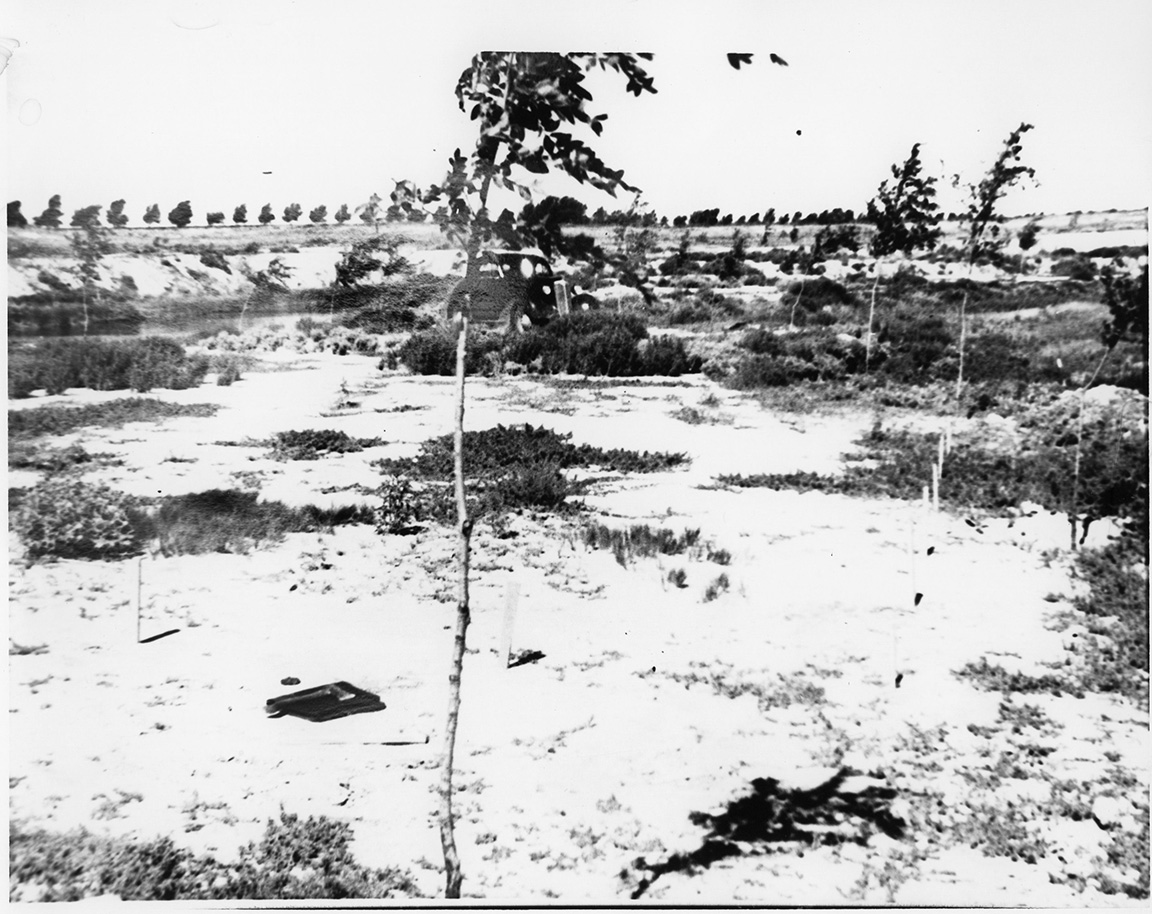
Lubbock Lake is located in a meander of an ancient valley, Yellowhouse Draw, near ancient springs. For thousands of years, people on the Southern High Plains used the water resources in the draw until those resources went dry in the early 1930s. Years of sediment covered the traces of human activity from the surface until 1936 when the city of Lubbock dredged the meander in an effort to revitalize the underground springs.
The first explorations of the site were conducted in 1939 by the West Texas Museum (now the Museum of Texas Tech University). By the late 1940s, several Folsom Period (10,800-10,300 years ago) bison kills were discovered. In a location of an ancient bison kill from a then unidentified Paleoindian group, charred bison bones produced the first ever radiocarbon date (currently the most accurate form of dating) for Paleoindian material (9,800 years old). The Landmark currently serves as a field laboratory for geology, soils, and radiocarbon dating studies, as well as being an active archaeological and natural history preserve.
Excavations today are conducted on an annual basis. The Museum of Texas Tech University has been involved with the discovery, preservation, research of, and education about the Lubbock Lake Landmark for over 80 years.
"Any one of the remarkable records of plant and animal communities, geology, climate, environmental resources, or human activities would make Lubbock Lake significant, but we have it ALL!"
- Vance T. Holliday
Professor, University of Arizona
Landmark Research Associate
Mission Statement
Lubbock Lake Landmark provides leadership through stewardship, research, and education to reveal cultural and natural heritage for the public and scientific communities.
We look to the future as well as the past. Read the 2015-2019 Lubbock Lake Landmark Strategic Plan (PDF) for more details.

Stewardship
The Lubbock Lake Landmark is an archaeological preserve containing evidence of peoples on the Southern High Plains for almost 12,000 years. Due to its nearly complete record of human activity within well-stratified and well-dated geological deposits, the Lubbock Lake Landmark is one of the most important archaeological sites in North America.
An archaeological site is any area that has an indication of activity by peoples of the past.
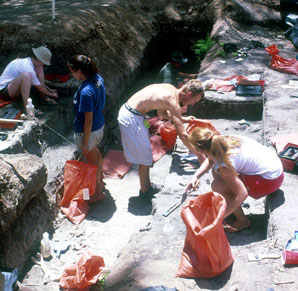
An archaeological site represents a piece of cultural and natural heritage of a region and the nation. Through survey and excavation, researchers attempt to reconstruct the ways in which people lived and adapted to their surroundings. Researchers study artifacts (objects made and modified for use by people) as well as plant, animal, and geologic specimens from excavations that might reveal information about the ways past peoples lived within the past landscapes and natural history.
Archaeology is important for the knowledge it unearths of societies and peoples unknown to today's population, past climates, and the natural history of a region. The placement, or context, in which archaeological evidence is found is very important for interpretation. When archaeological context is disturbed by people or natural means, information becomes irretrievable for scholars and ultimately for everyone.
As an archaeological preserve, the Landmark is government-protected from destruction due to widespread population growth, urbanization, and vandalism. According to the Office of the Texas State Archaeologist, over 6,000 Texas sites fall victim to some sort of disturbance every year, and only a handful receive professional attention.