Exhibitions
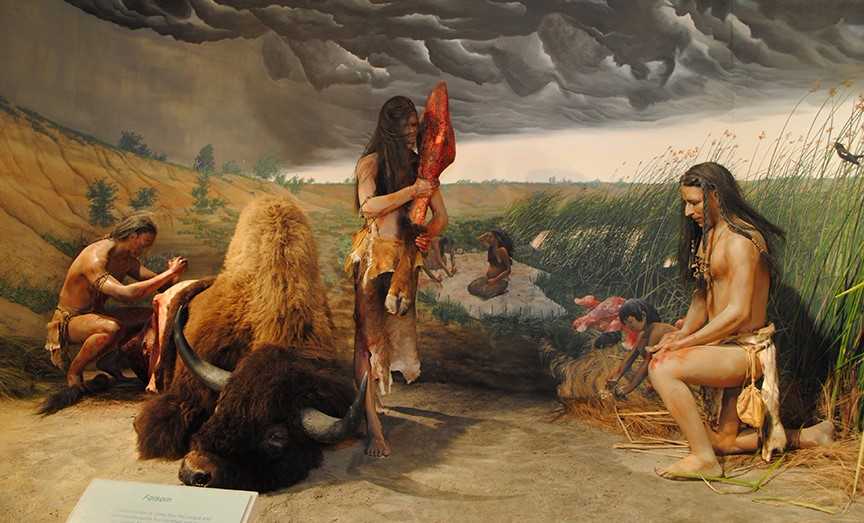
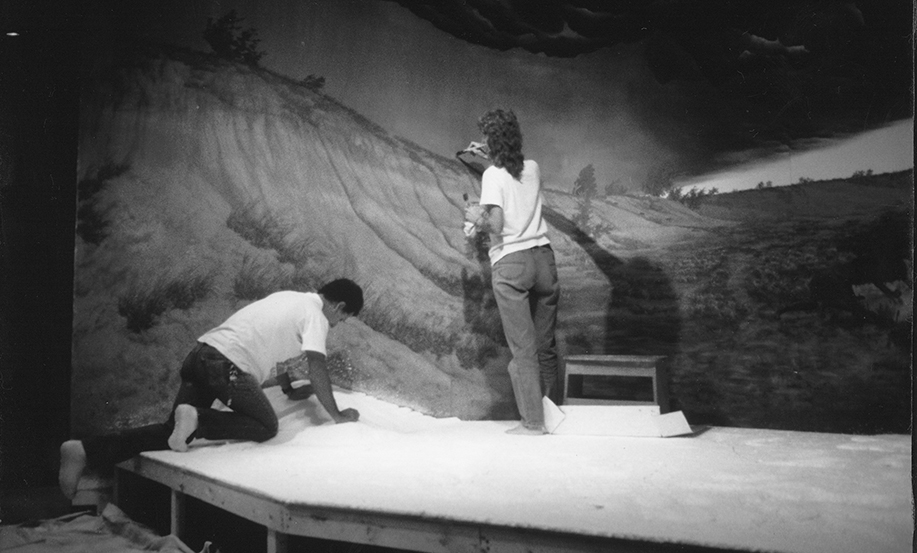
Almost 90 years of research at the Landmark has revealed thousands of years of human occupation in this meander of Yellowhouse Draw. Our exhibits examine the tools and methods of investigators as well as the cultural and natural history they have uncovered.
Temporary Exhibit: Living in a Dugout
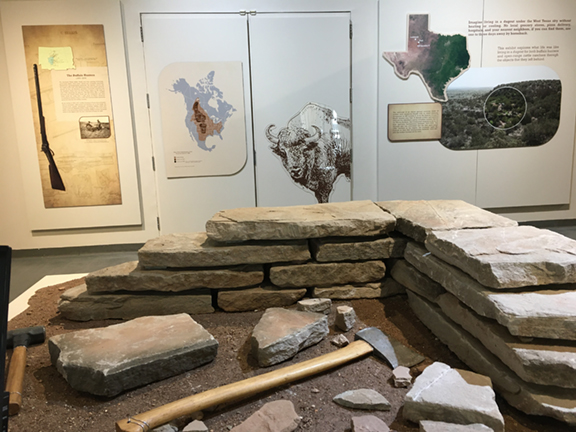
Living in a Dugout explores what life was like for buffalo hunters and open-range cattle ranchers through the objects they left behind. A central part of this research is an above-ground sandstone structure with an intact chimney on the historic U-Lazy-S Ranch near Post, Texas.
A decade of field and archival research identified a buffalo-hunting group led by the Woody brothers, who built dugouts for operations between 1876 and 1878. Research also found that the Lindsey family, among the region's first open-range cattle ranchers, used the dugouts as headquarters between 1879 and 1881 after the hunters left the area.
This interactive exhibit includes 3-D printed models of shell casings, a button, a rifle part, a horseshoe, and an axe head - objects that help tell the story of living in a dugout.
Long-Term Exhibits
American Lion
The American lion (Panthera atrox) was a large extinct cat that lived across North America during the Pleistocene. It was the largest predator in Ice Age North America. Remains uncovered at Macy Locality 100, one of the Landmark's research localities, represent the first record of American lion on the Southern High Plains.
The American lion was about 25 percent larger than the modern African lion. Males weighed up to about 1,100 pounds and females up to about 800 pounds. During the Pleistocene, North America was home to many giant animals (megafauna). At the end of the Pleistocene, around 11,000 radiocarbon years ago, climate change and other pressures coincided with megafaunal extinction.
Sand and Sediments
Hidden in the dirt are tiny clues about the past. Analysis of materials in stacked sediment layers, or strata, reveals evidence of environmental conditions at the time each layer formed. Reading these layers helps researchers understand regional climate and landscape change through time.
The Landmark's stratigraphic profile represents about 20 feet of sediments deposited in one location over the last 12,000 radiocarbon years. This near-complete record is one reason Lubbock Lake is one of the most important sites for North American prehistory.
Bones excavated in archaeological context also preserve key evidence. Researchers identify taxa by comparing finds with known collections and look for human modification under magnification. More than 100 animal species were recovered from an 11,100-radiocarbon-year-old bonebed, many with butchering evidence linked to Clovis people.
Peoples
Stone and bone tools and lithic flakes are among the most common evidence of human activity at Lubbock Lake. Our peoples exhibit highlights technologies and cultures represented at the site, including Apache and Comanche occupations and later historic-era settlement associated with George Singer.