Exercise Physiology Research
Faculty
Joaquin U. Gonzales, Ph.D.
Assistant Professor
Exercise & Sport Sciences, Rm 123
(806) 834-5944
joaquin.gonzales@ttu.edu
Jacalyn McComb, Ph.D.
Professor
Exercise & Sport Sciences, Rm 111
(806) 834-6306
jacalyn.mccomb@ttu.edu
Yoonjung Park, Ph.D.
Assistant Professor
Exercise & Sport Sciences, Rm 124
(806) 834-5942
yoonjung.park@ttu.edu
additional resources
- Admissions
- Advising
- Assistantships
- Blackboard Tutorials
- Comprehensive Exam
- Financial Aid
- Graduate Faculty
- Graduate Programs
- Intention to Gradution Form (Mandatory)
- Kinesiology & Athletics Society (KAS)
- List of Classes
- News & Events
- Ph.D. Program
- Prospective Graduate Students
- Research
- Scholarships
- Student Resources
Current Research
Mobility and Exercise Blood Flow in Older Adults
Men and women are needed to participate in research that will study how vascular function affects walking ability in healthy older adults. Participants must be between 60-80 years old, non-smokers without diagnosed cardiovascular, pulmonary or metabolic disease, not taking medications that affect cardiovascular function (including hormone replacement therapy), no high blood pressure, no high blood levels of total cholesterol or glucose, not obese, no orthopedic limitations that limit walking ability, or have knee problems in the right leg. This study involves 2 visits (two hours per visit) to the Vascular Assessment Laboratory located in the Exercise & Sport Sciences building at Texas Tech University. Measurements include questionnaires, body fat, blood pressure, blood cholesterol, blood glucose, vascular health measurements, and walking speed. Participants will be compensated $25 for completion of the study and will also receive results from tests (body fat percentage, total cholesterol, blood glucose, and resting blood pressure). Interested men and women should contact Dr. Joaquin Gonzales at 806-834-5944 or joaquin.gonzales@ttu.edu.
The Women’s Wellness Outreach Program
The Women’s Wellness Outreach Program is dedicated to helping women cope with stressors in their life through mindfulness based exercise, breathing and muscle relaxation techniques. Biofeedback is used to help women increase awareness of their physical and mental state and ultimately achieve a state of calmness. Pre-post tests following an intervention period include the health related fitness components, heart rate variability, and EMG measurements of strength and muscle tension. Questionnaires are used to find out their subjective levels of distress. We are presently working with women who are survivors of breast cancer
Sex Differences in the Stress Response
The purpose of the proposed study is to compare the efficacy of the published Trier Social Stress Protocol and the Beilock Stress Protocol. Efficacy will refer to the responsiveness of cortisol and heart rate variability (HRV) to the psychological stressor. In addition to this, differences in gender response will also be measured.
The Effect of Pilates and Yoga on Wellness Parameters in College-age Women
Study Members: Kembra Albracht, Drs. Gonzales, Del Fernandez, and McComb
The wellness parameters that will be assessed pre-post 8 week intervention programs (2 different interventions and a control group) are:
• Coping skills and the stress response [heart rate variability (HRV) following a stressor]
• Strength [Electromyography (EMG)]
• Body composition (DEXA)
• Flexibility (Goniometry)
Research Facilities
The Exercise Physiology graduate program at Texas Tech University is supplemented by a state-of-the art research facility comprised of multiple research laboratories in the areas of biochemistry, molecular physiology, biofeedback, body composition, cardiorespiratory function, skeletal muscle performance, and vascular function. Each laboratory contains equipment dedicated to research in exercise and sport sciences and used by graduate students in the Department performing a thesis or dissertation.
Biochemistry Lab

The Biochemistry Lab is fully equipped to perform biochemical techniques including: protein assay, kinetic assays and analysis using enzyme-linked immunoassays (ELISA). Featured equipment include centrifuges, dry bath incubator, fume hood, Isotemp incubator, pipettes, pH meter, plate shaker, plate washer, -80° freezer, refrigerator, and EIA capable plate readers (Spectramax Plus; Beckman DTX 800/880 Multimode Detectors).
Contact Dr. Yoonjung Park for more information.
Biofeedback Lab

This laboratory is dedicated to the use of biofeedback in altering physiological responses to stress. Featured equipment in this laboratory include biofeedback monitors (Nexus 10 Wireless Bluetooth Biofeedback; Comet XL-Grass-Telefactor polysomnogram; J & J Engineering C2+ 6 & 12 Channel Systems), continuous blood pressure monitor (CNAP 500i), and electromyography. Surface electromyography from this lab is also used to provide feedback regarding muscle fatigue in order to individualize resistance training programs.
Contact Dr. Jacalyn McComb for more information.
Body Composition Lab

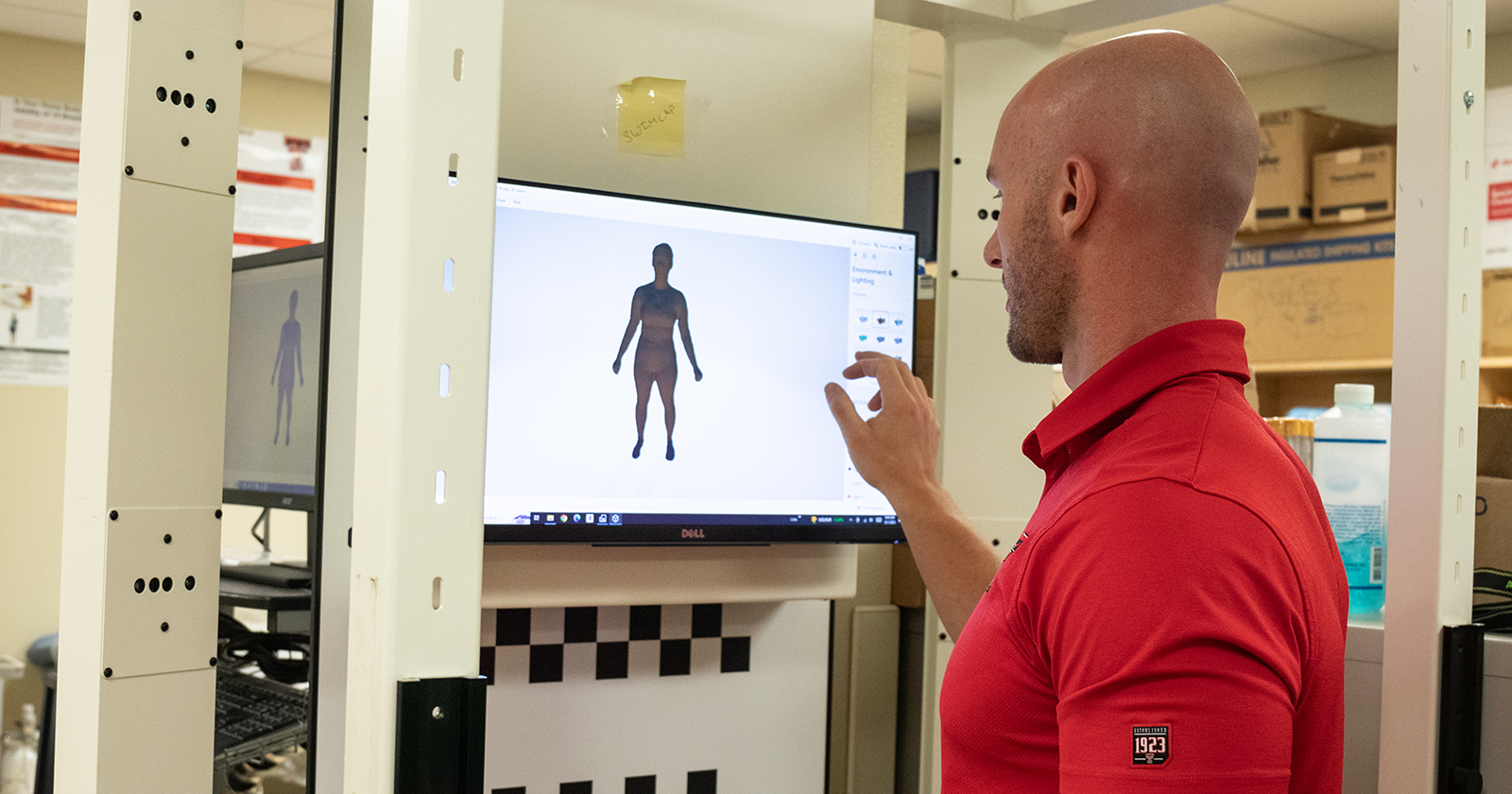
The Body Composition Lab is equipped with a dual-energy X-ray absorptiometry (DEXA, GE Lunar Prodigy Primo), skinfold calipers, and bioelectrical impedance machines (Tanita).
Contact Dr. Joaquin Gonzales for more information.
Cardiorespiratory Lab

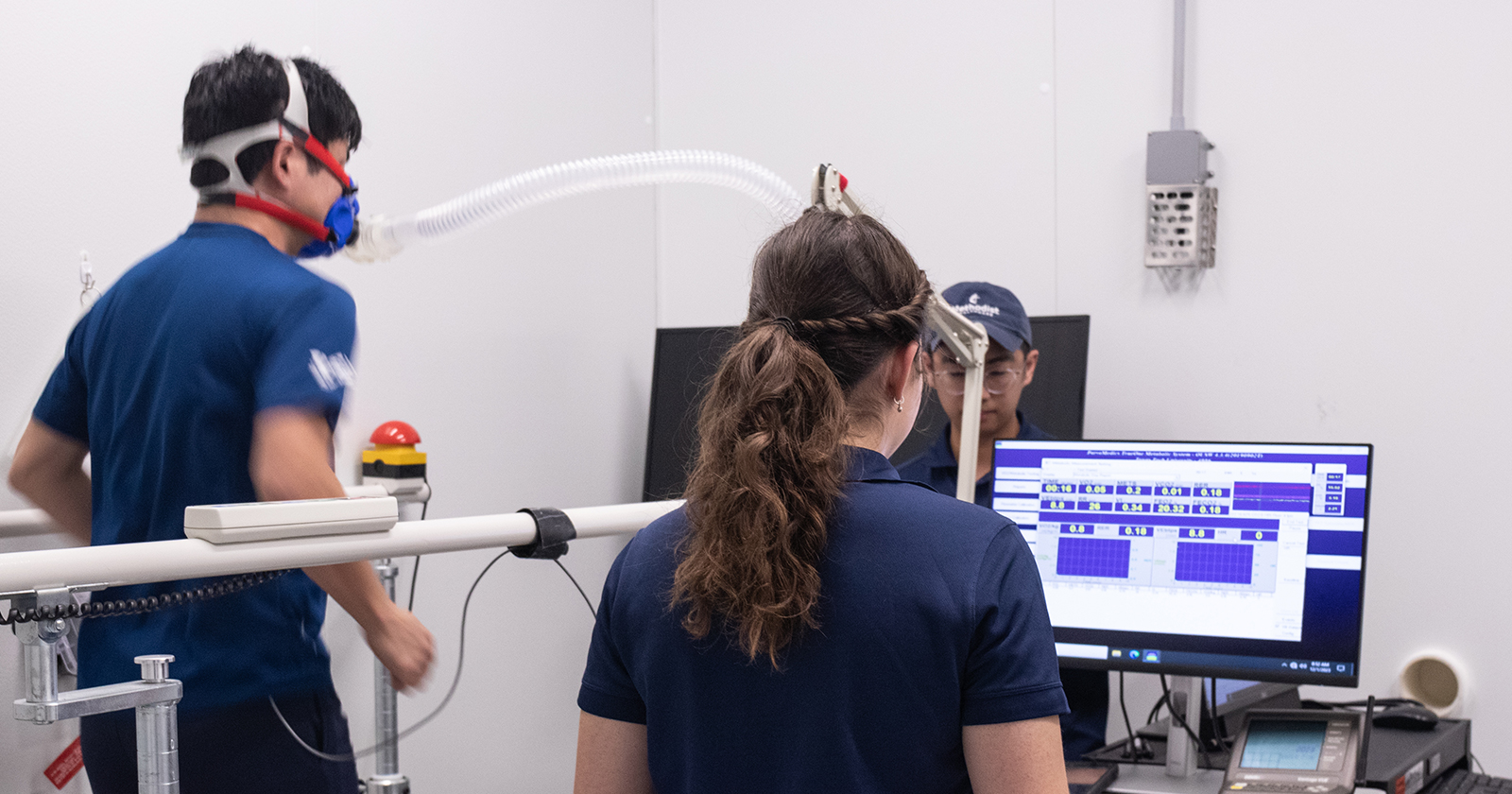
The Cardiorespiratory Lab is fully equipped for measuring ventilation and gas exchange responses to exercise. Featured equipment include automated EKG stress testing systems (MedGraphics CardiO2™; Quinton Q Stress and Q4500), radiotelemetry heart rate monitors (Polar), computerized metabolic measurement systems (MedGraphics ULTIMA; Physiodyne Max II; ParvoMedics 2400); EMG equipment (Biopac), Trackmaster treadmill, and cycle ergometers (Lode Excalibur Sport, Corival; Monarch 828E).
Contact Dr. Joaquin Gonzales for more information.

Phlebotomy Lab

The East and West Phlebotomy Labs were developed as a dedicated space for blood collection in research studies.
Contact Dr. Jacalyn McComb for more information.
Vascular Assessment Lab

The Vascular Assessment Lab is designed to measure peripheral vascular function at rest and during exercise in humans. This laboratory features Doppler ultrasound machines (GE Vivid 7; Hokanson MD6), applanation tonometry (SphygmoCor PVx), automated blood pressure monitors (CNAP 500at, Omron BP785), rapid cuff inflation system (Hokanson E20), data acquisition system (PowerLab 8SP), pulse oximeter (Nellcor N-395), and an automated EKG monitor (Schiller AT-10).
Contact Dr. Joaquin Gonzales for more information.
Lab Safety Materials
Click here for the required training for anyone working in a BSL II Lab.
Click here to go to the online training. Here are the 3 topics needed to work in a BSL Lab II:
- Bloodborne Pathogen Exposure Control
- Radiation Refresher
- Biological Safety
Click herefor Emergency Procedures related to Bloodbourne Pathogens.
Click here for the TTU Post Exposure Packet.
Click here for the Phlebotomy Handbook.
Click here for the Physiology Phlebotomy Standards for Thesis Students who need to collect Blood Samples. Includes:
- Educational Requirements
- Applied Phlebotomy Video Exam
- Practical Skills for Phlebotomy
Click here for the Procedures for Graduate Students to Obtain a Hepatitis B Shot.