HESS Research

Biomechanics
Ongoing research in the Biomechanics Lab generally focuses on sports performance and the mechanics of human impact and injury. Current faculty and graduate student projects relate to:
- Head impact and injury
- Anterior cruciate ligament (ACL) injury in females
- Over arm throwing mechanics
- Landing, jumping and cutting mechanics
- Muscle damage
- Muscle mechanics
- Fall prediction and prevention in the elderly
The Effects of Aging on Skeletal Muscle
This research seeks to measure changes in the extracellular matrix of aging skeletal muscle. Furthermore we will determine what effect these changes have on the mechanotransduction of the muscle cells.
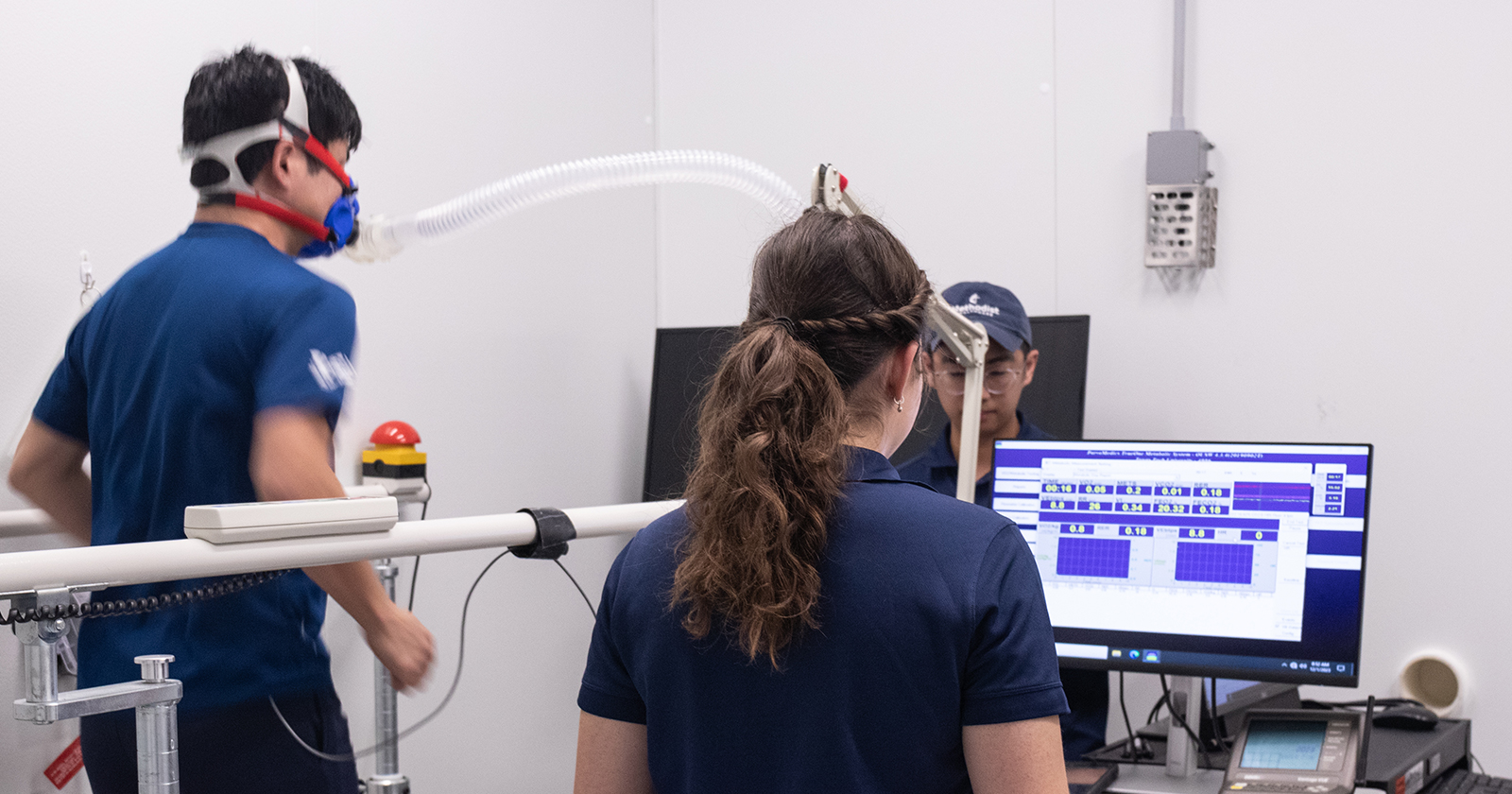
Exercise Physiology
Influence of Ethnicity on Vascular Function in Young Adults
Men and women are needed to participate in research that will determine if vascular function differs between healthy Hispanic and non-Hispanic whites.
The Women’s Wellness Outreach Program
The Women’s Wellness Outreach Program is dedicated to helping women cope with stressors in their life through mindfulness based exercise, breathing and muscle relaxation techniques.
Protocol and the Trier Social Stress Test
The purpose of the proposed study is to compare the efficacy of the published Trier Social Stress Protocol and the Beilock Stress Protocol.
Exercise & Sport Psychology
Physical Activity
The importance of personality and achievement motivation theories such as Elliot’s (1999) achievement goal framework in the context of lifetime physical activity as well as competitive sport is my main research focus.
Motor Behavior
Motor Development
Motor development is especially concerned with changes in movement (motor behavior) across the lifespan and the processes that underlie these most important milestones. At the HESS our emphasis is on the acquisition of fundamental motor patterns of both typically developing children and those who are at-risk of delay.
Motor Skill Competence and Physical Activity
This research examines the dynamic relationship between motor skill competence and physical activity.
Motor Control
Theoretical research interests include the role of attentional capacity and information processes in motor learning and movement production.
Motor Learning
Factors that influence learning such as, instructional cues, modeling and transfer of learning.
Sport Management
Consumer Shopping Behavior
Exploring and comparing consumers’ shopping habits, interests, and characteristics between and among different countries in relation to athletic apparel. As sport apparel companies become more globalized, there is an increased focus on international marketing. This study will, therefore, provide valuable information to sporting goods companies in selecting precise international target markets.
Sport Facility Management
Studying the satisfaction of physically disabled consumers in sport facilities.
Strength & Conditioning
Examines the strength and conditioning aspects of baseball pitching and the effects of strength and conditioning programs.
Teaching Physical Education and Sport
Pedagogy
Effects of varying levels of physical activity on children (specifically those that are at-risk for being overweight).
Sport Sociology
Sport sociology research examines the relationship between sport patterns and cultural and social patterns and practices. Popular variables of interest are age, gender, socioeconomic status and ethnicity.
Assessing Pre-Service Teachers Content Knowledge Via a Service Learning Environment
Service Learning is a unique curriculum that allows students to learn through experience. This experiential setting provides unique research opportunities regarding the cognitive and affective changes that occur in pre-service teachers.
Children’s Commitment to Physical Activity
This research project is currently being conducted as part of a Fun & Fit program for overweight, lower socio-economic children. Specifically, this project will examine the impact of the program on children’s sense of enjoyment and commitment to physical activity.
Measuring Behaviors and Attitudes in the N.A.S.P.E.
To date, no comprehensive assessment measure of the National Standards for Physical Education (N.A.S.P.E.) has been developed. The purpose of this line of research is to establish an instrument that will help with the assessment of the affective components inherent in the standards, namely the behaviors and attitudes of students enrolled in physical education in the public school.