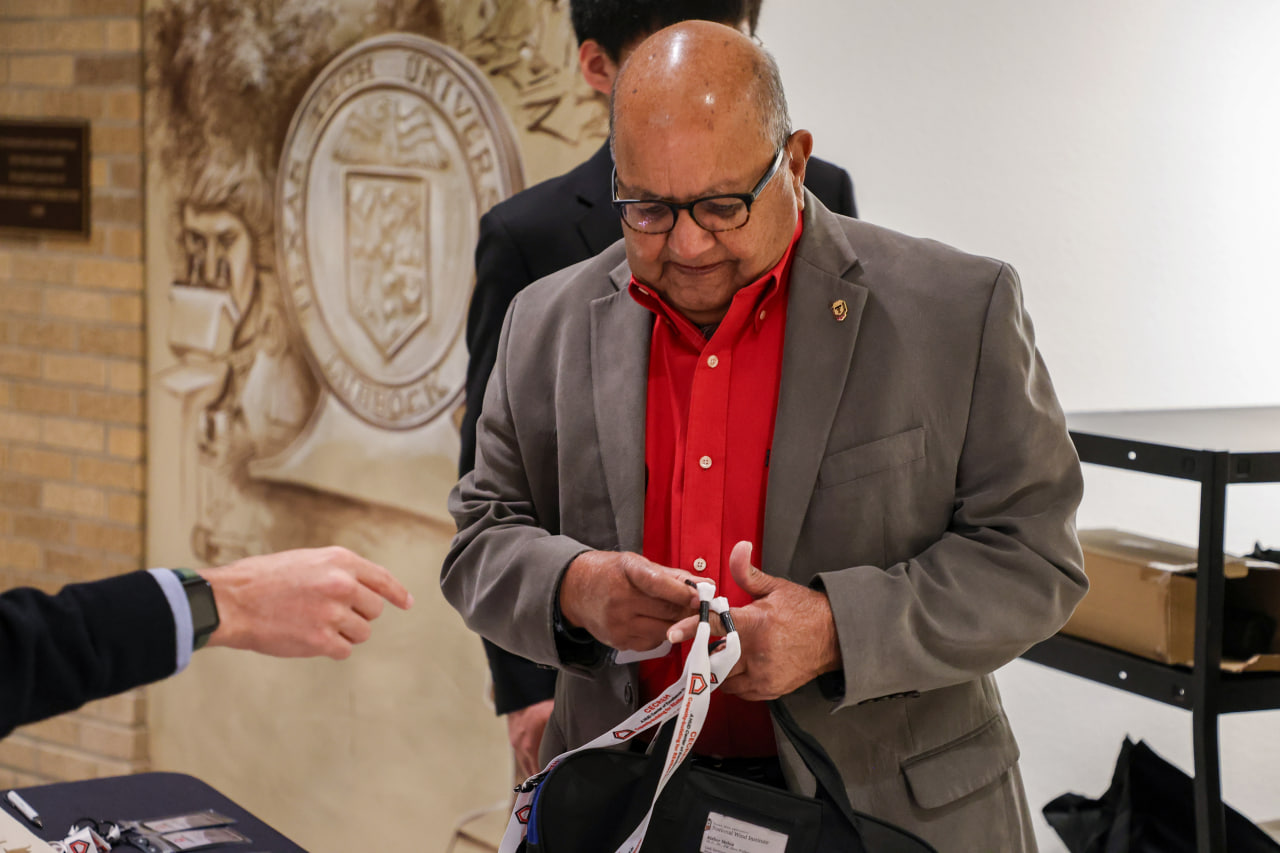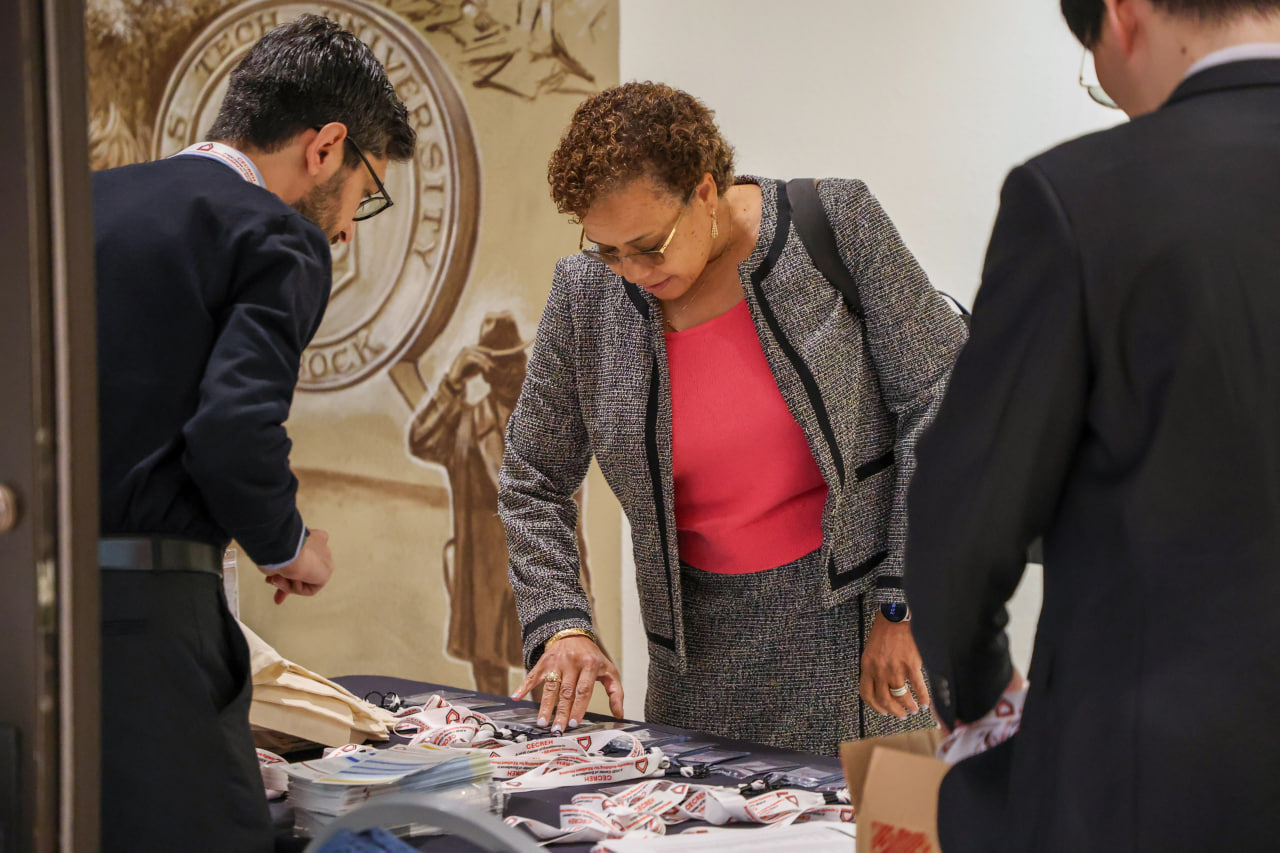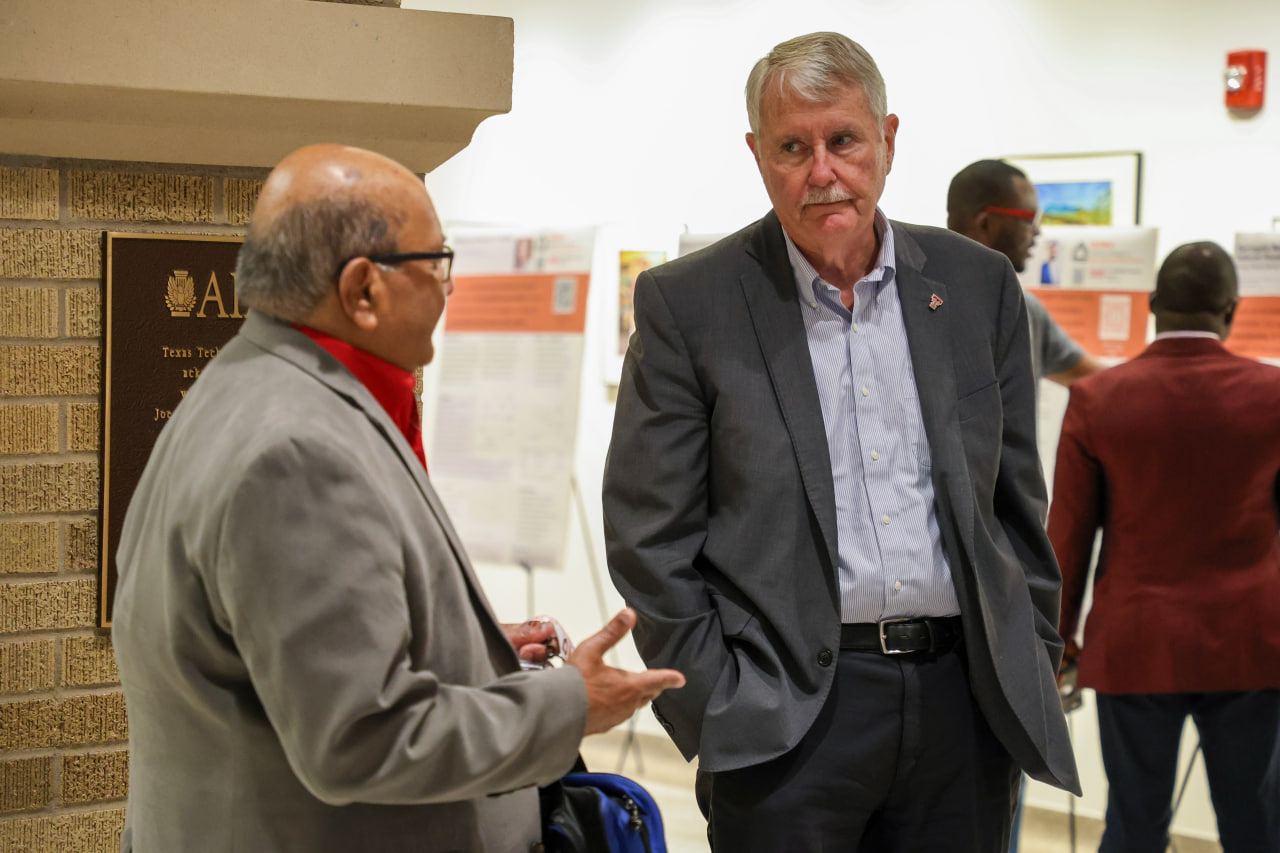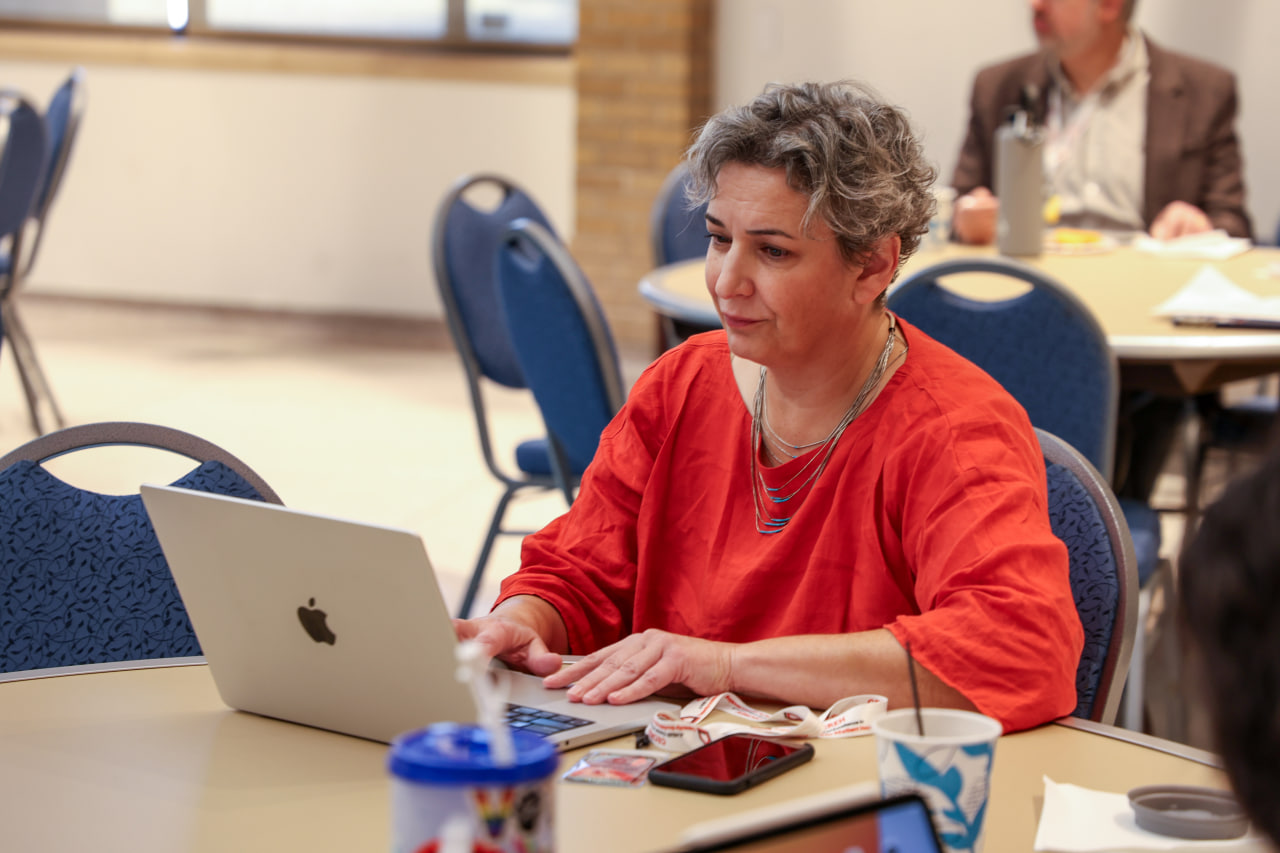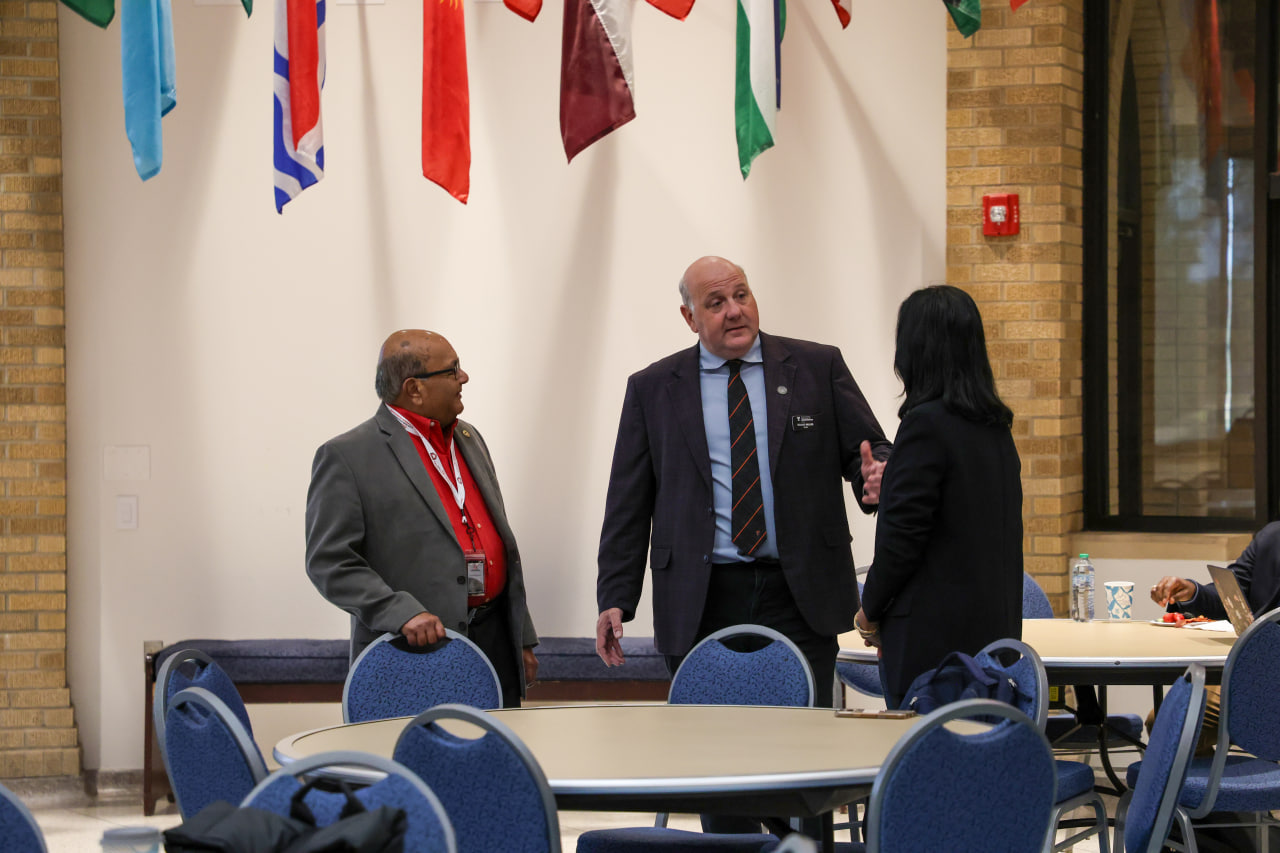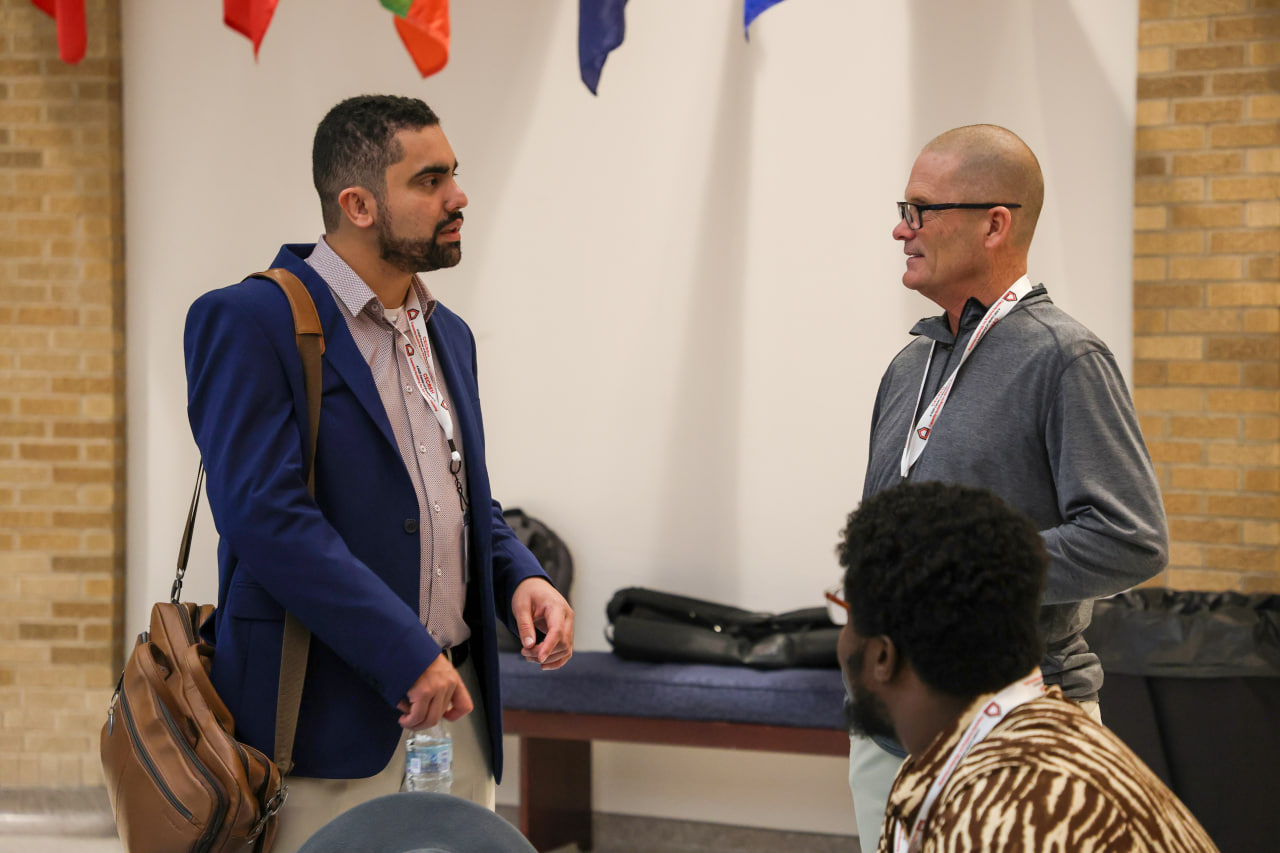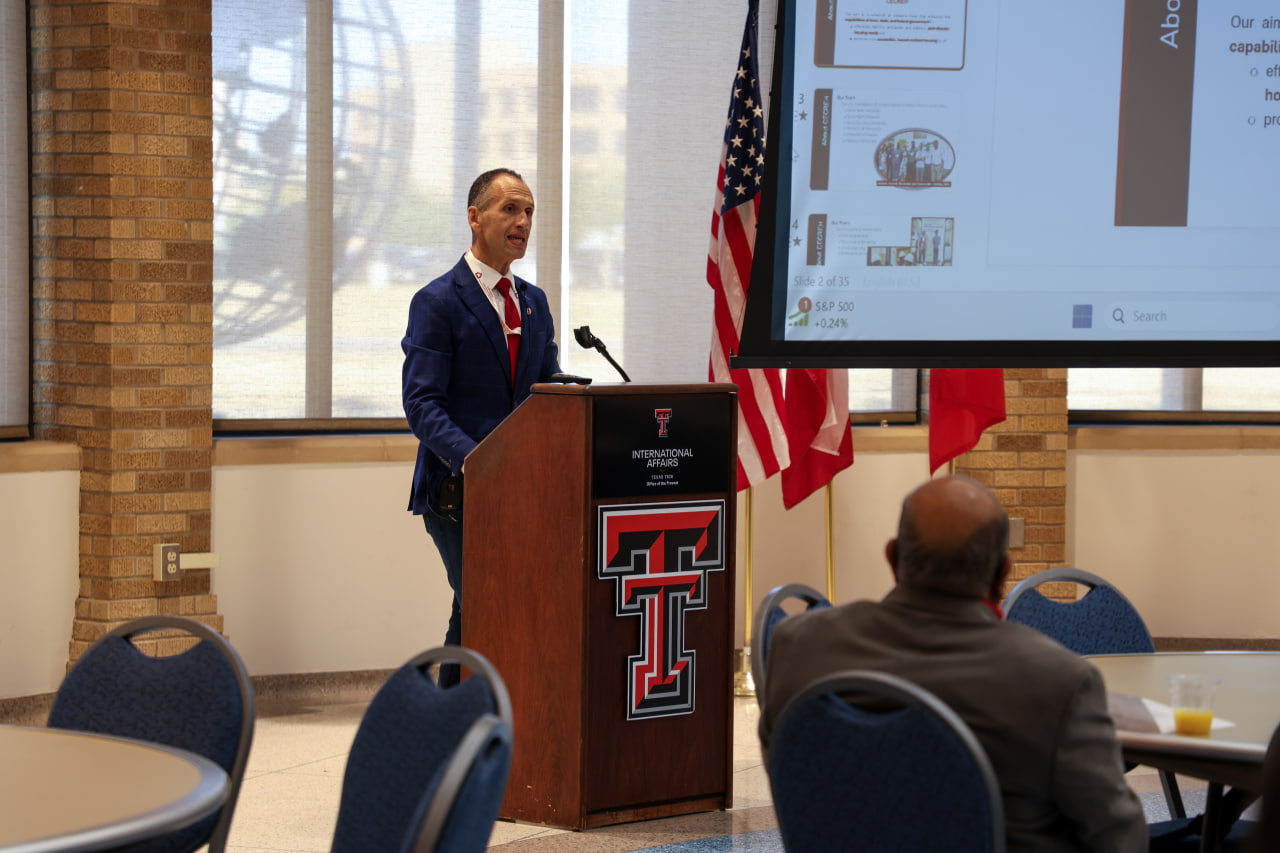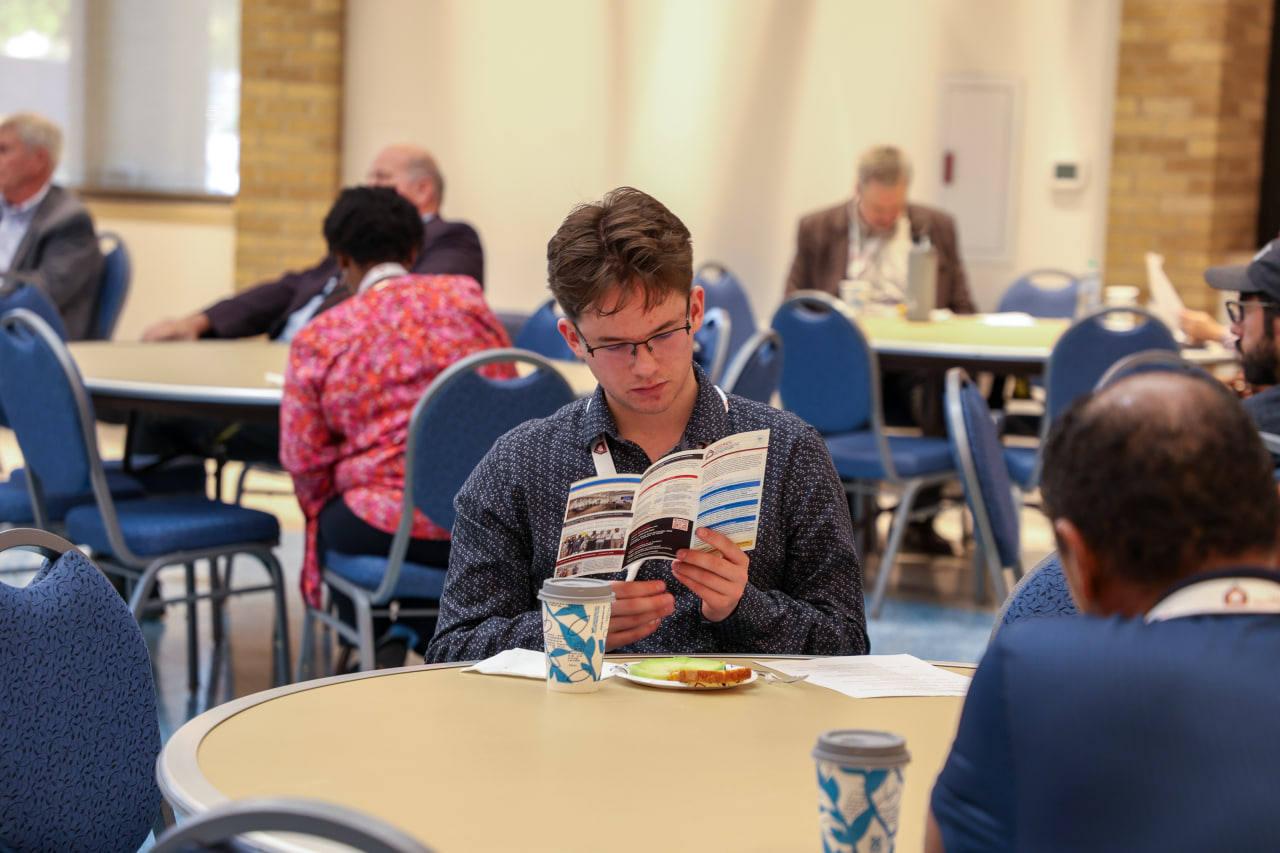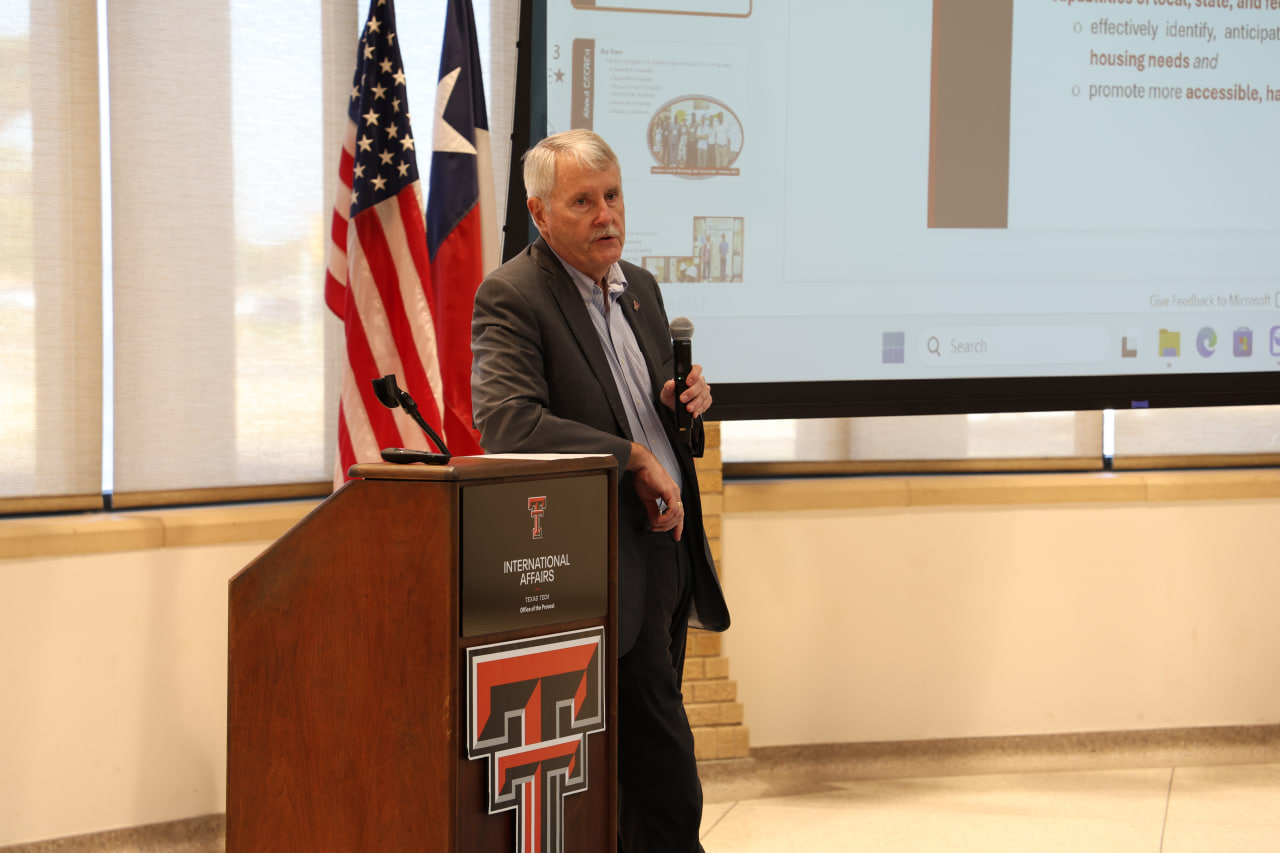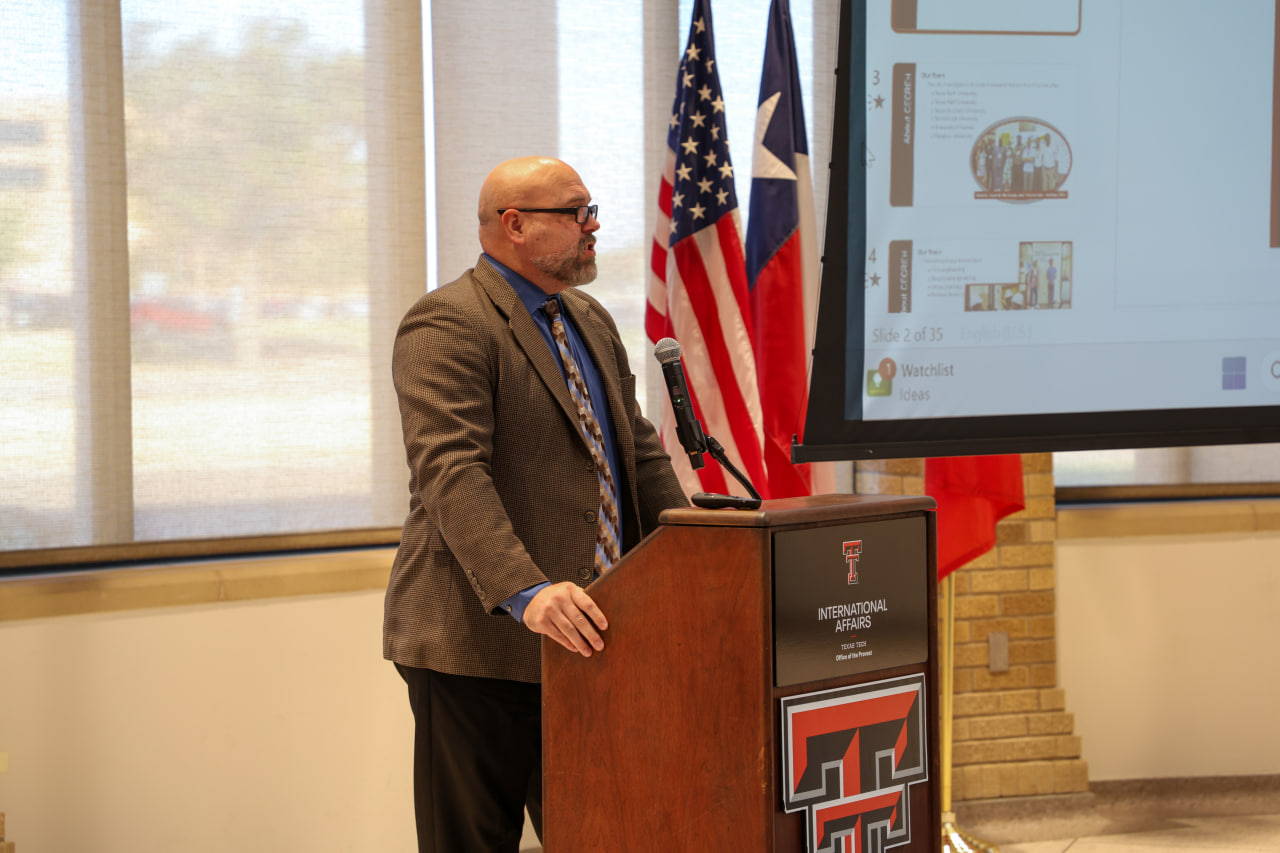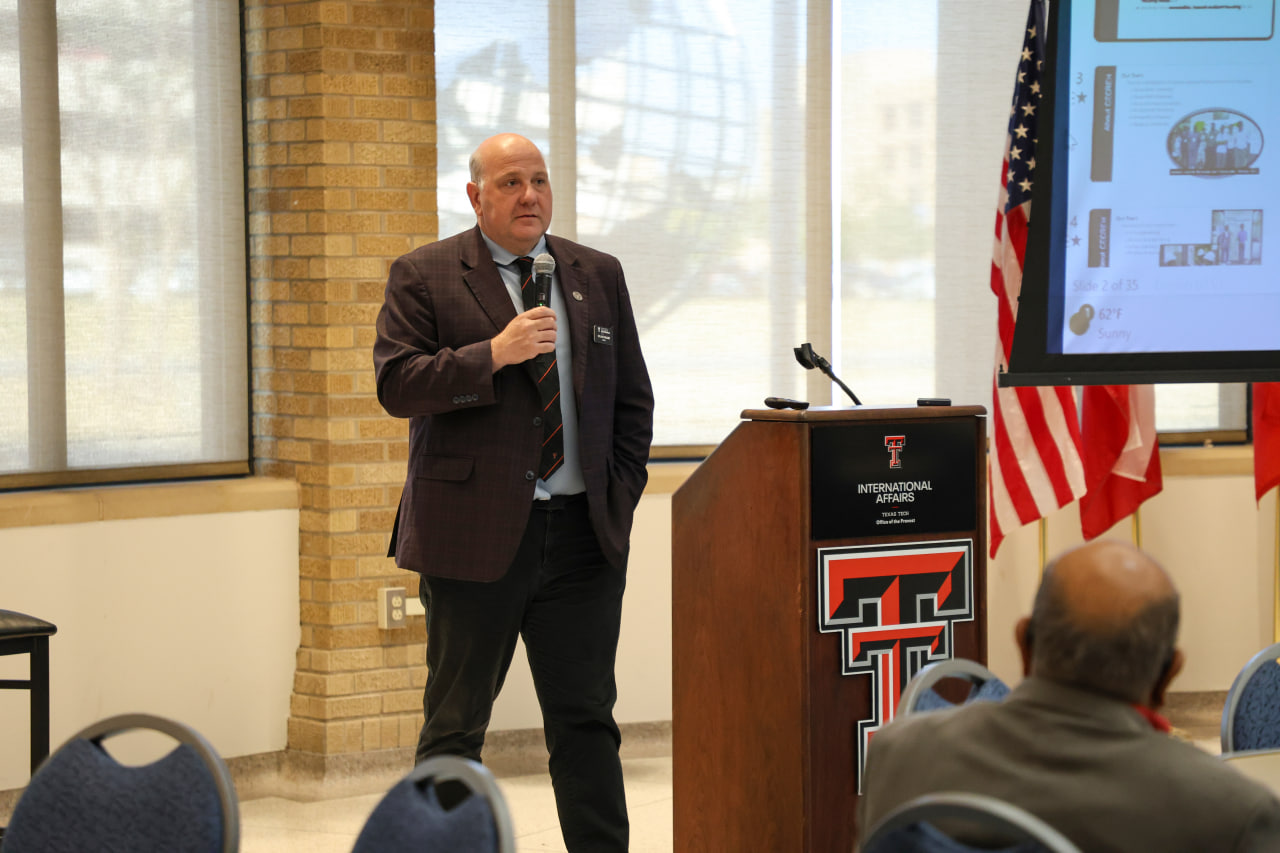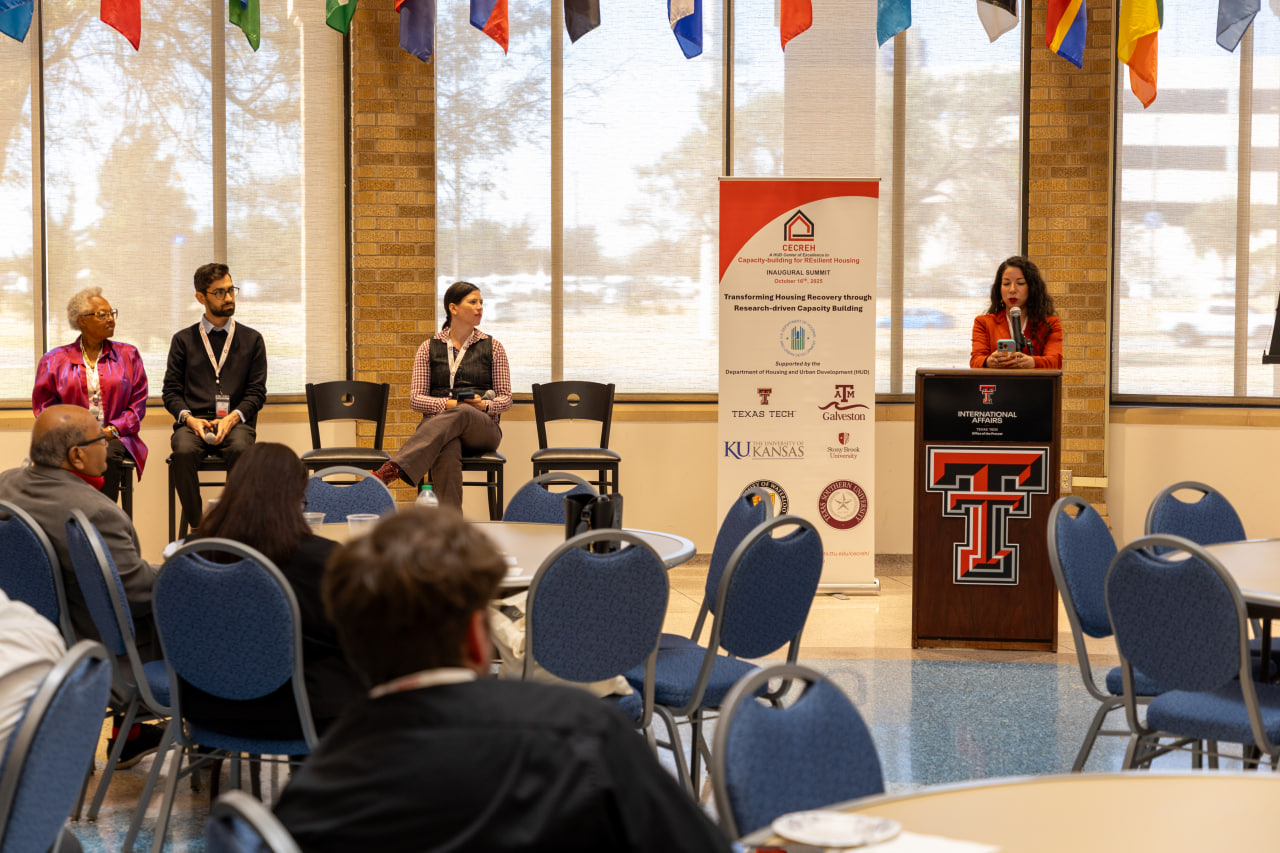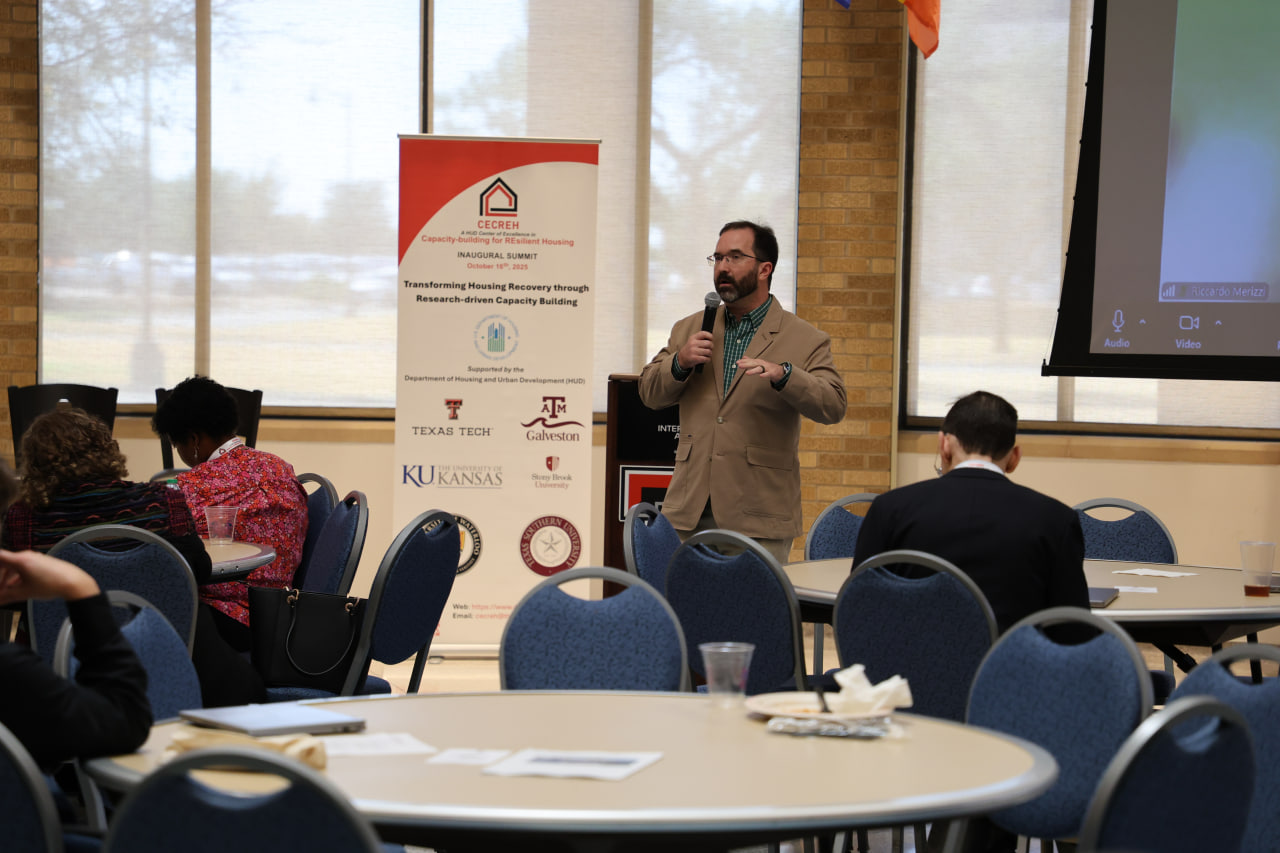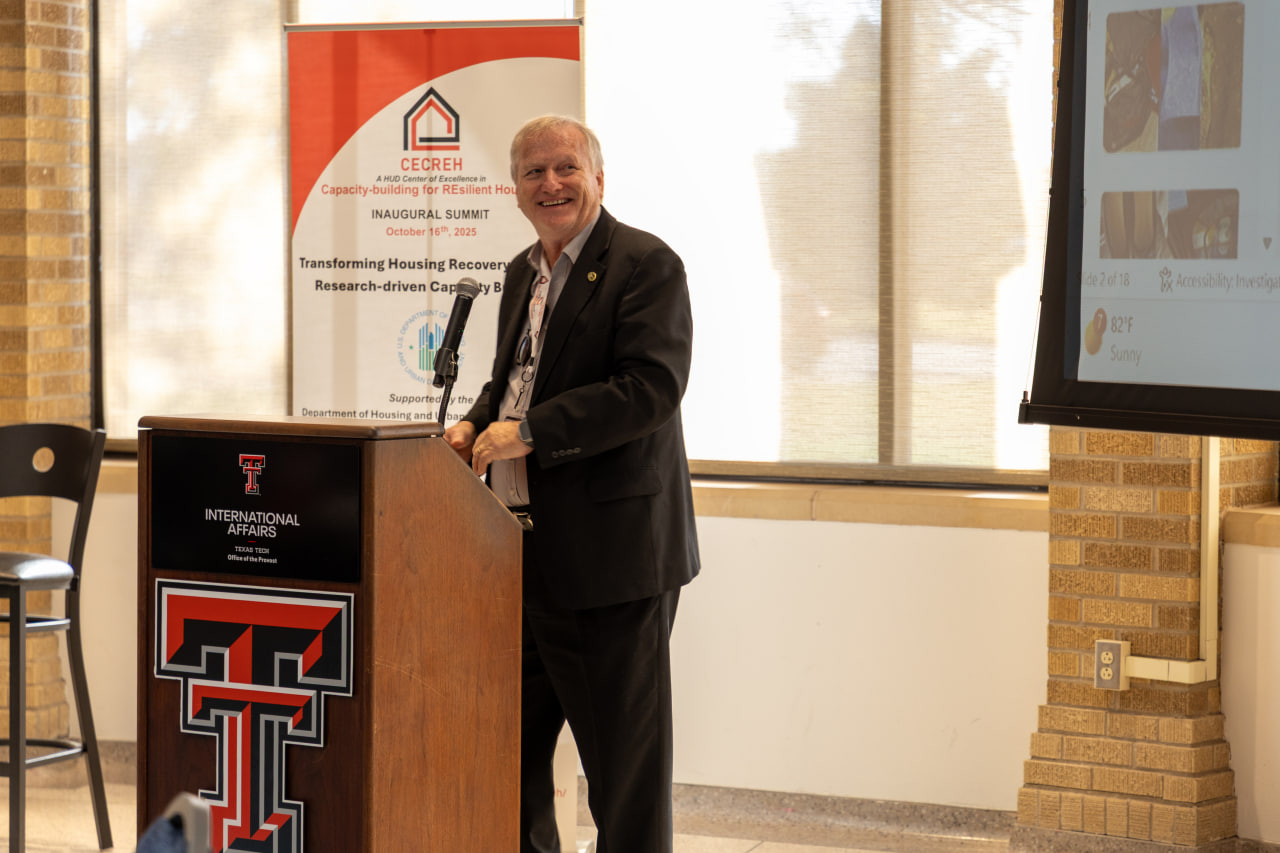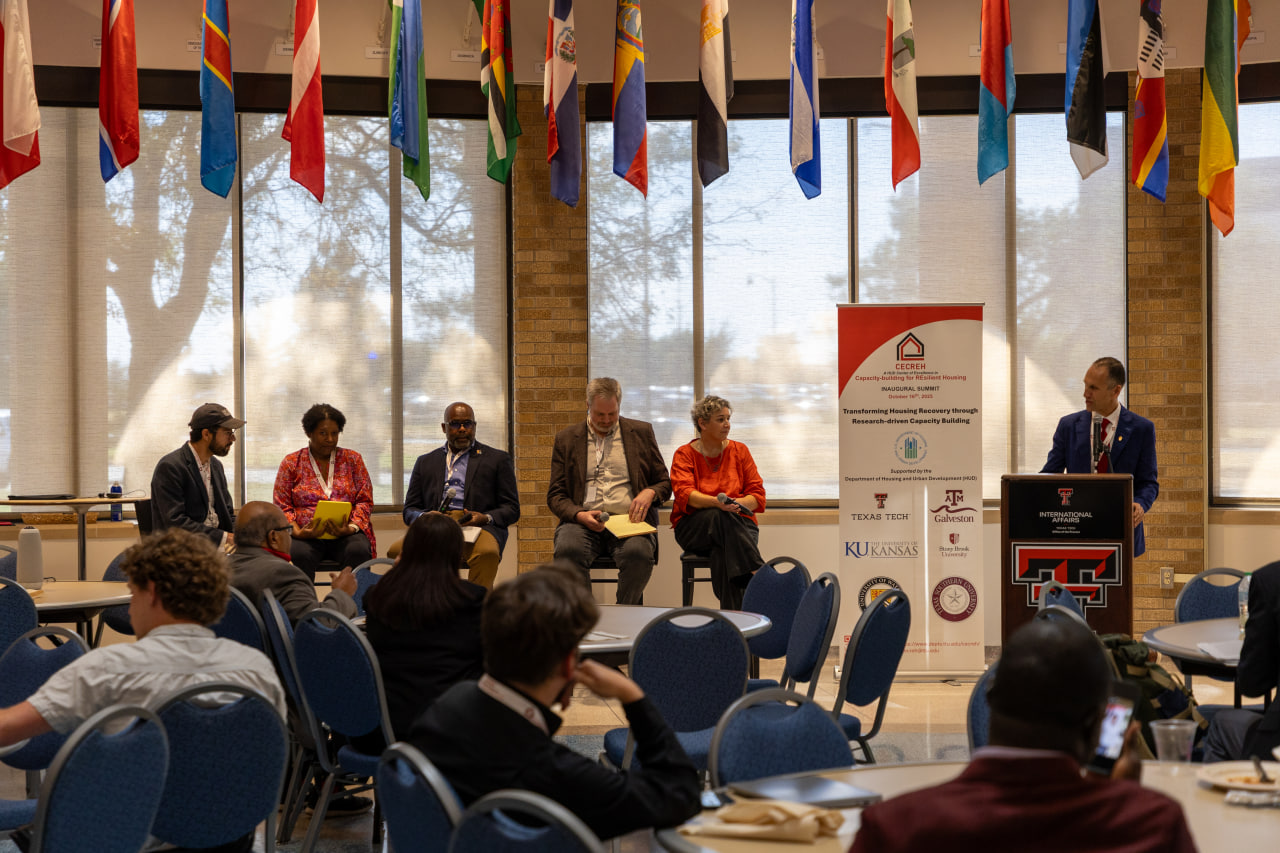
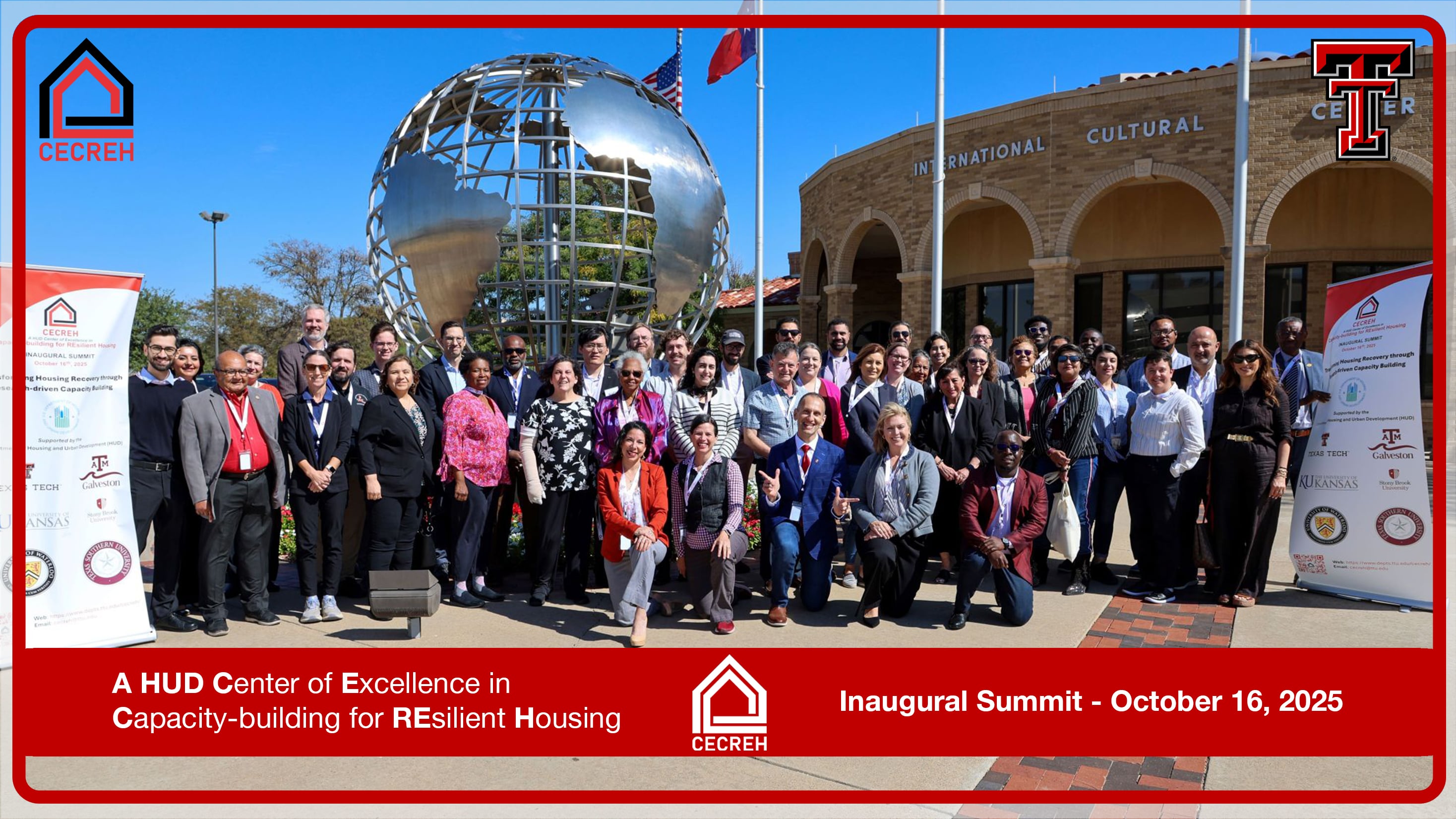
The U.S. Department of Housing and Urban Development (HUD) Research Center of Excellence in Capacity-building for Resilient Housing (CECREH) hosted its Inaugural Summit at Texas Tech University, bringing together partners from universities, agencies, advocacy groups, and community organizations from across the United States and beyond.
Over two days, participants explored critical challenges at the intersection of climate risk, affordable housing, and equitable recovery. The summit created space to share research, exchange practical experience, and identify new strategies for building resilient, community-centered housing systems before and after disasters.
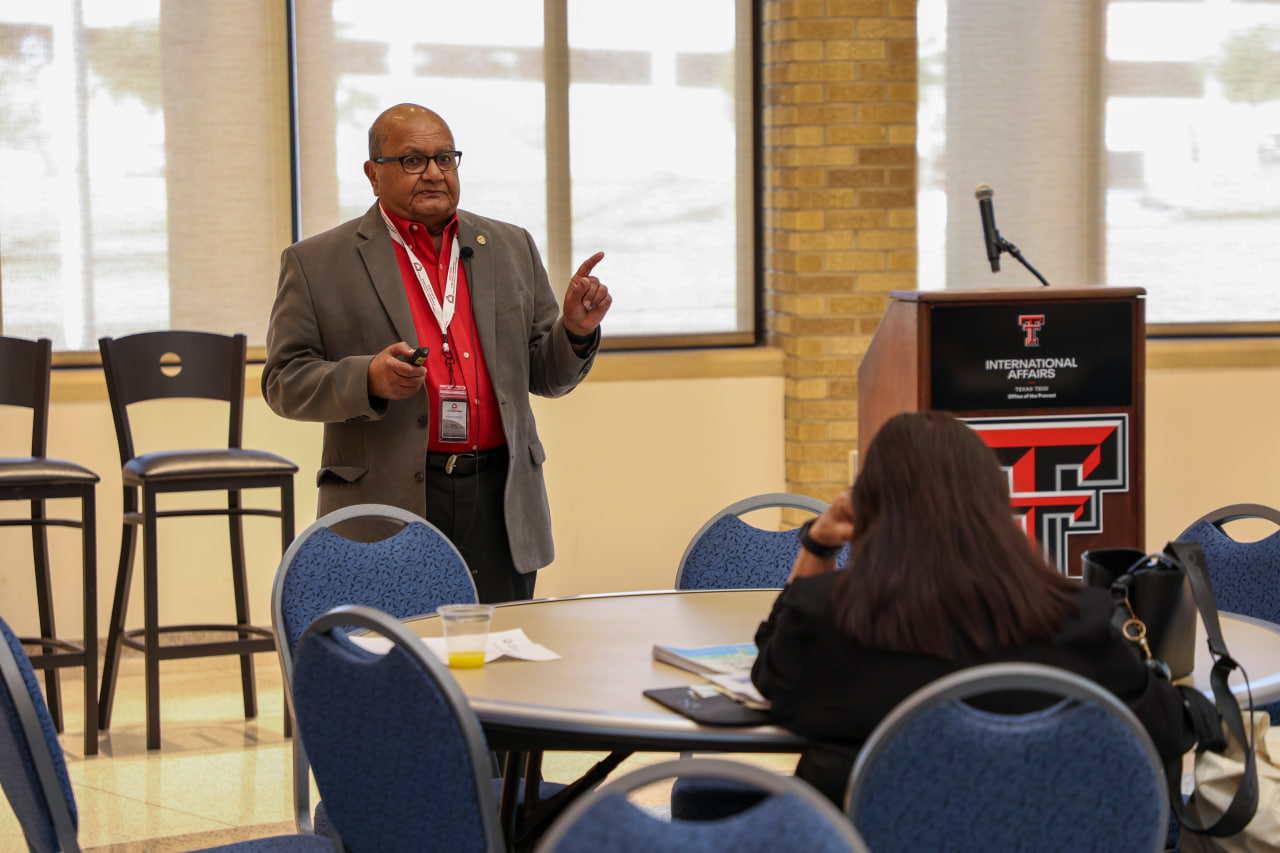
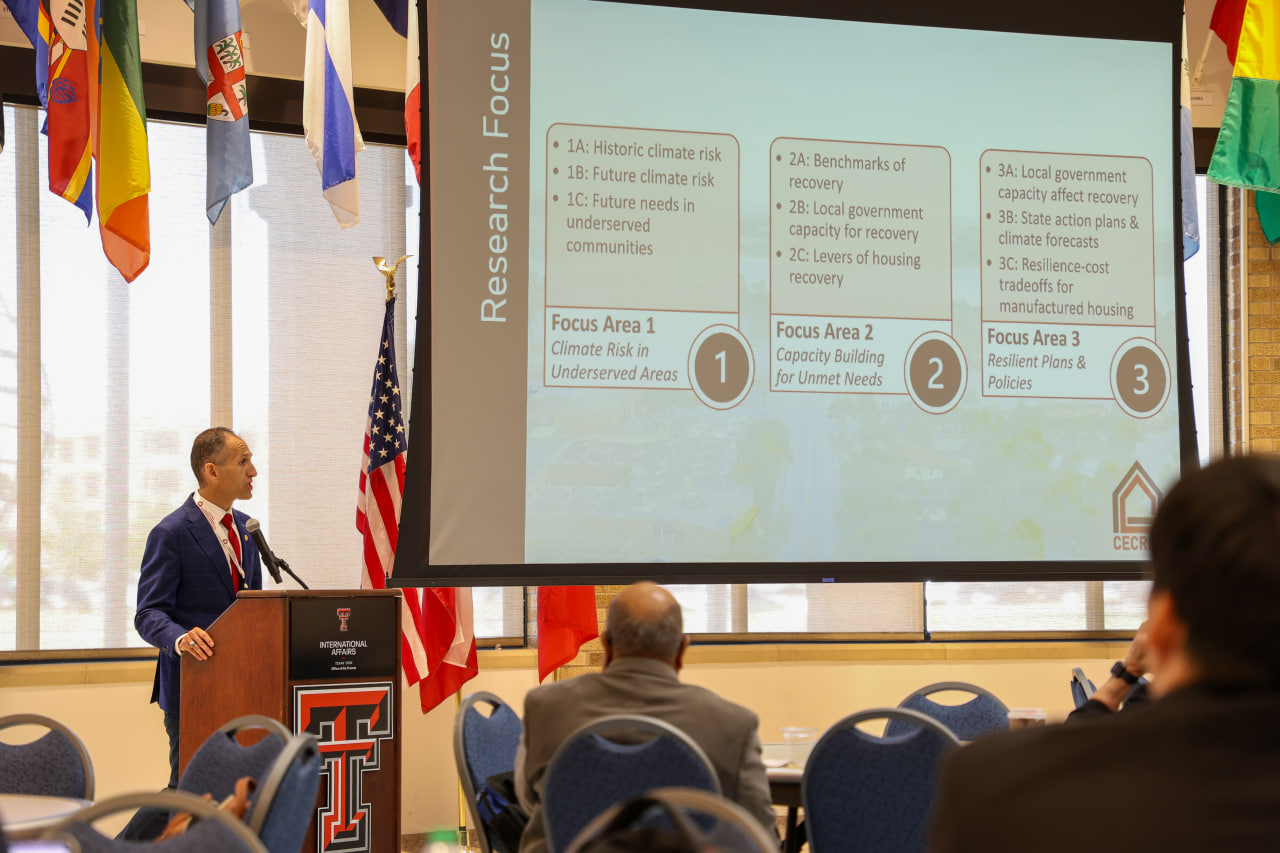
The program was led by CECREH Director Ali Nejat, PhD, PE, PMP, and Associate Director Ashley Ross, PhD, whose opening remarks emphasized the Center’s mission: transforming housing recovery through research-driven capacity building and partnerships with communities most affected by disaster risk. They were joined by welcome speakers Joseph Heppert, Rod Williams, and Roland Faller, and keynote speakers Kishor Mehta and Danny Reible, who reflected on decades of work in wind engineering, environmental resilience, and equitable infrastructure planning.
Resilience is not something we wait for. It is something we build together through collaboration, transparency, and trust.
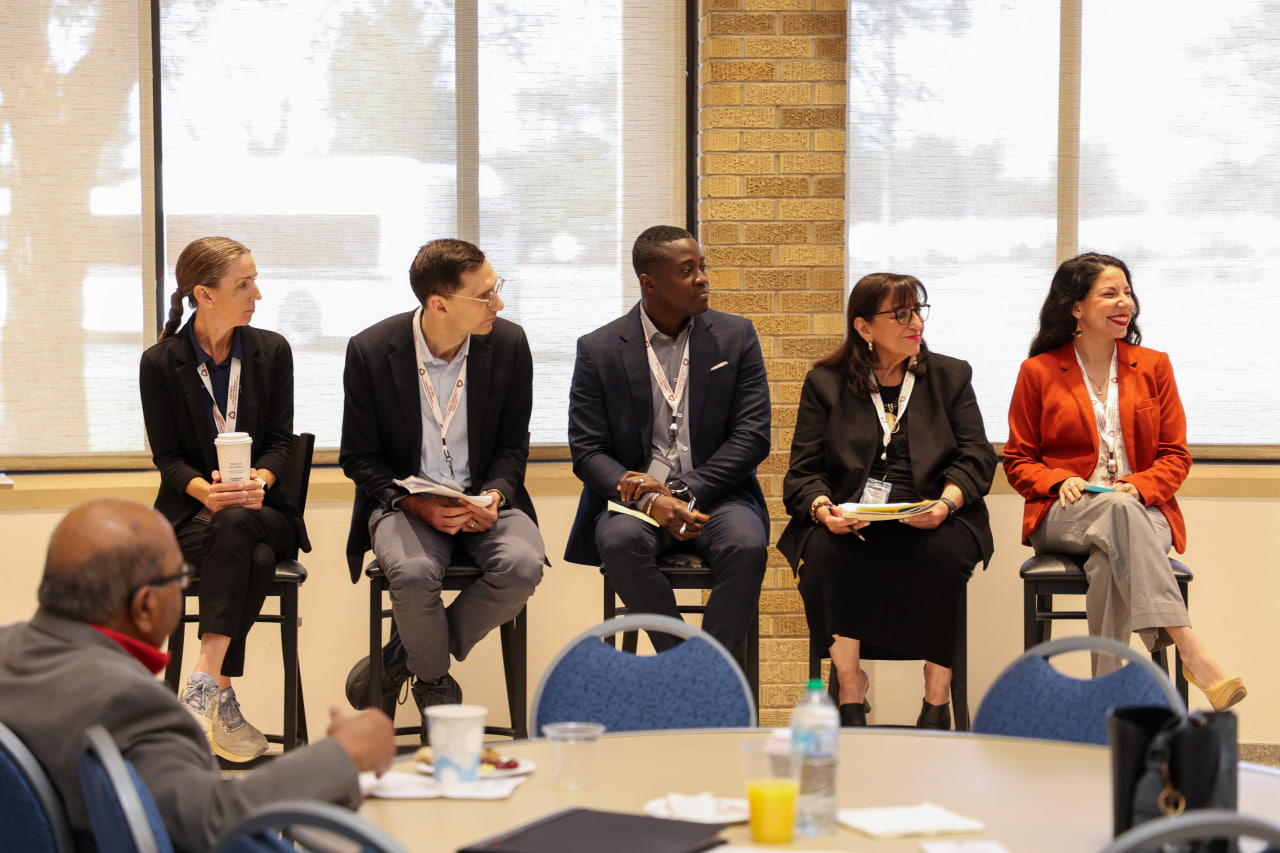
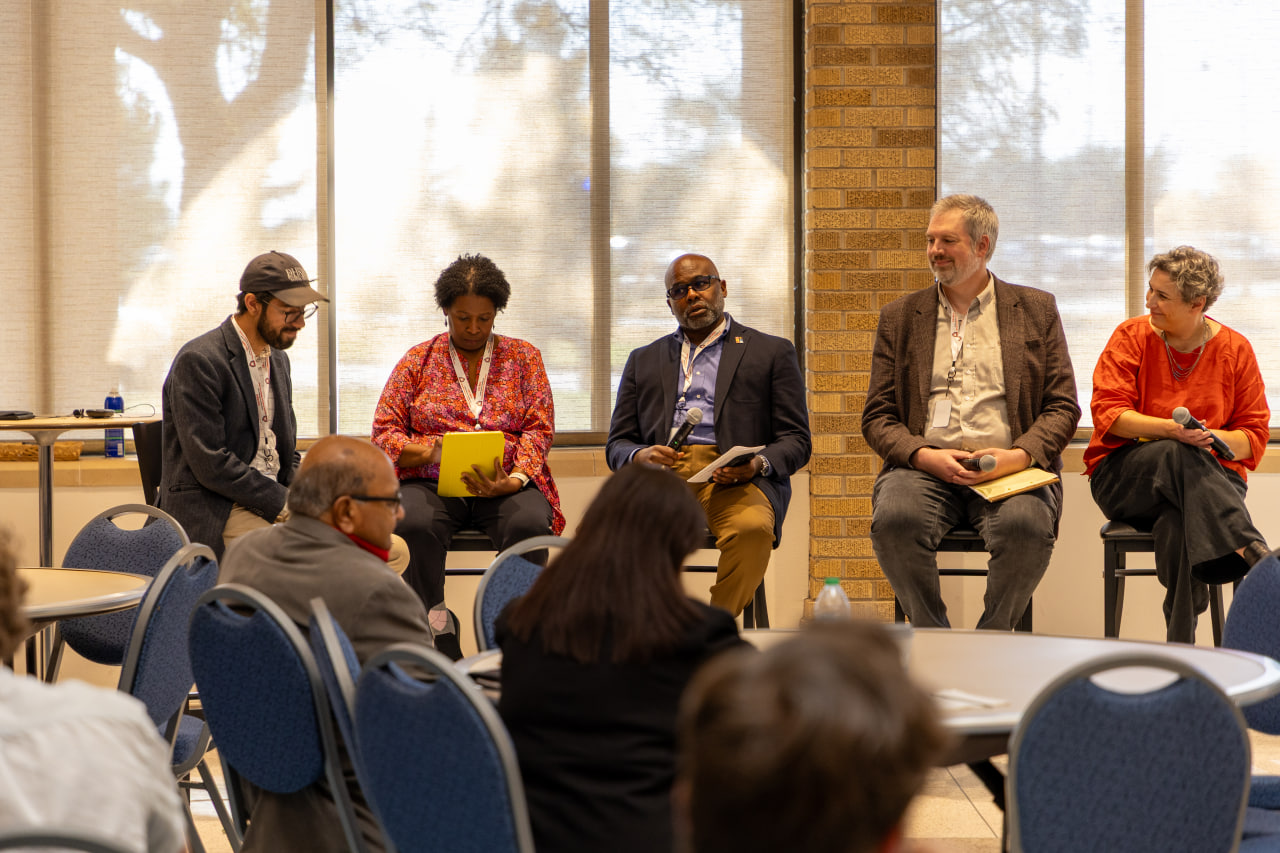
Across four panel discussions and two expert presentations, summit conversations focused on: the vulnerability of manufactured housing; practical standards for temporary and emergency housing; policy and funding barriers that slow equitable recovery; the need for local technical capacity; and community-led approaches to rebuilding that turn research into accessible tools for action. Speakers highlighted how gaps in CDBG-DR implementation, zoning and land-use rules, rental protections, and infrastructure investment shape who recovers—and who is left behind.
Moderators and panelists included Rodrigo Costa, Julia Orduña, Kayode Atoba, Patrick Roberts, Katie Simmons, Grace Salinas, Ivis Garcia, Amin Sobhani, Luciana Alves de Oliveira, Riccardo Merizzi, Gemma Cremen, Erin O’Connell, Noah Patton, John Cooper, Adam Pirtle, Maddie Sloan, and Arica Young. Their perspectives spanned disaster law and policy, housing advocacy, community development, infrastructure planning, and hazard modeling, underscoring the transdisciplinary nature of CECREH’s work.
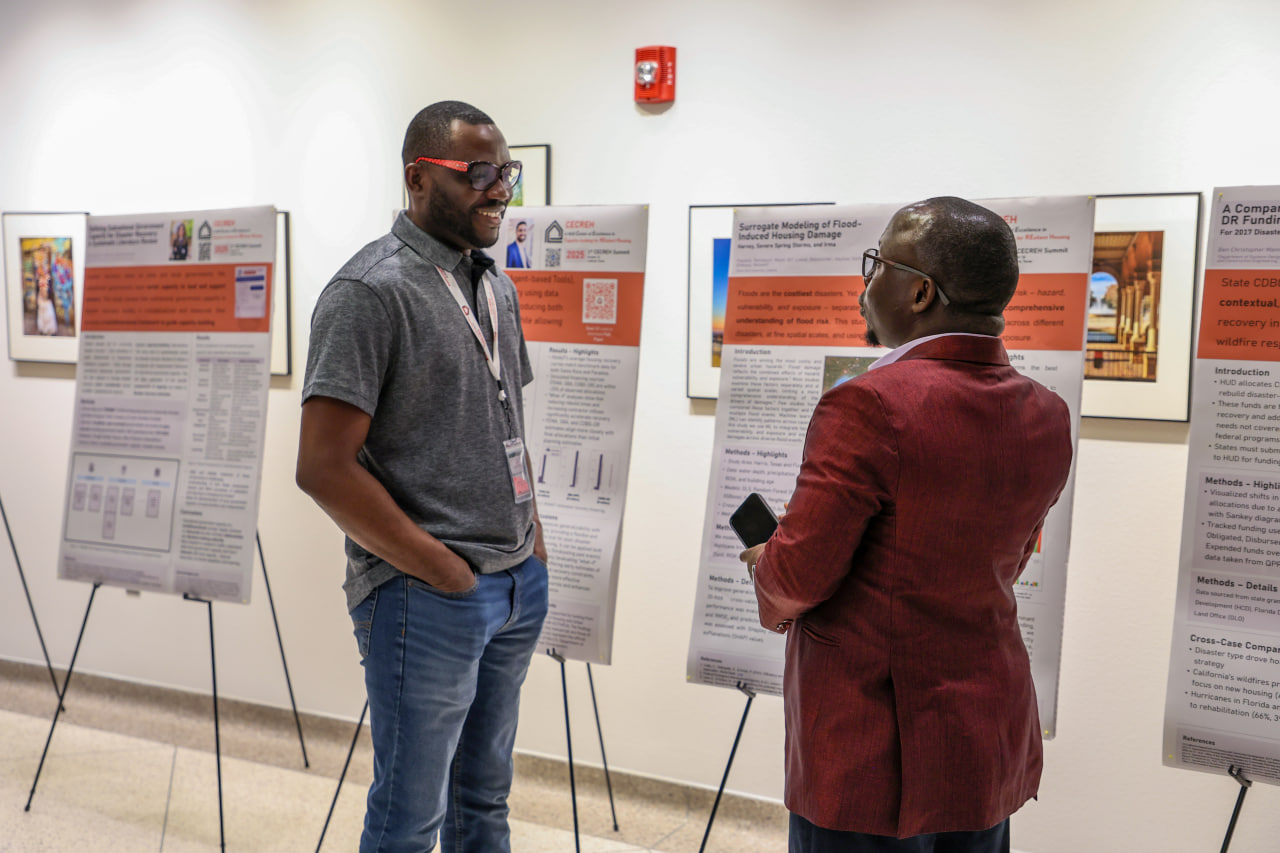
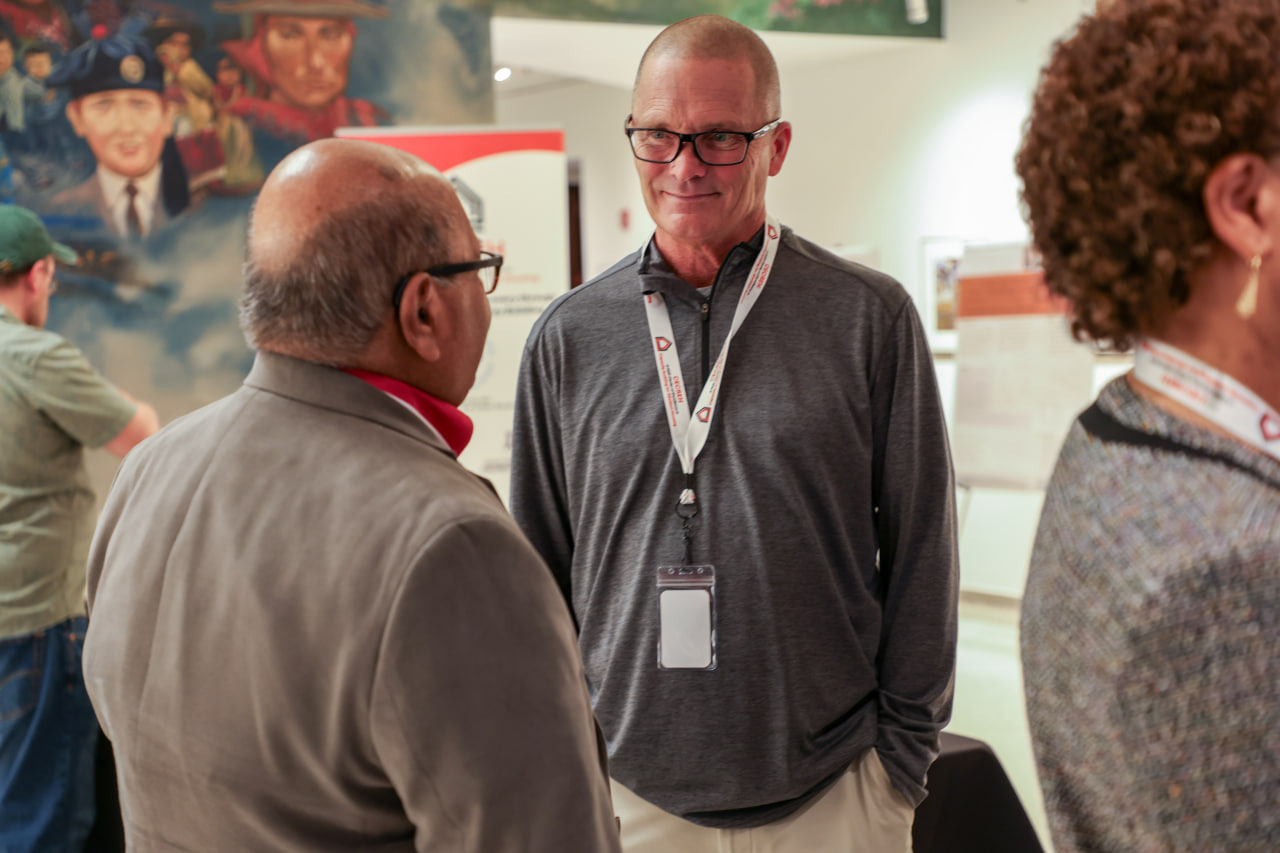
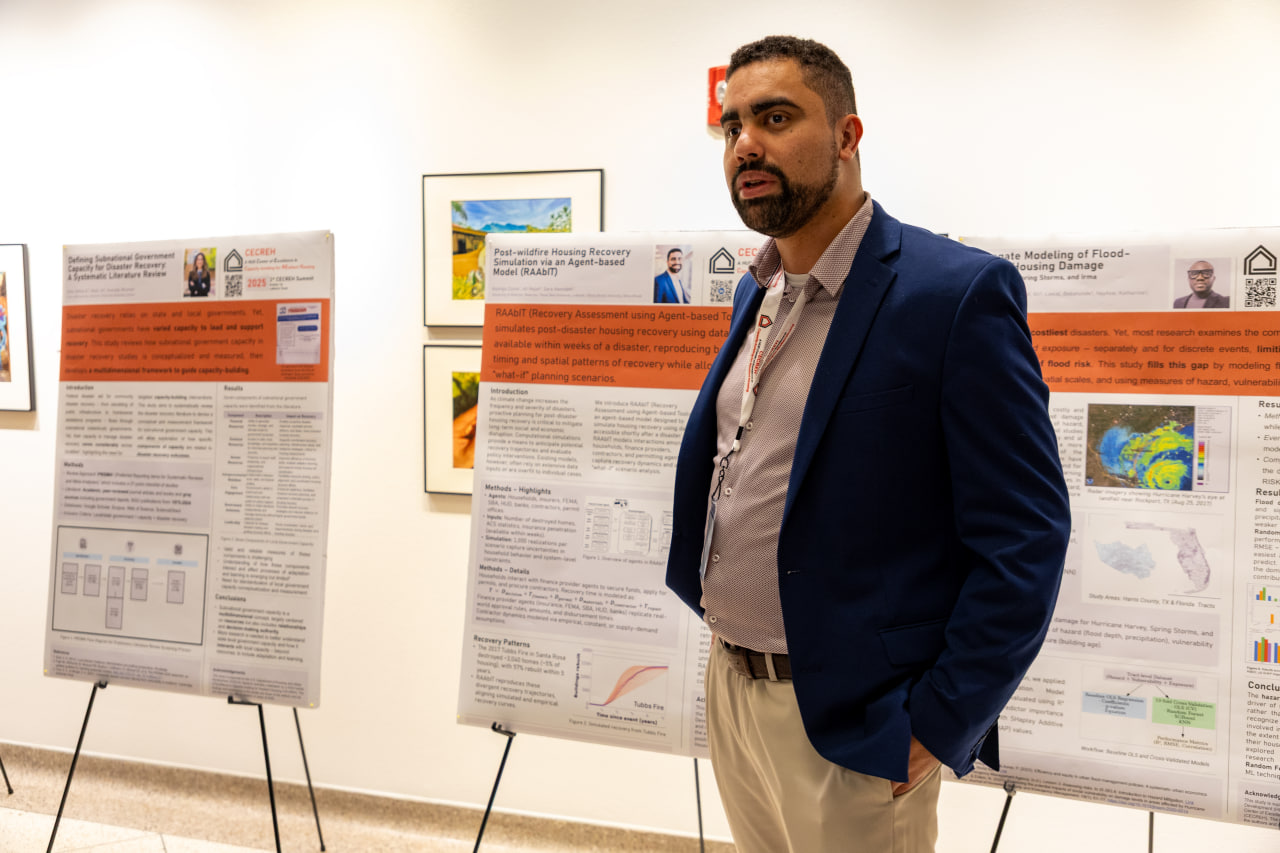
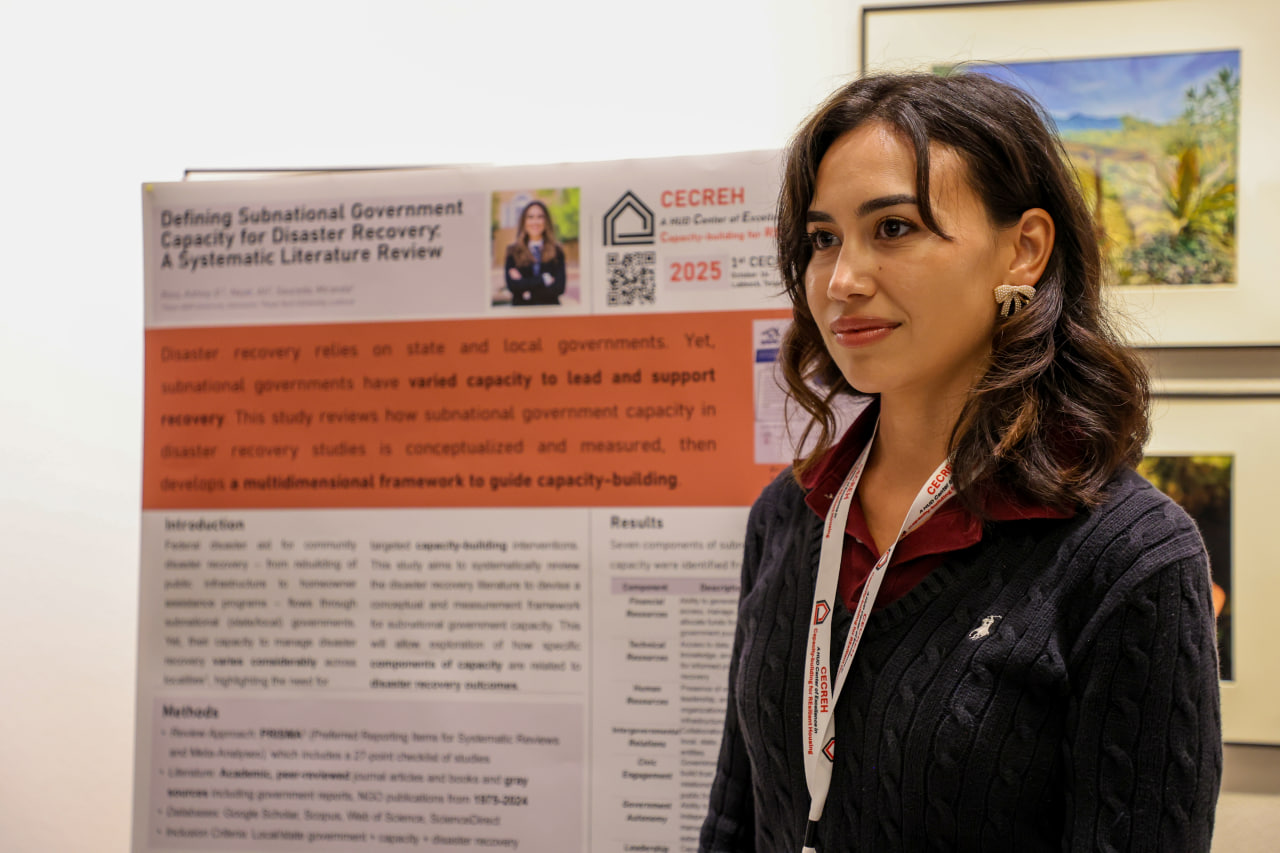
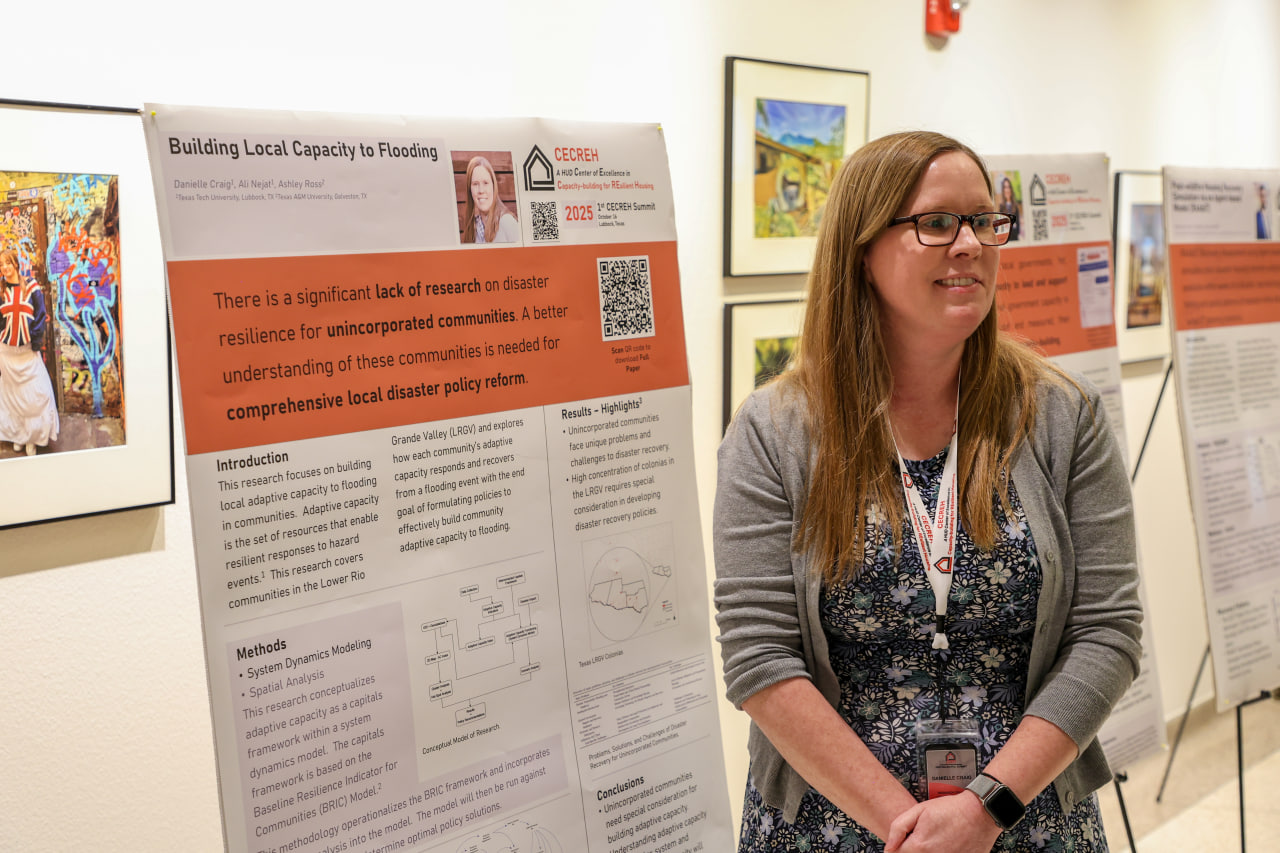
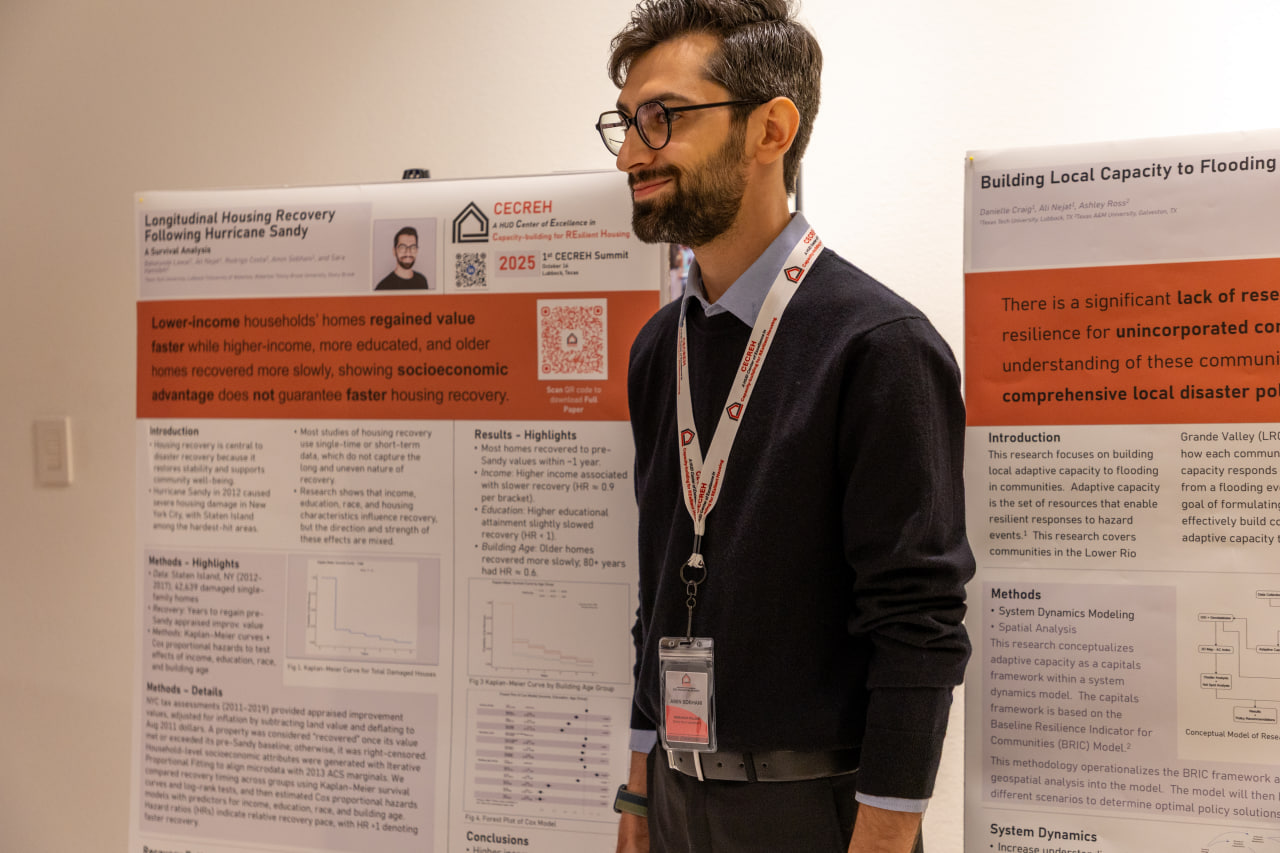
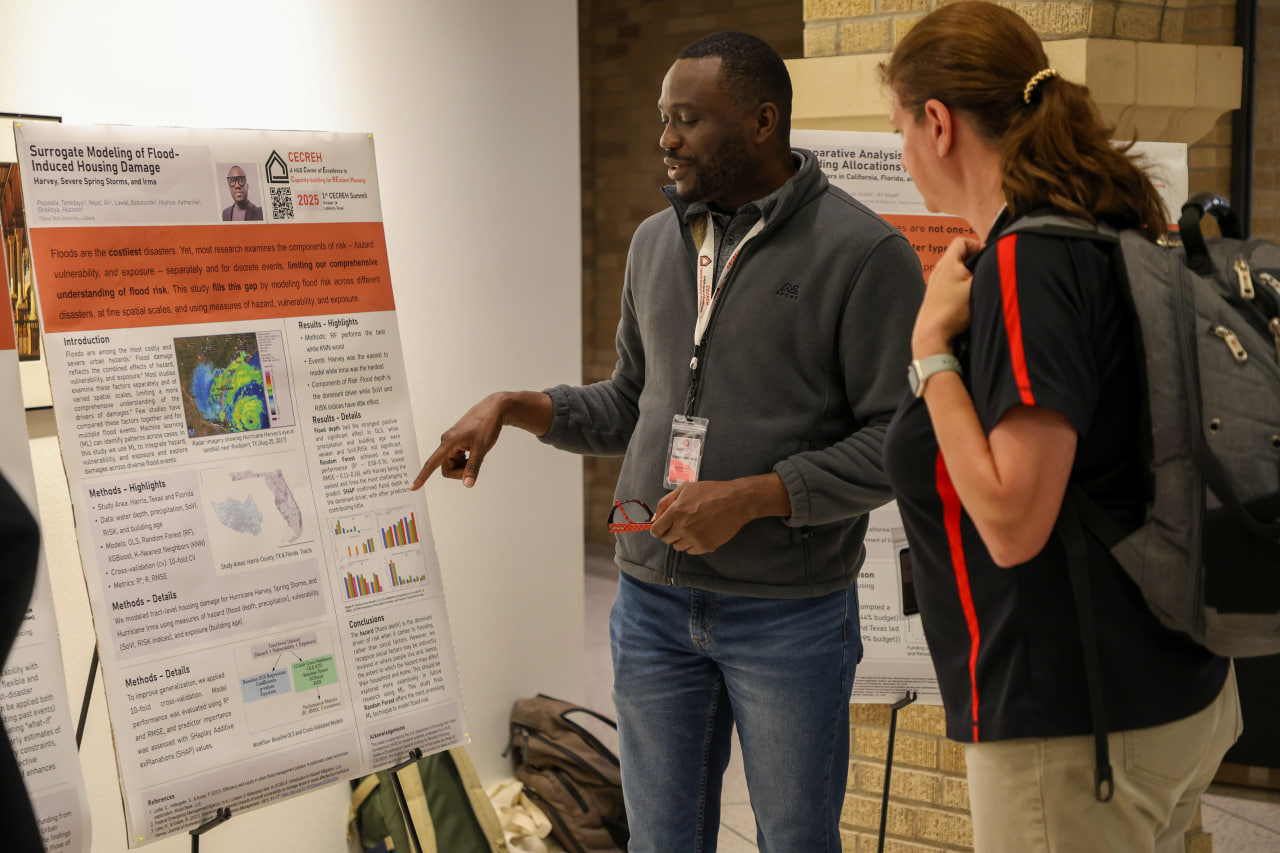
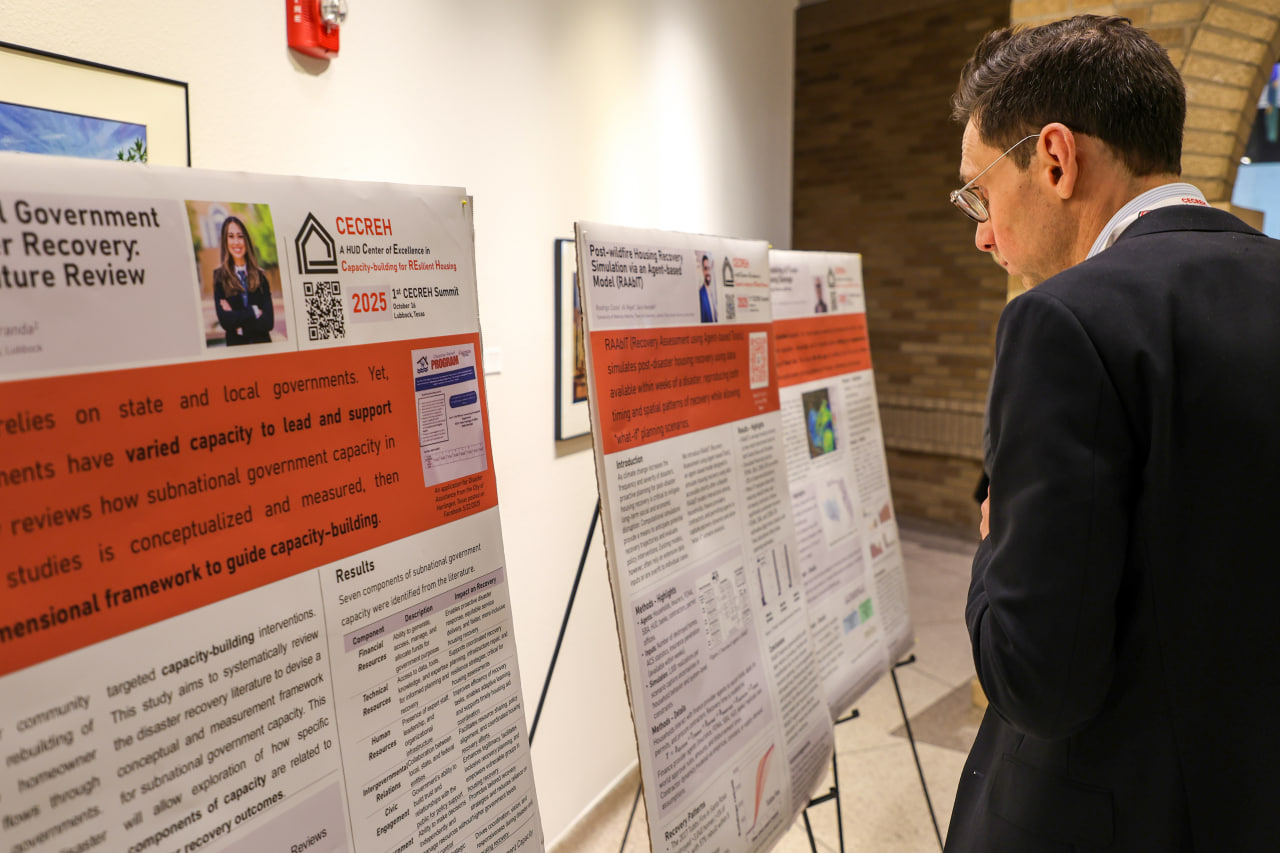
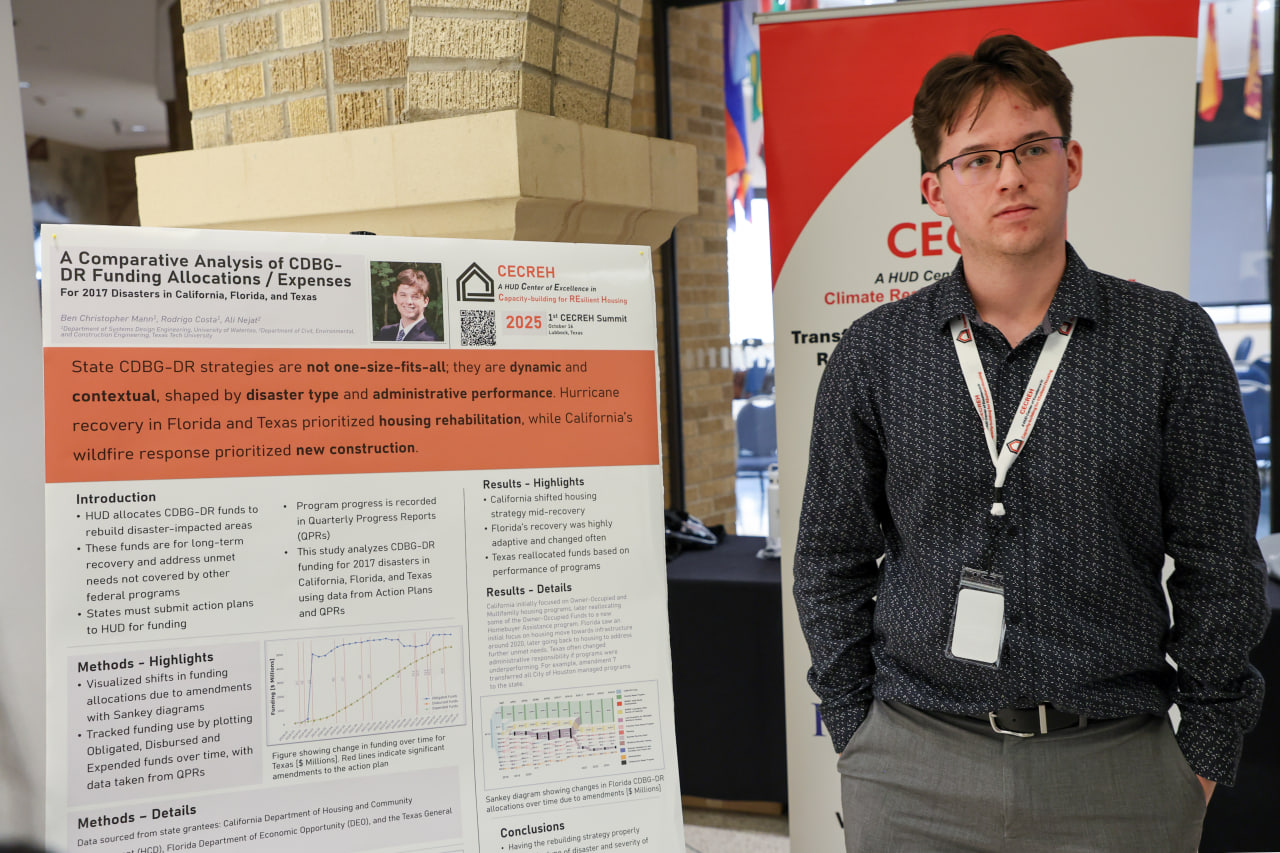
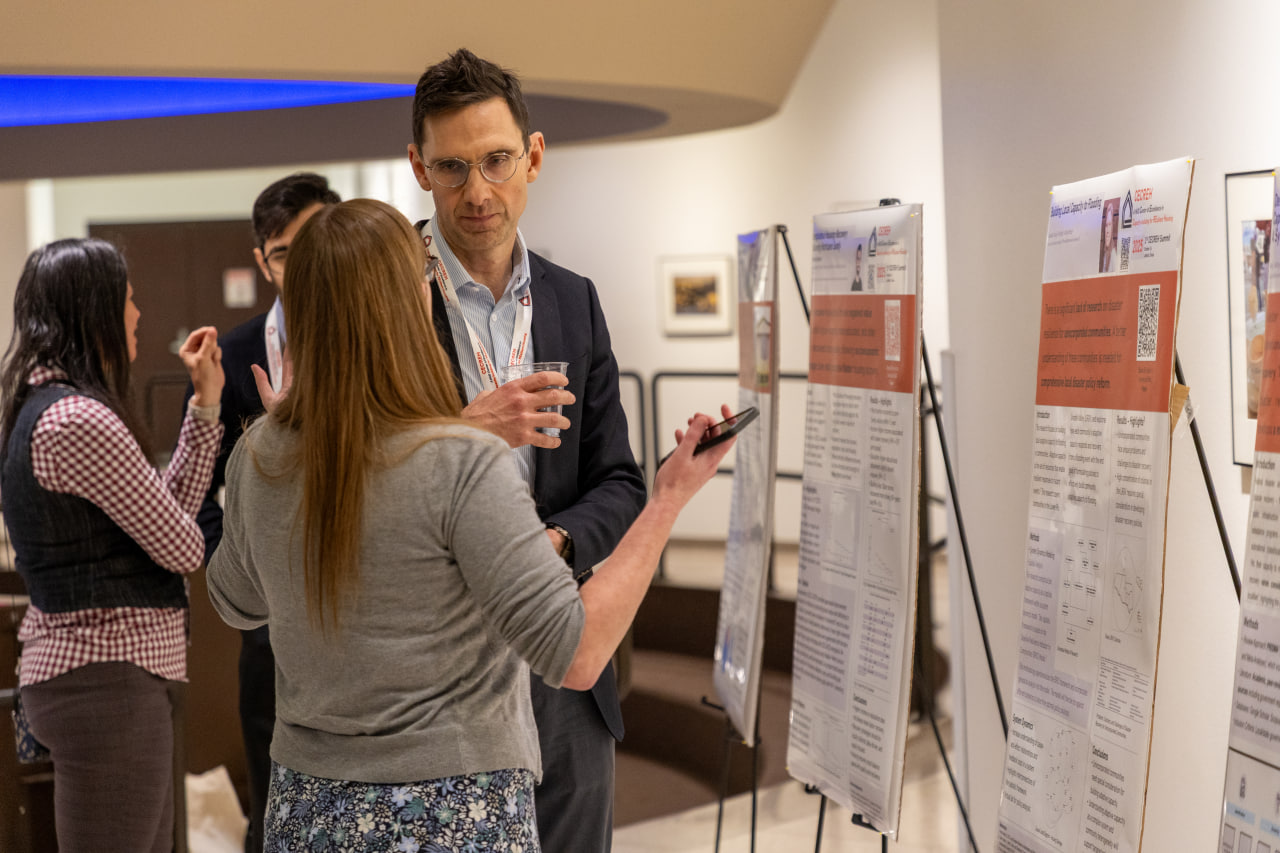
A highlight of the summit was the research poster session, where faculty, research fellows, and graduate students presented work on housing recovery, community capacity, equity and social vulnerability, climate and flood risk, and HUD and CDBG-DR programs. Posters demonstrated how methods such as survival analysis, agent-based modeling, machine learning, and systematic reviews can be translated into practical tools for decision-makers and communities.
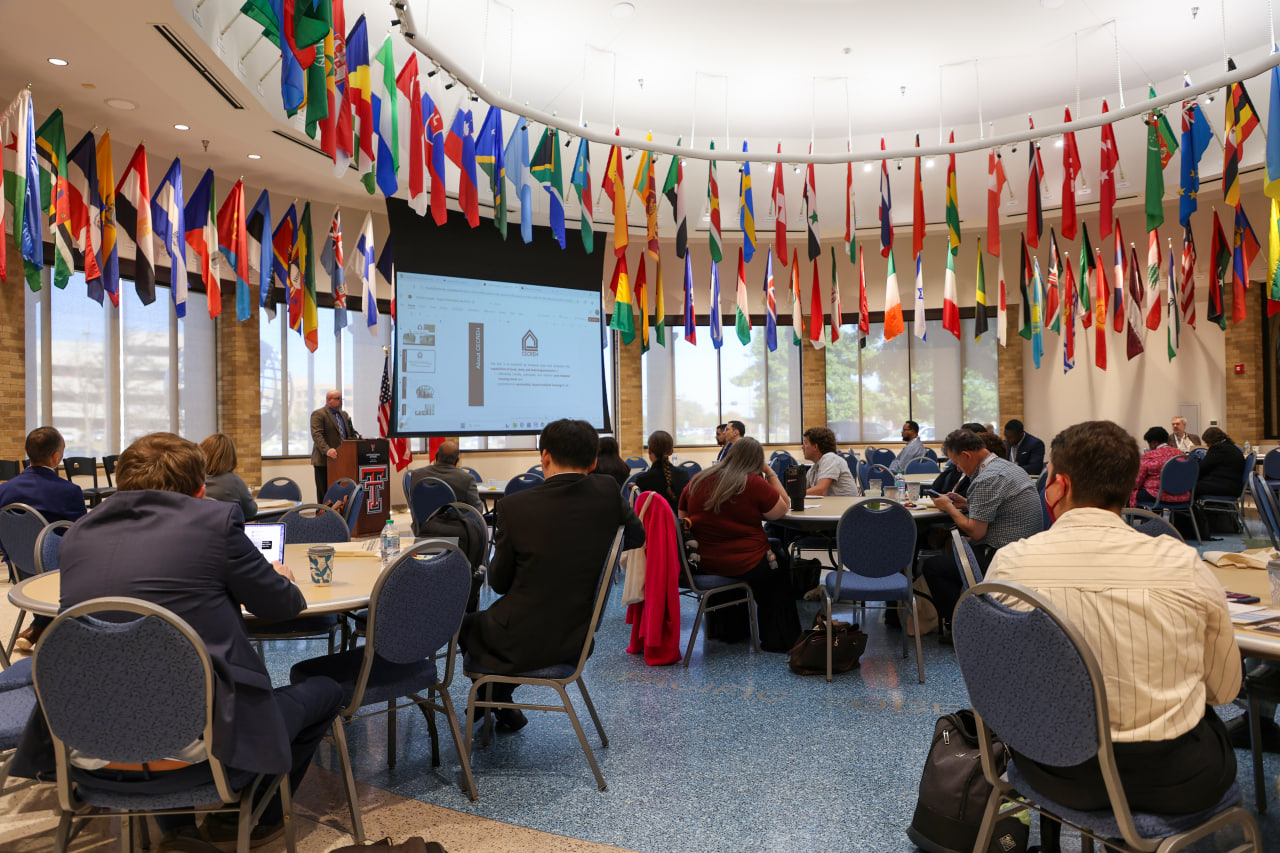
Throughout the summit, conversations repeatedly returned to the importance of community-centered recovery, self-reliant strategies, and removing policy and funding barriers that delay reconstruction. Speakers emphasized the vulnerability of manufactured housing, the need for resilient temporary housing, and the importance of building local capacity through partnerships with universities and training hubs. A shared theme across sessions was that research should act as advocacy—making data and tools accessible so that communities can use evidence to guide housing, planning, and recovery decisions.
Speakers and attendees noted that resilience is not something we wait for—it is something we build together through collaboration, transparency, and trust. The summit strengthened connections among CECREH’s partner institutions, advisory panel, research fellows, and community collaborators, and it set clear next steps for continued work on training, practitioner engagement, and co-developed tools.
CECREH extends sincere thanks to all speakers, moderators, poster presenters, and participants whose insights and engagement made the Inaugural Summit a success. We look forward to sharing additional materials and deeper dives into summit sessions in the months ahead.