
Texas Tech University
Research Projects

Research for resilient housing recovery.

CECREH’s research portfolio focuses on climate risk, local capacity, equitable recovery needs, and policy pathways that strengthen housing systems before and after disasters.

CECREH Focus Areas
Integrated research areasClimate risk, capacity building, and resilient policy development connected through applied housing recovery research.
Focus areas

Explore our key research areas.

Our work connects risk modeling, unmet needs estimation, and policy design to support equitable and resilient housing recovery.

Area 01

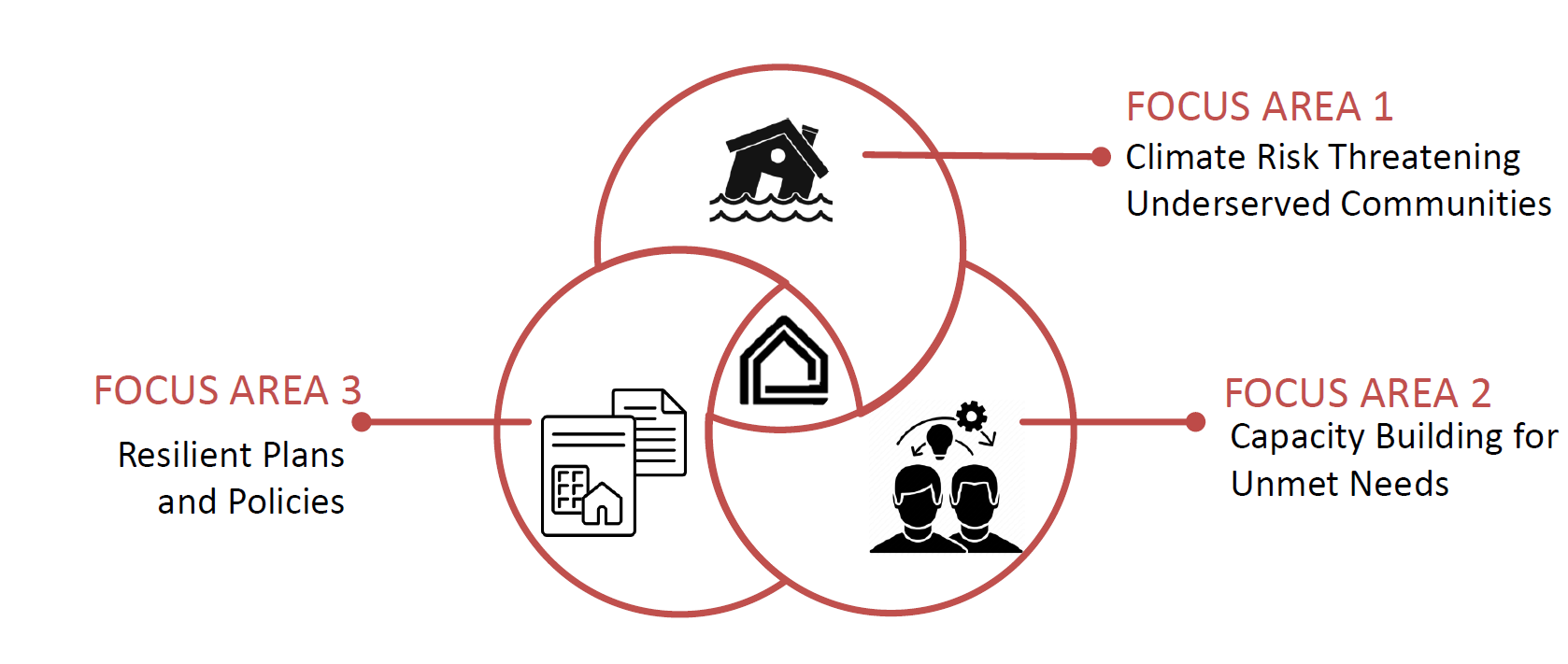
Climate Risk Threatening Underserved Communities

We assess past and future climate threats impacting underserved communities.

  • Model historic climate risk to analyze past vulnerabilities.
  • Model future climate risk to predict upcoming challenges.
  • Identify underserved future needs to guide policy and planning.
Area 02

Capacity Building for Unmet Needs

We refine methods for estimating post-disaster housing recovery needs.

  • Identify benchmarks of recovery needs for improved assessment tools.
  • Define local government capacity for equitable housing recovery.
  • Identify key factors that influence housing recovery outcomes.
Area 03

Resilient Plans and Policies

We develop strategic models and policies to enhance resilience in affordable housing.

  • Analyze how local government capacity affects equitable housing recovery.
  • Enhance CDBG-DR action plans through future climate risk simulations.
  • Assess resilience-cost tradeoffs for affordable manufactured housing.

From risk to recovery strategy.

Each focus area contributes to a shared goal: developing research-informed tools, evidence, and policy guidance that help communities prepare for, respond to, and recover from disaster impacts more equitably.

Stay connected

Follow the work as it happens.

Keep up with CECREH research stories, event highlights, and community partnerships across our social platforms.