
Public Speaker Series
2026-27 2025-26 2024-25
2023-24 2022-23 2021-22
2020-21 2019-20
2025-26
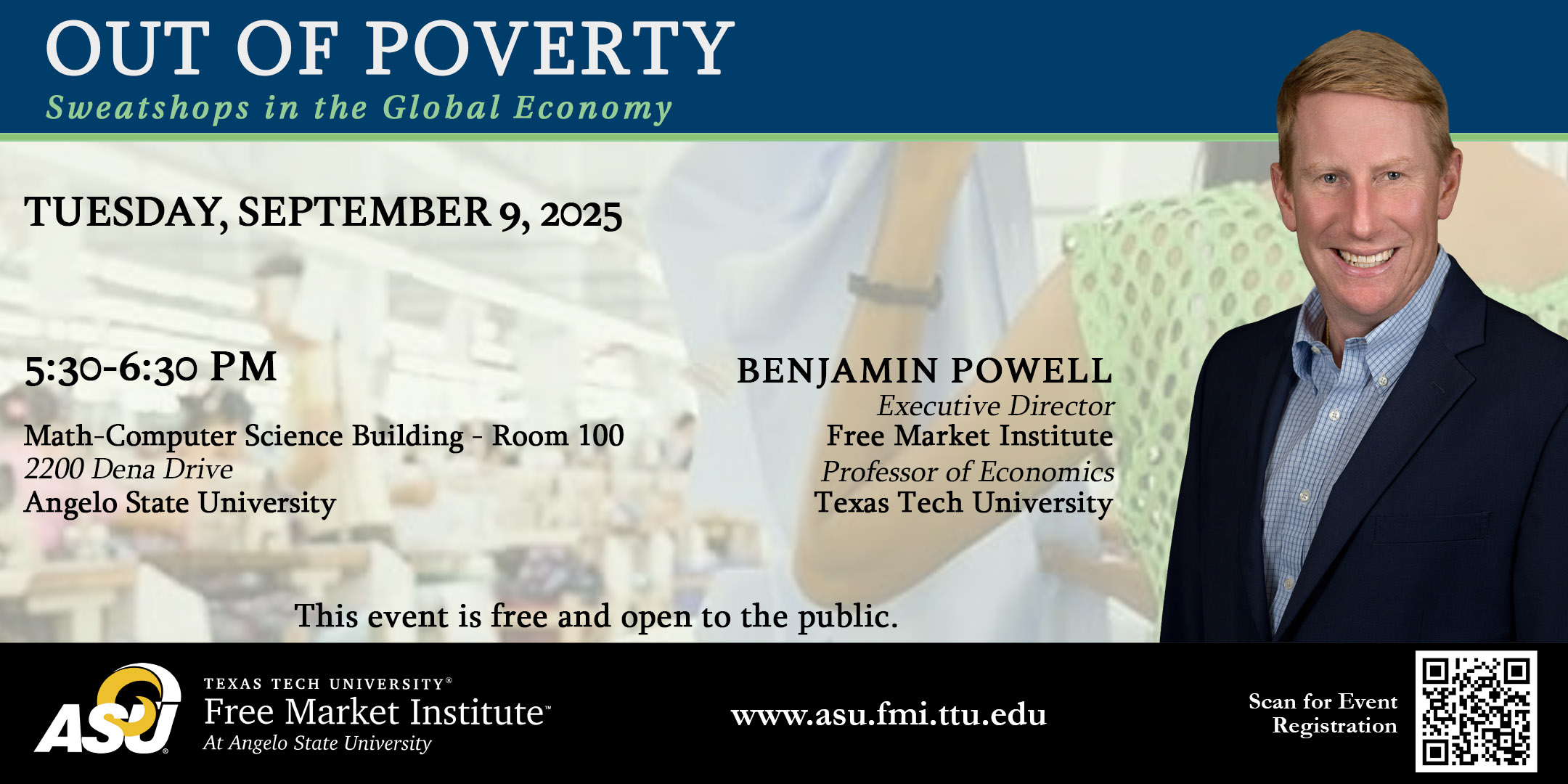
Out of Poverty: Sweatshops in the Global Economy
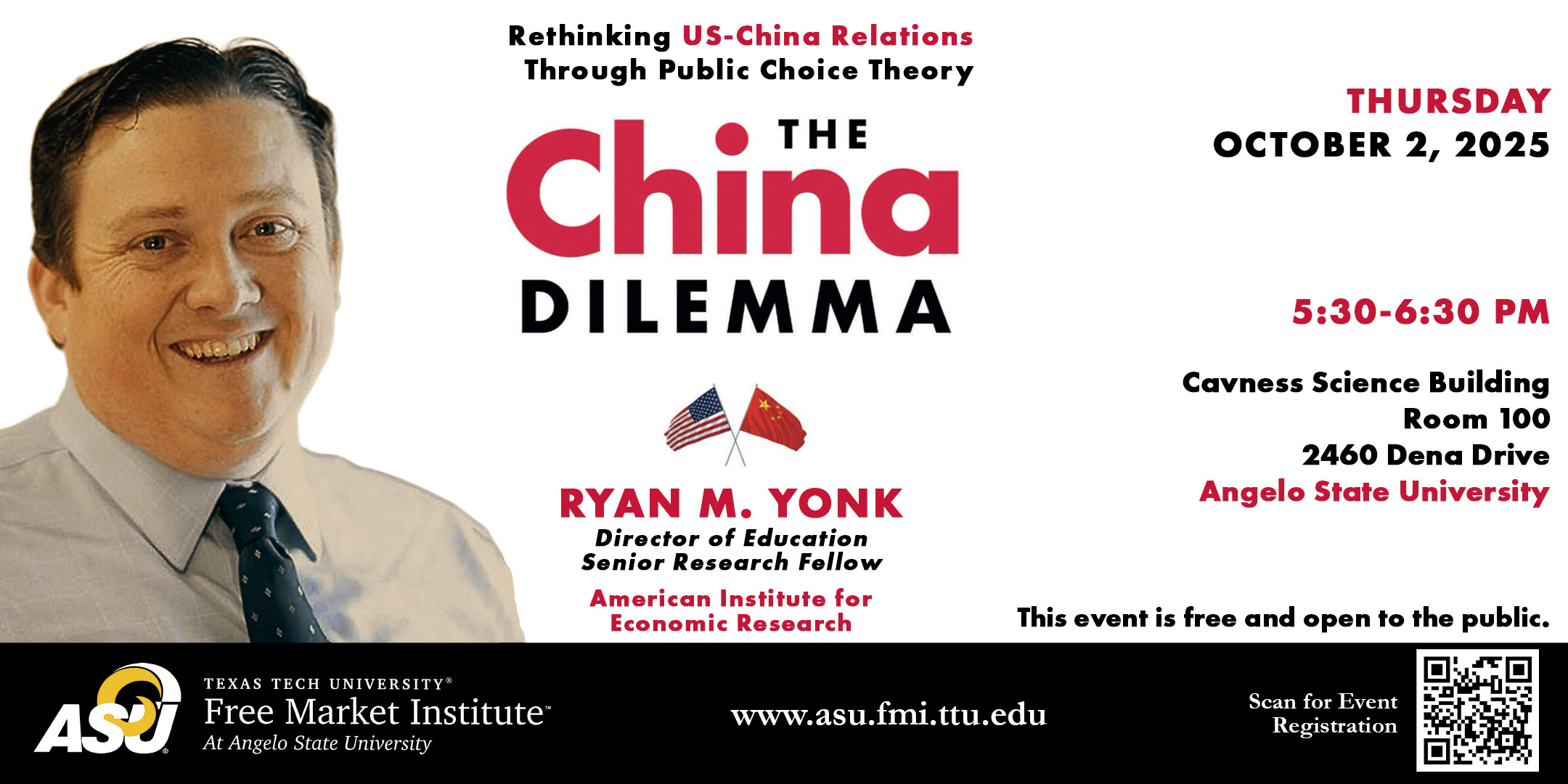
The China Dilemma: Rethinking US-China Relations Through Public Choice Theory
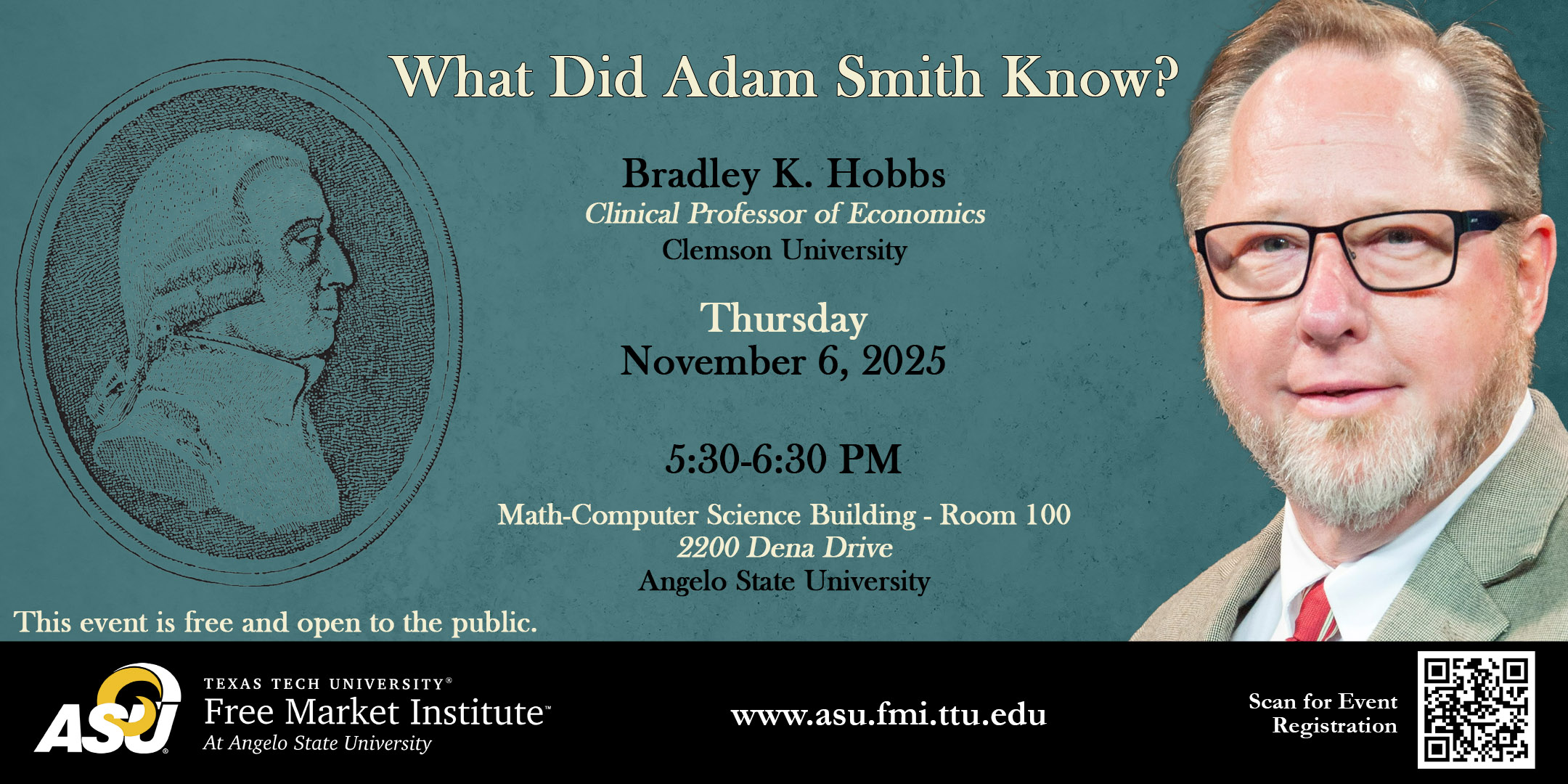
What Did Adam Smith Know?
Tipping Points: Why Gratuities are Good for Economies
The Triumph of Economic Freedom: Debunking the Seven Great Myths of American Capitalism
Out of Poverty: Sweatshops in the Global Economy
September 9, 2025
Benjamin Powell, Texas Tech University
About the Program
Dr. Benjamin Powell provides a defense of Third World sweatshops that does not put economic efficiency over people but instead explores methods of improving the welfare of those in Third World countries. He explains how sweatshops provide the best opportunity for workers; and how they play an important role in development, leading to better wages and working conditions. Using economic theory, empirical evidence, and historical investigation, He argues that the anti-sweatshop movement would harm the very workers it intends to help by creating less-desirable alternatives and undermining development.
The China Dilemma: Rethinking US-China Relations Through Public Choice Theory
October 2, 2025
Ryan Yonk, American Institute for Economic Research
About the Program
Based on his book, The China Dilemma: Rethinking US-China Relations Through Public Choice Theory (American Institute for Economic Research, 2023), Dr. Ryan Yonk offers a public choice analyisis to set the table for a more sober and complete conversation regarding the economic relationship between the United States and China.
What Did Adam Smith Know?
November 6, 2025
Bradley K. Hobbs, Clemson University
About the Program
Prof. Bradley Hobbs discussed Adam Smith's foundational contributions to the modern world through major themes in his books The Theory of Moral Sentiments (1759) and An Inquiry into the Natures and Causes of the Wealth of Nations (1776).
Tipping Points: Why Gratuities are Good for Economies
March 26, 2026
Anthony Gill, University of Washington

About the Program
Dr. Anthony Gill discusses the practice of providing gratuities (i.e., tips) to service employees and how it has come under a great deal of scrutiny and criticism in the past two decades. He offers three reasons why tipping is actually a beneficial social norm in many economic environments.
The Triumph of Economic Freedom: Debunking the Seven Great Myths of American Capitalism
May 5, 2026
Phil Gramm, Former U.S. Senator and U.S. Congressman

About the Program
Sen. Phil Gramm examines the seven events and issues in American history that define, for most Americans, the role of government and how the 21st century world works. To many Americans, these five periods of American history, which include the Industrial Revolution, Progressive Era, Great Depression, decline of America's postwar preeminence in world trade, and the Great Recession, along with the existing levels of income inequality and poverty, represent strong evidence for expanding government in American life. Sen. Gramm argues that the evidence points to a contrary verdict: government interference and failed policies pose the most significant threat to economic freedom.

Free Market Institute
-
Address
Texas Tech University - Box 45059 - Lubbock, TX - 79409-5059 -
Phone
806.742.7138 -
Email
free.market@ttu.edu