
I. Diagnostic acoustics & ultrasoud
Ultrasonic surface acoustic wave elastography
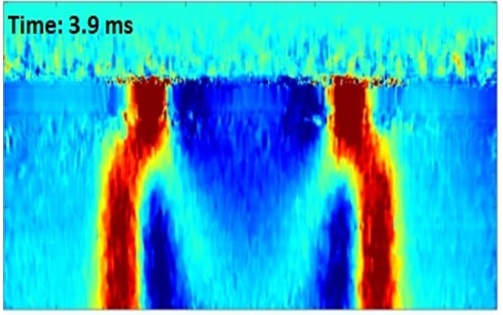
This work is developing a new elastography method based on acoustic surface wave and ultra-fast ultrasound imaging for imaging superficial tissues at a tissue boundary. It has great potential in screening diseases such as skin cancer in a safe and reliable manner.
Ultrasonic guided acoustic wave elastography
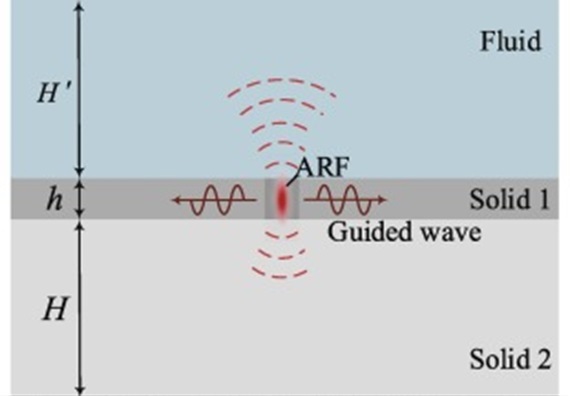
This work is developing an elastography method based on acoustic guided wave and ultra-fast ultrasound imaging for imaging layered tissues at a tissue boundary. The targeted applications including imaging and evaluating tissue elasticity of plate-like tissue such as diaphram, heart tissues, and deep layers of skin and some flat muscles.
II. THERAPEUTIC ACOUSTICS & ULTRASOUND
Focused ultrasound induced cancer immunotherapy
Apply focused ultrasound based cancer treatment methods to enchance the effectiveness of conventional cancer immunotherapy.
Transcranial focused ultrasound neuromodulation for neuro disorders
Utilize focused ultrasound to reshape neuro networks that are responsbibe for different disorders to treat the disorder-generated diseases.
Low-intensity ultrasound for selective cancer ablation
Understand the physical mechanism of ultrasoud-induced selective damage of cancer cells and develop a side effects free biomechanical strategy for cancer treatment.
III. Medical acoustic & ultrasonic device
Design optimization of 3D therapeutic ultrasound array transducers
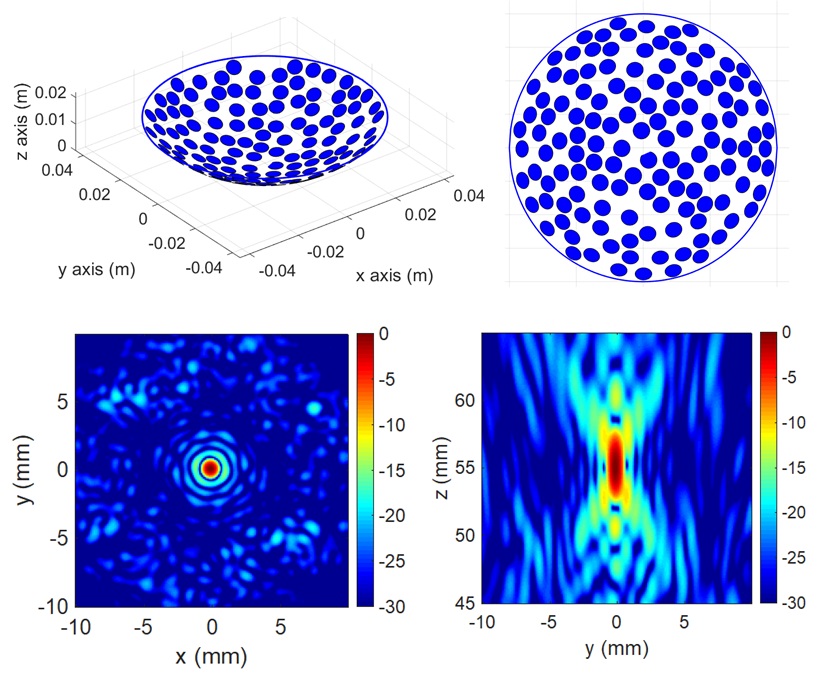
This research employs optimization methods, including different types of machnie learning techniques, in the design of therapeutic utlrasound transducers aiming at improving their performance not only to facilitate the conventional application, such as cancer treatment, of focused utlrasoud, but also expand its applicaiton to delicate cases such as neuromodulation and neurosurgery.
Biomedical Acoustics Research Lab
-
Address
Texas Tech University, Box 41021 | Lubbock, TX 79409 -
Phone
806.742.3563 -
Email
webmaster.coe@ttu.edu