
Testing the Influence of Broadcast Supplemental Feed Availability on Fall and Winter Movements and Stress of Bobwhites in Texas
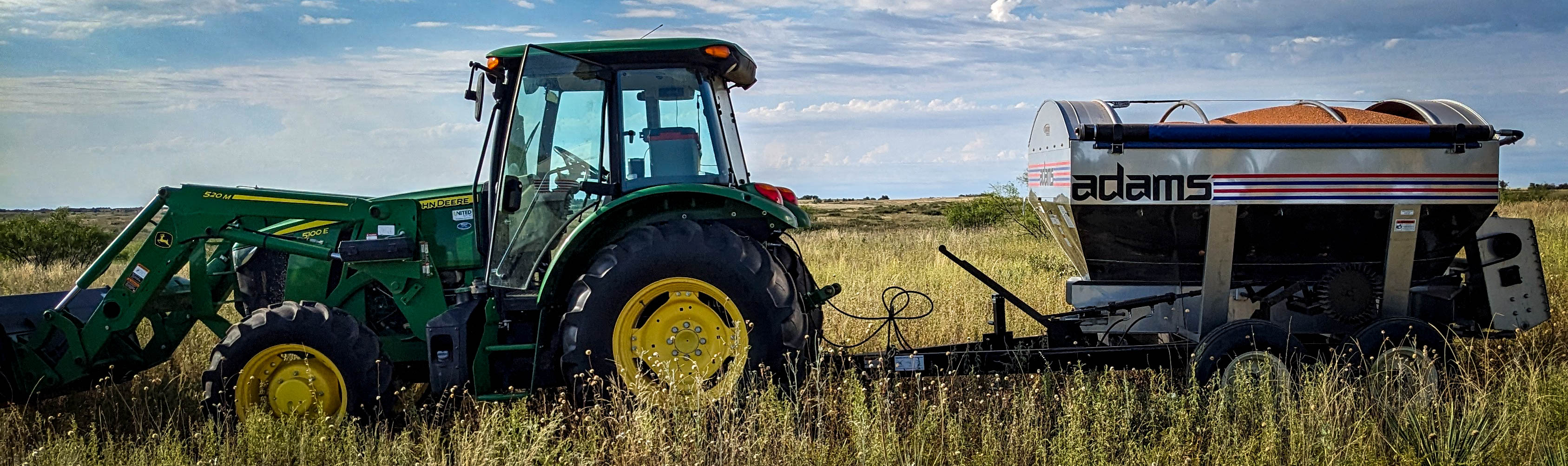
Texas Tech™ Quail (TTQ) has been testing the benefits of broadcasting supplemental feed in Texas with experiments (feed vs no feed) that evaluate the influence of supplemental feed on wild bobwhites in the field on a large scale since 2010. Evidence concerning the survival and reproductive benefits of broadcasting supplemental feed into the habitat for bobwhites in Texas is substantial. However, the mechanisms of how these factors improve bobwhite survival during winter and increase reproductive output are unclear. Most studies concerning these mechanisms have been conducted in the subtropical climates of Florida and Georgia. These studies revealed that reducing daily movement and exposure to predation were the likely dominant factors influencing survival. Florida and Georgia do not have high winter energy demands or the drought induced energy (food) limitations of the semi-arid and cold climate of the Rolling Plains of Texas. It is likely that energy has a greater influence on the benefits of supplemental feeding in this region than subtropical climates. Understanding the mechanisms of how broadcasting supplemental feed influences bobwhite demographics is key to more reliably providing the most beneficial supplemental feed in the most efficient and effective manner.
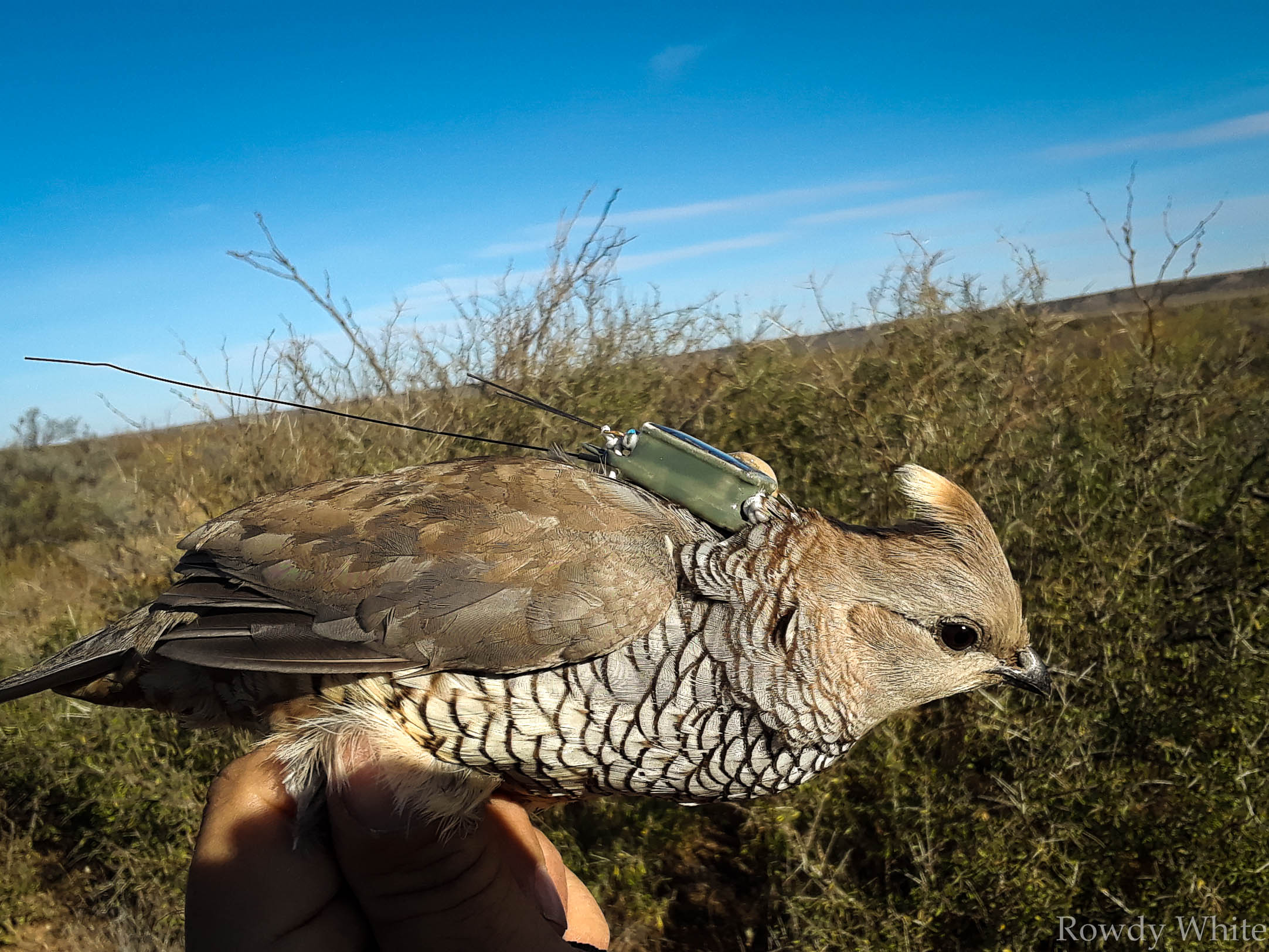
We can advance our knowledge of these mechanisms by monitoring the relationships between bird movement, stress response, environmental conditions, and food availability. Factors that increase bird stress signal negative consequences before mortality occurs. For instance, bobwhite encounters with hunters can cause movements away from broadcast supplemental feed lines and increased stress in Florida. Hunter encounters can also be viewed as simulations of predator encounters. The increased stress response is associated with eventual lower survival and reproductive success. Undoubtedly similar responses occur in Texas where the additional stressors of extreme thermal conditions and drought induced food limitation are also present, but no such data are available. GPS radiotransmitter technology used by TTQ will allow us to closely monitor covey movement daily without presence of the biologist and provide a large sample size for analysis.
Analyzing bobwhite movement and stress response may not only allow us to improve the way we provide feed but also may improve our knowledge of what needs to be fed. Providing supplemental feed during winter has primarily been viewed as a period when the main input need is energy. Sorghum has filled this role nicely as it is readily eaten by bobwhites and is a high energy food. However, if environmental and predatory interactions elicit stress responses in bobwhites that lead to negative demographic consequences it may be possible to mitigate this stress response with nutrient pellets that are offered in combination with sorghum. TTQ has successfully demonstrated that bobwhites will eat moisture resistant protein-rich pellets broadcast with sorghum. Several vitamins, trace minerals, and nutraceuticals can mitigate the negative effects of the stress response on bird physiology and could be supplied with sorghum to bobwhites during particularly stressful times of the year. Given the evidence that environmental and predatory interactions can elicit stress responses that negatively influence bobwhite demographics in sub-tropical regions, these potential stress responses need to be investigated in the semi-arid cold climate of the Rolling Plains of Texas.
Our objectives are to measure the influence of broadcast feed availability and environmental
conditions on bobwhite movements and stress response during fall and winter in the
Rolling Plains of Texas.
Field Testing the Use and Benefits of a Nutritionally Complete Feed Pellet Designed for Broadcasting to Wild Northern Bobwhite Chicks
Though we have shown that broadcasting supplemental feed allows hens to still lay eggs during severe drought, bobwhite populations still decline, because sorghum, the supplemental feed that we used, does not provide sufficient protein for chick growth and subsequent survival. Sorghum averages 10% protein while bobwhite chicks require 28% crude protein for the rapid body and feather growth they require to reach relative adult body size in 15 weeks. Bobwhite chicks in the wild meet their high protein demand by consuming insects which average 40% crude protein. Insect population growth is suppressed during a drought, making them unavailable for chick consumption. Chicks have a 3-day supply of energy and protein that they receive from the yolk. Bobwhite chicks that receive inadequate sources of protein die within 3 weeks of hatch. Our data indicate that during the drought of 2011, chick body growth lagged, reaching only 11 grams at 12 days-of-age. In contrast, chick body growth reached 17 grams in 12 days during the 2012 breeding season. This difference in body growth resulted in very low chick survival during 2011 and the loss of an entire cohort of birds entering the bobwhite population.
Our supplemental feeding technique has the ability to overcome the adult survival problem as well as keep hens in laying condition, but supplying chicks with adequate protein during drought is still an unsolved problem. We can probably never be as good as a year of adequate rainfall, but the ability to provide chicks with dietary protein sufficient for body growth would increase chick survival during drought and further limit the decline of bobwhite populations during drought. Development of a nutritionally complete feed used by wild bobwhite chicks would help to reduce the magnitude of population decline when dry conditions occur.
Several factors suggest that it is feasible to produce a nutritionally complete feed that would benefit chicks in the wild. We have already created a nutritionally complete feed pellet for bobwhite chicks that is water resistant. The pellets are red, yellow, and green colored to mimic natural food sources in the wild. We have proven that wild strain chicks will eat feed pellets in outdoor habitat pen studies in Florida (unpublished data). This evidence indicates that chicks in the wild will also be capable of recognizing feed pellets as a food source because chick feeding behavior is an instinctual trait and not learned behavior from parents. The parents of precocial gamebird chicks, such as bobwhites, guide chicks to appropriate feeding sites, but provide little direct input on food selection. Nevertheless, this brood guiding trait is the second factor, which suggests a wild chick feed is feasible. We can take advantage of this guiding trait to have hens bring chicks to sites where feed is available. In fact, we have already accomplished this step. Hens regularly brought their broods to supplemental feed areas during our supplemental feed experiments, a phenomenon that occurred most prominently during the drought of 2011 when other food sources were unavailable. We did not document chick use of supplemental feed in these areas, because they were not the intended target. However, this data shows that hens will bring their chicks to our supplemental feed areas in search of food. Finally, gamebird chicks are attracted to green and yellow food items. GroGel ™ Plus, a green-colored gel that contains moisture and nutrients (Dawes Laboratory, Arlington Heights, IL) is readily used by newly hatched Galliform chicks including bobwhites. Wild-strain bobwhite chicks in our Florida study generally preferred yellow and red pellets. Further, chicks eating our feed pellets attained the same weight, body size, and growth rate as those fed a commercial game bird feed. Together, this evidence of the bobwhite chick’s instinctual consumption of colored feed pellets and the ability of bobwhite hens to guide chicks to supplemental feed areas in the wild suggests that a supplemental feed for wild chicks is very feasible. We have created the feed pellet and tested it in a controlled setting. The next step is to test chick use of the feed pellets in the wild and to document any growth and survival benefits that it provides.
Our objective is to determine if wild northern bobwhite chicks will use our nutritionally
complete feed pellets in the wild, and to document any growth and survival benefits
that this feed provides.
Testing the Influence of an Integrated Treatment of Broadcast Supplemental Feeding and Predator Reduction on Bobwhite Chick Survival and Population Density in the Rolling Plains of Texas
Tall Timbers Research Station developed a set of management tools to sustain bobwhite populations at relatively high densities. This set of tools, termed predator management, reduces the efficiency and impact of predators on bobwhite populations. Managers in the Southeastern States consider supplemental feeding to be one leg of the three-legged stool of predator management. They define predator management as management efforts to reduce the efficiency and impact of predators on bobwhite populations. Supplemental feeding into the habitat allows bobwhites to more quickly, gather food and get back to dense protective cover, reducing the exposure to predation. Habitat management, another leg of the stool, provides visual obstruction of sufficient height to hide bobwhites and their nests from predators and large enough areas of habitat to prevent predators from being able to quickly search a small area. Predator reduction, the third leg of the stool of predator management, is the reduction of mesomammal predators in response to a predator population that has become abundant relative to the bobwhite population in the same area. The continuous integration of these tools sustains fall bobwhite populations averaging 1.4 birds per acre in the Red Hills Region of Georgia and Florida allowing significant opportunities for hunters.
After viewing this success in a relatively warm and wet area like the Red Hills Region, Texas Tech Quail (TTQ) brought this predator management strategy to the Rolling Plains of Texas and began to test the tools within it. We hypothesized this strategy might be as, or more effective in our area which has colder temperatures and more limited food and cover than the Red Hills Region. The complexity of the research and the logistical demands of large study sites caused us to examine one management tool at a time. Now, after successfully demonstrating the benefits of broadcasting supplemental feed and testing the influence of predator reduction on nest success, it is time to combine these techniques into an integrated predator management system. Combining year-round broadcast feeding and predator reduction into one system will replicate the successful model developed by Tall Timbers. The Rolling Plains of Texas suffers periodic drought that limits food and cover resources. The Tall Timbers Research Station management model should provide the best chance of maintaining huntable populations in the face of periodic drought.
The objectives for this project are to measure the combined effects of broadcasting
supplemental feed and predator reduction on bobwhite chick survival, bobwhite density,
and hunting success. To accomplish this project we will monitor and feed bobwhite
populations year-round, measure predator populations quarterly, and trap predators
prior to and during nesting season.
Estimating the Influence of Predator Abundance, Weather Conditions, and Habitat Characteristics on Bobwhite Chick Survival in the Rolling Plains of Texas
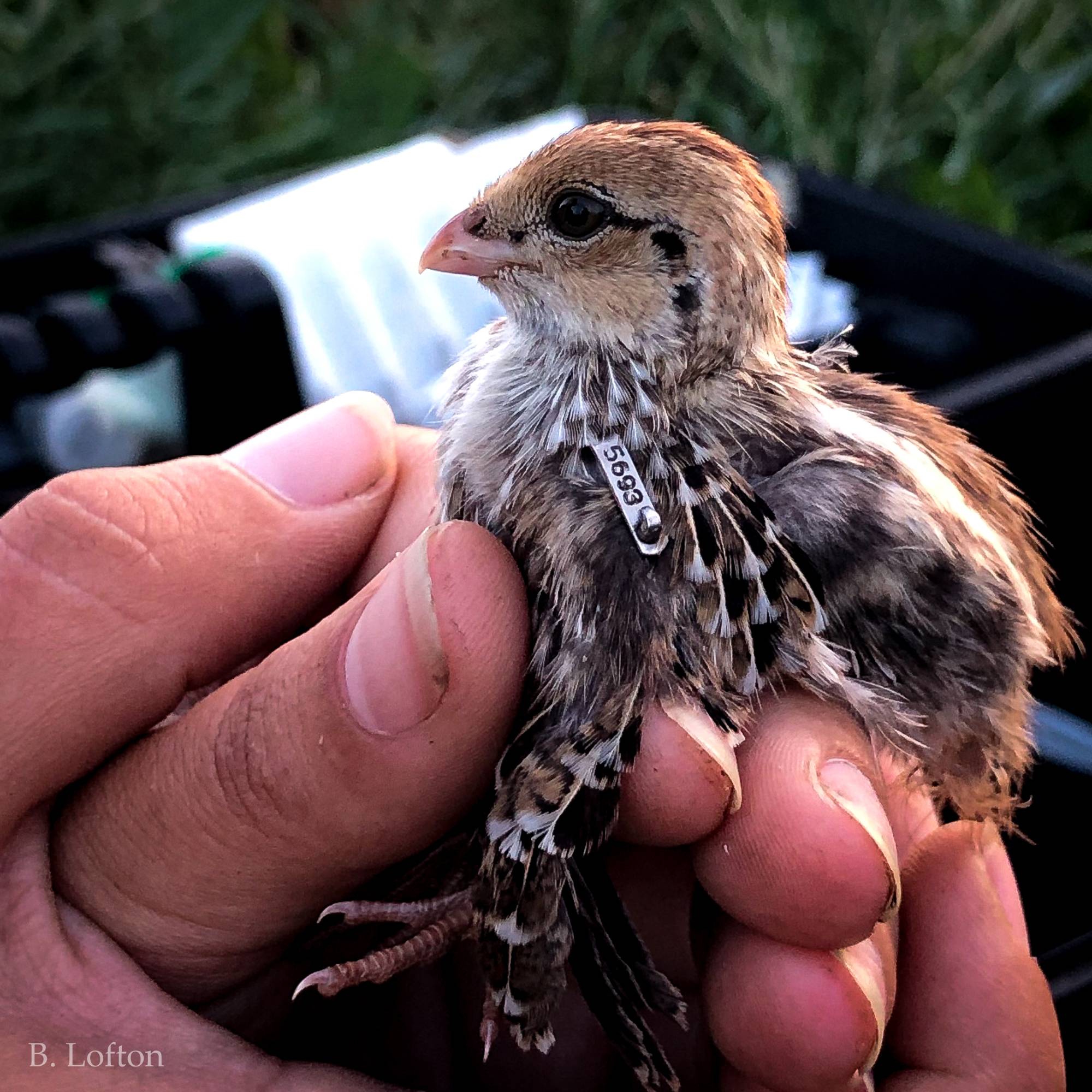
Much more needs to be learned concerning chick survival in the Rolling Plains of Texas. Chick survival represents a knowledge gap in our understanding of bobwhite ecology. Most bobwhite chick mortality during the breeding season is presumed to be primarily caused by predators. However, the validity of this inference is unclear. We have begun to monitor chick mortality over the past few years to gain this information. Individually marking chicks using miniature radiotransmitters allows us to identify specific sources of mortality and estimate chick survival rate. We can then relate chick survival rate to a suite of potential influential factors including predator abundance, weather conditions, and habitat characteristics. Understanding factors that promote chick survival should lead to development of specific management techniques to increase this key demographic parameter.
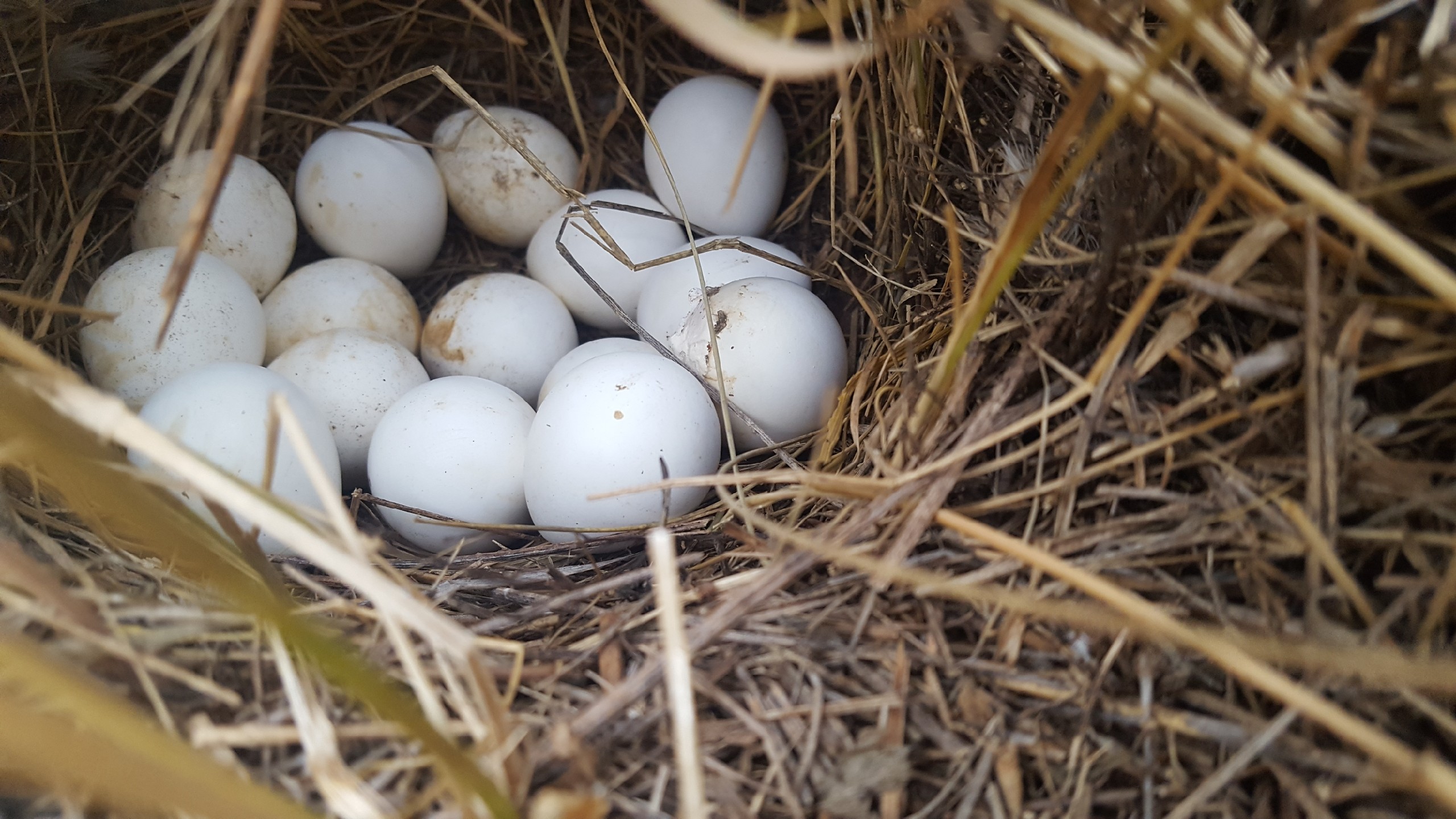
Since 2018 we have monitored 47 broods and over 400 chicks using a combination of patagial tags and radio-tags, 2-4 times a day to determine movements, survival and cause of mortality based on evidence at the mortality site. Chick survival to 6 weeks-of-age was estimated to be 1%, 16%, 38%, and 52% in 2018, 2019, 2020, and 2021, respectively. Mammals, snakes, and raptors were the primary sources of mortality. Increased survival over the past few years was related to increased precipitation and the resulting increase in vegetative cover. However, rain during the first week after hatch may be related to decreased chick survival, because of their inability to thermoregulate when exposed to wet cool conditions. Some evidence suggests predator reduction may benefit chick survival, but small sample sizes have limited strong inference. The competing sources of chick mortality, including many potential predators as well as hypothermia, make this a complex system that will take some time to fully understand. However, the extreme variability in chick survival over the past few years shows that understanding the factors that influence chick survival is a top priority.
Our objective is to relate chick survival rate to a suite of potential influential factors including predator abundance, weather conditions, and habitat characteristics. We will analyze the data to evaluate the influence of these factors on chick survival.

TEXAS TECH QUAIL Publications
- Mueller, J. M., Dabbert, C. (2002). Relationship between plasma triglycerides, body mass, and reproduction of northern bobwhites (vol. 5, pp. 221-224). Proceedings of the National Quail Symposium.
- Andes, A., Buckley, B., Schroeder, K., White, R., Dabbert, C. (2026). Northern bobwhite chick survival, growth, and movement in relation to broadcast supplemental feed and drought. Wildlife Biology, 2026(1), 1-12.
- McLaughlin, J., Wiley, D., Dabbert, C., Terhune, T. (2019). Broadcast Supplemental Feeding and Northern Bobwhite Demographics in Texas. Journal of Wildlife Management, 83(1), 52-63.
- Buckley, B. R., Andes, A., Dabbert, C. (2018). Effects of food supplementation on the nesting dynamics of wild northern bobwhite. Wildlife Biology, 2018(1), 1-8.
- Buckley, B. R., Andes, A. K., Grisham, B., Dabbert, C. (2015). Effects of Broadcasting Supplemental Feed into Roadside Vegetation on Home Range and Survival of Female Northern Bobwhite. WILDLIFE SOCIETY BULLETIN, 39(2), 301-309.
- Oberheu, D. G., Dabbert, C. (2001). Aflatoxin contamination in supplemental and wild foods of northern bobwhite. Ecotoxicology, 10, 125-129.
- Oberheu, D. G., Dabbert, C. (2001). Aflatoxin production in supplemental feeders provided for northern bobwhite in Texas and Oklahoma. Journal of Wildlife Diseases, 37, 475-480.
- Oberheu, D. G., Dabbert, C. (2001). Exposure of game birds to ochratoxin A through supplemental feeds. Journal of Zoo and Wildlife Medicine, 32, 136-138.
- Dabbert, C. (2016). Sustainable rangelands for upland gamebird management and habitat. In Ron Sosebee (Ed.), Proceedings of the Sustainable Rangeland Symposium (1st ed., vol. 1). Lubbock, Texas: Texas Tech University.
- Treadway, Jr., J. H., Dabbert, C., Mitchell, R. B., Buckley, B. R. (2012). Exclosures: an experimental technique for protection. Proceedings of the 7th National Quail Symposium (vol. 7). University of Tennessee: Proceedings of the National Quail Symposium.
- Warren, T. L., Yancey, S. R., Dabbert, C. (2012). Invertebrate abundance at northern bobwhite brood locations in the Rolling Plains of Texas. Proceedings of the 7th National Quail Symposium (vol. 7). University of Tennessee: Proceedings of the National Quail Symposium.
- Abbott, C. W., Dabbert, C., Lucia, D. R., Mitchell, R. B., Andes, A. K. (2012). Nest-site characteristics of northern bobwhites translocated into weeping lovegrass CRP. Proceedings of the 7th National Quail Symposium (vol. 7, pp. 59-62). University of Tennessee: Proceedings of the National Quail Symposium.
- Dankwa-Wiredu, B., Schlichting, P., Dabbert, C. (2012). Pronghorn Antelope Use of Prescribed Burn Areas in the Southern High Plains of Texas. In R. N. Walker and K. W. Rodden (Ed.), Proceedings of the 25th Biennial Western States and Provinces Pronghorn Workshop (vol. 25, pp. 60-68). New Mexico Department of Game and Fish.
- Schlichting, P., Dankwa-Wiredu, B., Dabbert, C. (2012). Seasonal Contribution and Nutritional Quality of Pronghorn Diet in the Southern High Plains of Texas. In R. N. Walker and K. W. Rodden (Ed.), Proceedings of the 25th Biennial Western States and Provinces Pronghorn Workshop (vol. 25, pp. 37-46). New Mexico Department of Game and Fish.
- Norton-Johnson, A. A., Dabbert, C., Mitchell, R. B., Thorvilson, H. G. (2009). Integrating prescribed burning and insecticide to reduce fire ant impacts on bobwhite chicks (vol. 6, pp. 78-87). Proceedings of the National Quail Symposium.
- Johnson, A. A., Dabbert, C., Mitchell, R. B., Thorvilson, H. G. (2009). Integrating prescribed burning and insecticide to reduce fire ant impacts on bobwhite chicks. In S. Cederbaum, B. Faircloth, T. Terhune, J. Thompson, and J. Caroll (Ed.), Gamebird 2006: Quail VI and Perdix XII (1st ed., vol. 6, pp. 78-87). Warnell School of Forestry and Natural Resources, University of Georgia.
- Forbes, A. R., Dabbert, C., Mitchell, R. B., Mueller, J. M. (2002). Does habitat management for northern bobwhite benefit the red imported fire ant? (vol. 5, pp. 135-140). Proceedings of the National Quail Symposium.
- Wiley, D., Schroeder, K., Dabbert, C., White, R. (2025). Vegetation Structure Linked To Nest Site Selection And Nest Survival Of Northern Bobwhite. Wildlife Society Bulletin, 49(4), 1-12.
- Andes, A., Buckley, B., White, R., Dabbert, C. (2025). Northern Bobwhite Brood Site Selection In Relation to Arthropod Abundance In The Rolling Plains of Texas. Southwestern Naturalist, 69, 1-9.
- Smith, B. W., Dabbert, C., Verble, R. M. (2019). Prescribed Fire Effects on Rangeland Dung Beetles (Coleoptera: Scarabaeinae, Aphodiinae) in the Southern Great Plains. Rangeland Ecology and Management, 72, 120-125.
- Schlichting, P. E., Fritts, S. R., Mayer, J. J., Gipson, P., Dabbert, C. (2016). Determinants of Variation in Home Range of Wild Pigs. Wildlife Society Bulletin, 40, 487-493.
- Schlichting, P. E., Chandler, B., Gipson, P., Dabbert, C. (2015). Wild pig (Sus scrofa) reproduction and diet in the rolling plains of Texas. Southwestern Naturalist, 60, 321-326.
- Mitchell, R. B., Cathey, J. C., Dabbert, C., Prochaska, D. F., DuPree, S., Sosebee, R. (2005). Managing yaupon with prescribed fire and herbicides in the Texas Post Oak Savannah. Rangelands, 27, 17-19.
- Pleasant, G. D., Dabbert, C., Mitchell, R. B. (2003). Evaluation of the moisture-facilitated nest depredation hypothesis in a semiarid environment. Wilson Bulletin, 115, 344-347.
- Dabbert, C., Mitchell, R. B., Mueller, J. M., Forbes, A. R., Treadway, J. H. (2002). Northern bobwhite and red imported fire ant interactions in the Texas Coastal Plains. Southwestern Entomology Supplement, 25, 105-110.
- Mehta, J. A., White, R. A., Luft, J. B., Dabbert, C. (2022). Examination of an Anecdotal “October Disappearance” of Northern Bobwhite in the Rolling Plains of Texas Through Demographic Data. Proceedings of the 9th National Quail Symposium (vol. 9, pp. 59-62). University of Tennessee: Proceedings of the National Quail Symposium.
- Perkins, R., Dabbert, C., Boal, C. (2018). Raptor Selection of Captive Reared and Released Galliform Birds. Wildlife Society Bulletin, 42(4), 713-715.
- Urban, K. N., Gibson, A. G., Dabbert, C., Presley, S. (2013). Preliminary Disease Surveillance in West Texas Quail (Galliformes: Odontophoridae) Populations. Journal of Wildlife Diseases, 49, 427-431.
- Pleasant, G. D., Dabbert, C., Mitchell, R. B., Buckley, B. R. (2012). Clinical Variables of Scaled Quail (Callipepla squamata) in the Southern High Plains of Texas. The Southwestern Naturalist, 57(2), 154-156.
- Pleasant, G. D., Dabbert, C., Mitchell, R. B. (2006). Nesting ecology and survival of scaled quail in the Southern High Plains of Texas. Journal of Wildlife Management, 70, 632-639.
- Buckley, B. R., White, R. A., Dabbert, C. (2022). Evaluation of a Solar-Powered Micro-GPS Datalogger for Northern Bobwhite in the Rolling Plains of Texas. Proceedings of the 9th National Quail Symposium (vol. 9). University of Tennessee: Proceedings of the National Quail Symposium.
- Duong, L., White, R., Dabbert, C., Sari-Sarraf, H. (2024). A Complete Framework for Hyperbolic Acoustic Localization with Application to Northern Bobwhite Covey Calls . Ecological Informatics, 84, 102871.
- Andes, A. K., Buckley, B. R., Warren, T. L., Woods, P. C., Yancey, S. R., Dabbert, C. (2012). Use of a thermal camera to aid in capturing northern bobwhite quail chicks. Wildlife Society Bulletin, 36(2), 371-375.
- Abbott, W. C., Dabbert, C., Lucia, D. R., Mitchell, R. M. (2005). Does muscular damage during capture and handling handicap radiomarked northern bobwhites. Journal of Wildlife Management, 69, 664-670.

Texas Tech Quail
-
Address
Goddard Building, Texas Tech University, Box 42125, Lubbock TX 79409 -
Phone
806.742.2841 -
Email
nrm@ttu.edu