
Belize Estates Archaeological Survey Team
About BEAST
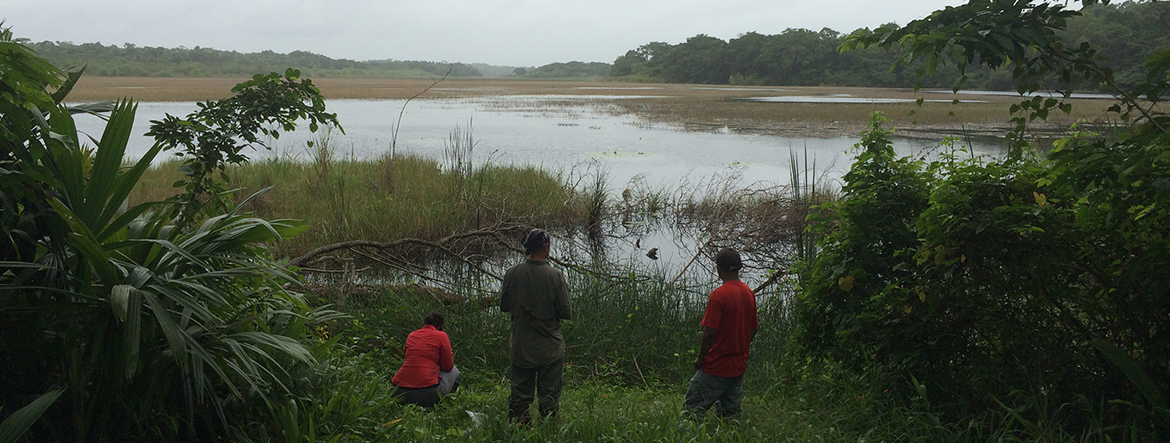
The Belize Estates Archaeological Survey Team (BEAST) is an ongoing research effort of Texas Tech University with a permit area covering approximately 560 square kilometers in northwestern Belize. The project completed its 16th season of research. See below for links to our available interim reports, articles, and maps.
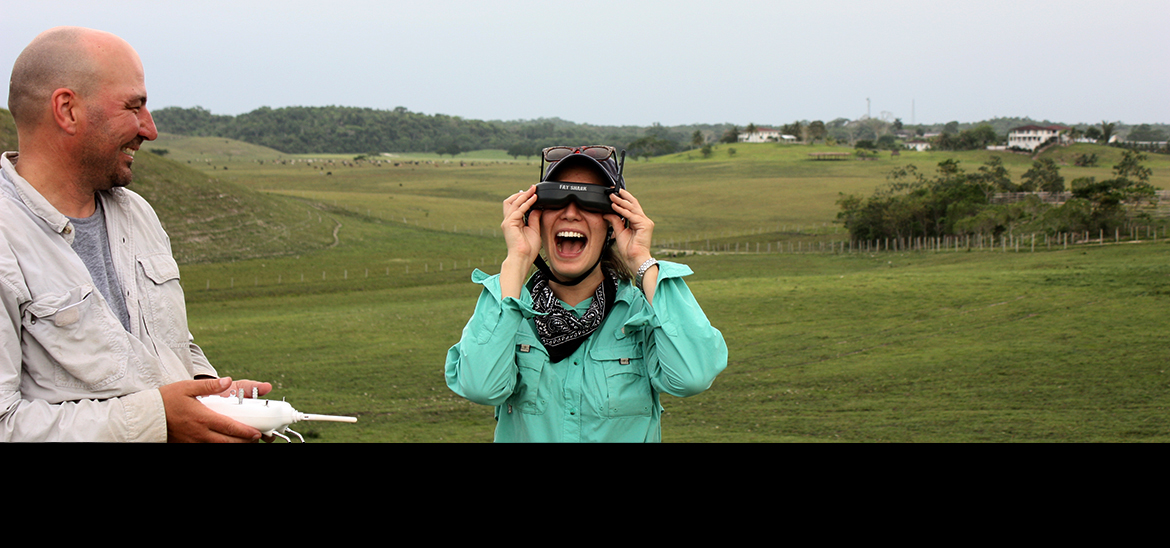
The project studies the rise of divine kingship, the distinct evolution of Maya urbanism in the eastern lowlands, the demise of the monumental centers in the Terminal Classic period (AD 810–900), and the resettlement of the lowlands by the Maya centuries later. Between 2016 and 2018, the project investigated essential components of the above overarching research foci. This also included studies of the development of the royal acropolis; craft production, distribution, and exchange in urban and suburban contexts; the possibility that one elite courtyard was built as a defensive enclave; and the nature of life at Kaxil Uinic. The project also conducted aerial survey and mapping using drones, mapped and tested previously recorded sites, and conducted other regional studies.
In 2016, the CCAP conducted excavations at Chan Chich, investigated the rise of divine kingship during the Terminal Preclassic at the Upper Plaza and the abandonment of the site during the Terminal Classic at Norman's Temple. BEAST conducted the second season of excavations at the historic Maya village of Kaxil Uinic and surveyed over 14 square kilometers of cleared pasture with a drone. The 2016 season's interim report is now available for download.
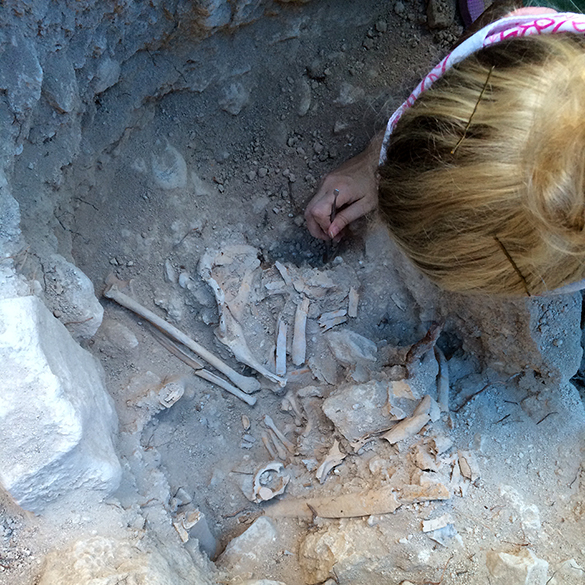
In 2017, the CCAP continued excavations in the Upper Plaza at Chan Chich, exposing a buried early Late Preclassic building nicknamed Blanca and documenting a fascinating burial with indications that it may be a royal interment. The project also excavated a residential courtyard southeast of the Main Plaza, and investigated a stone tool workshop in the northeastern corner of the Main Plaza. The 2017 season's interim report is now available for download.
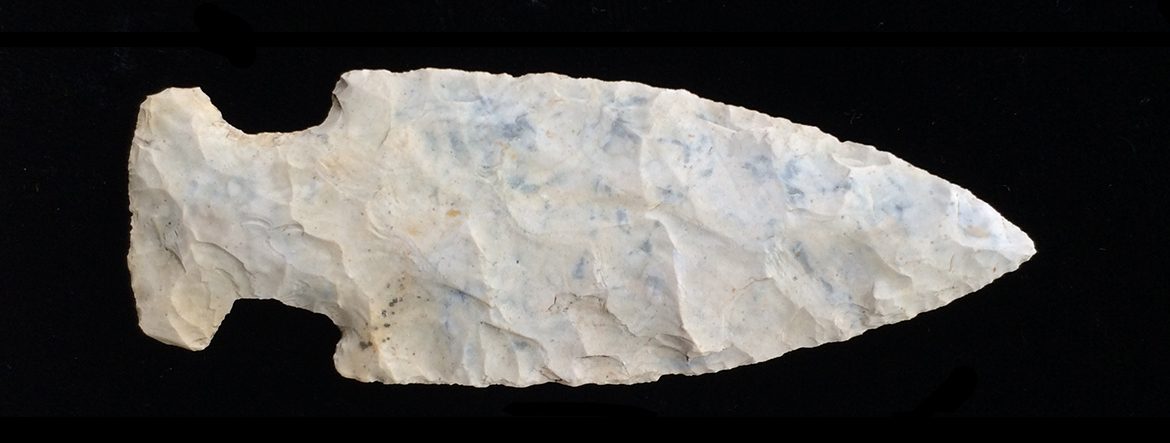
In 2018, the project continued work in the Upper Plaza and at the stone tool workshop near Structure A-6. For the first, time BEAST conducted mapping and testing at the site of Gallon Jug, discovering a buried Early Classic (?) platform nicknamed Esperanza in the plaza at the site.
In 2019, we returned to the Upper Plaza to intensively study Structure A-13. BEAST, under the direction of Dr. Claire Novotny, produced a topographic map of the site core of Gallon Jug and conducted extensive excavations at a residential courtyard east of the Main Plaza.
Sadly, our 2020 and 2021 seasons were cancelled by the global COVID-19 pandemic. Fortunately, we successfully returned to the field in June 2022 to renew excavations at Chan Chich and Gallon Jug. Our work included a collaborative research project funded by the National Science Foundation to study ancient Maya marketplaces. At Chan Chich we conducted systematic excavations to test the hypothesis that the North Plaza at the site served as a Late Classic marketplace! We are also thrilled to report that the National Center for Airborne Laser Mapping (NCALM) at the University of Houston collected lidar data over our entire 590 square kilometer research area in May 2022. As we analyze this amazing dataset, we are seeing wonderful things.
In 2023, BEAST made a short visit to Belize in April to visit a previously unrecorded site that was revealed in our lidar data. BE-30, more prosaically dubbed Ayiin Winik, is a large center with a rare double ball court. Our short visit involved chainsawing a lot of trees and assessing our lidar data for the site. BEAST returned to Belize in June and July for a 29-day season to conduct more lidar field assessment and complete the lab work on the NSF Market Place Study.
In 2024, the project initiated excavations at Courtyard B-1 at Chan Chich, investigated a ball court and conducted chronological test pitting at Ayiin Winik, and continued field assessment of lidar data. The season concluded with an event at the Casey Community School, hosted by the Public Outreach and Engagement Team (POET) of BEAST.
If you wish to support the CCAP through a financial contribution directly to Texas Tech University for the project, you can do so by clicking this link. Any contribution made to Texas Tech University is greatly appreciated and is tax deductible! Feel free to email Dr. Houk for more information about the project and our future plans.
Student Research
Between 2012 and 2025, the CCAP has supported twelve thesis research projects. Each of the completed theses listed below are available through the Texas Tech University Library.
Calderon, Alexia
2025 Cataloging the Past, Capturing the Present: The Creation of a Virtual Catalog
of Small Finds from Three Archaeological Sites in Northwestern, Belize.
De Gregori, Mara
2025 Take me out to the Ball Court: Investigating Processional Architecture and Maya
Ball Court Variability in the Southeastern Three Rivers Adaptive Region, Belize.
Castillo, Leann
2023 A Bioarchaeological Study of Life History and Body Treatment at the Maya site
of Chan Chich, Belize.
Kilgore, Gertrude
2018 Maya Household Identity and Domestic Activity Areas at Courtyard D-4, Chan Chich,
Belize.
Sandrock, David
2017 BEAST Mode: Two Seasons of Archaeological Survey on the Gallon Jug-Laguna Seca
Property in Northwestern Belize.
Booher, Ashley M.
2016 Assessing the Form and Function of the Sacbeob and Associated Structures at Chan
Chich, Belize.
Bonorden, Alyssa Brooke
2016 Comparing Colonial Experiences in Northwestern Belize: Archaeological Evidence
from Qualm Hill Camp and Kaxil Uinic Village. (winner of Outstanding Thesis Award for 2018 in the category of Social Sciences)
Vazquez, Edgar
2015 In Service of the King: The Form, Function, and Chronology of Courtyard A-3 at
Chan Chich, Belize.
Kelley, Krystle
2014 Establishing the Acropolis: Two Seasons of Investigations in the Upper Plaza
of Chan Chich, Belize.
Harris, Matthew C.
2013 A Short Walk from Paradise: Initial Excavations at Kaxil Uinic.
In addition to graduate student research, the CCAP and BEAST support undergraduate work, as well. Bridgette Degnan (University of Virginia) and Nicholas Kopp (University of Central Florida) have used data from the project for their honors theses.
Publications
Books
Data from the CCAP feature prominently in Ancient Maya Cities of the Eastern Lowlands, a book by Brett A. Houk, published by University Press of Florida in 2015, in Ritual, Violence, and the Fall of the Classic Maya Kings, edited by Gyles Iannone and colleagues (2016), and in Approaches to Monumental Landscapes of the Ancient Maya, edited by Brett A. Houk and colleagues (2020).
Journal Articles and Book Chapters
Houk, Brett A. 2011. The Curious Case of Kaxil Uinic. Mono y Conejo 6:3–7.
Interim Reports
2017 Season Report (11.6 mb) This version is an optimized PDF and a much smaller file.
2016 Season Report (7.6 mb) This version is an optimized PDF and a much smaller file.
2015 Season Report (10 mb) This version is an optimized PDF and a much smaller file.
BEAST Archaeology Activity Book
Archaeology Activity Book (2024 Updated Version)
CCAP Field Manual
CCAP Field Manual, Version 1.0, 2015 (iBook version). This version is meant to be read on an iPad and includes interactive features.
CCAP Field Manual, Version 1.0, 2015 (PDF version). This version lacks the interactive features that are found in the iBook version.
Maps and Drawings
Sociology, Anthropology, and Social Work
-
Address
Holden Hall 158, Box 41012, 1011 Boston Ave., Lubbock, TX 79409 -
Phone
806.742.2400 -
Email
athena.baumann@ttu.edu