
Archaeological Studies Minor
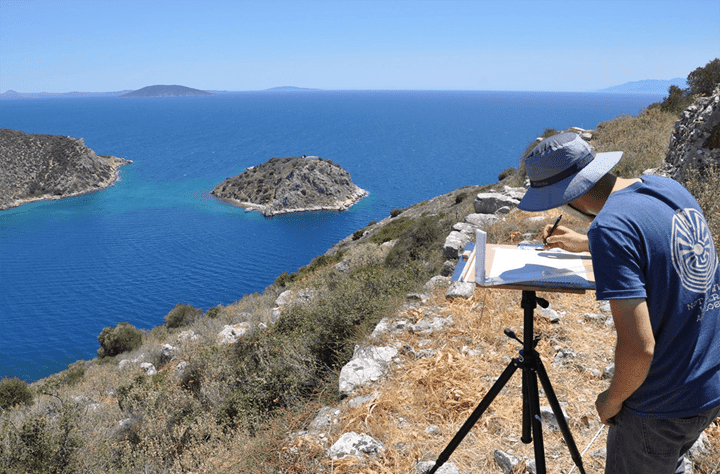
Texas Tech University conducts field research in Greece.
Texas Tech University's College of Arts & Sciences offers an interdisciplinary minor in Archaeological Studies. This program combines archaeological courses from Classics and Anthropology to provide students with complementary perspectives on the discipline, focusing on the Mediterranean world and the Americas.
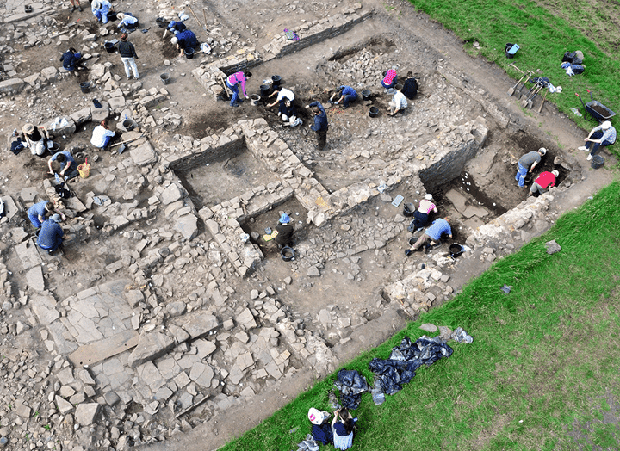
Texas Tech researchers collaborate on an archaeological dig in Binchester, England.
Archaeologists study the material remains of past cultures that survive into the present. Armed with a rich body of theory and a diverse array of methods, archaeologists are able to examine the nature of ancient civilizations and cultures with or without the aid of recorded history.
While grounded by the remains of the past, archaeology is concerned with understanding how cultures change, in both the short and long term. This focus leads to examinations of questions big and small, such as:
- Why and how did humans domesticate plants and animals?
- Why did people start to live in cities?
- Why do civilizations collapse?
- What can we learn from a single burial or a derelict terrace?
Archaeology, however, is also concerned with connecting the present to the past through the study of cultural heritage and its role in contemporary societies.
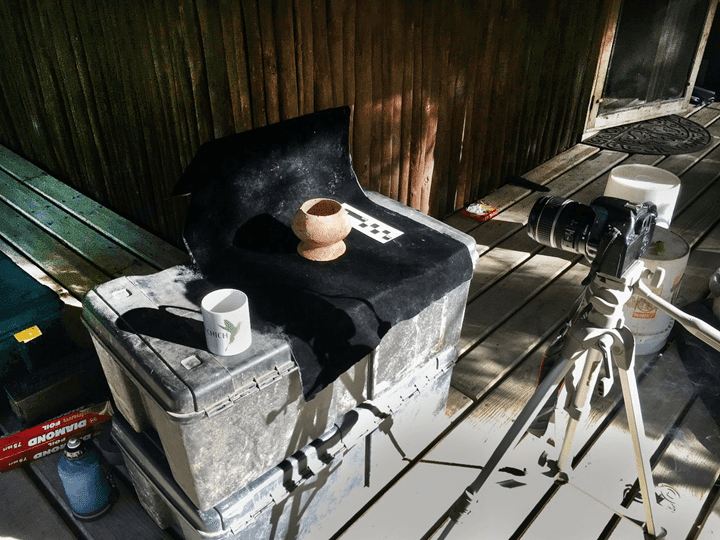
Texas Tech conducts anthropological field research in Belize.
To complete the minor in archaeological studies, students must complete 18 hours of courses approved by the director. The minor requires a minimum of 9 hours of upper division (3000–level courses or higher) coursework. All students are required to take:
- ANTH 2301 (Introduction to Archaeology)
- CLAS 2335 (Archaeologies of the Classical World)
Because field work is an important part of archaeology, students may count one field course toward the minor:
- ANTH 4042 (Field Archaeology),
- ANTH 4643 (Field Research in Skeletal Biology),
- CLAS 4601 (Classical Field Archaeology).
No more than 12 hours of coursework from one program (Anthropology or Classics) can be counted toward the minor. Students must receive a grade of C or better in all courses applied toward the minor.
To declare the Archaeological Studies minor, email your advisor. If you have other questions, email the Archaeological Studies minor director, Dr. Giacomo Fontana.
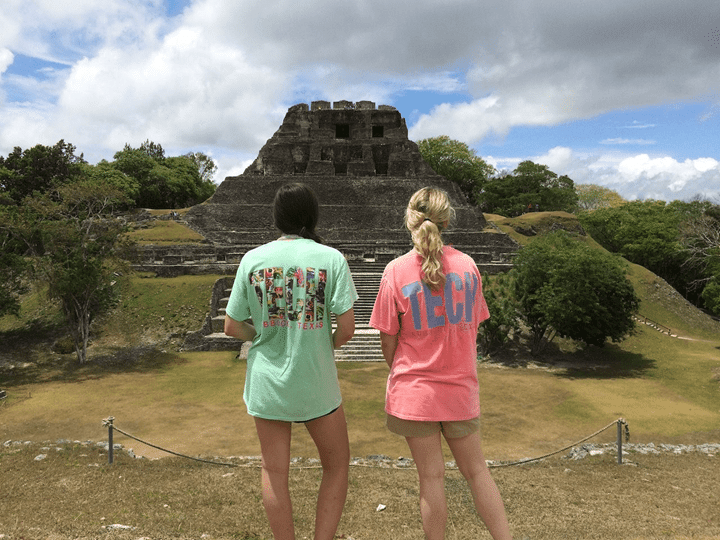
Texas Tech students visit Xunantunich, an archaeological site in Belize.
Please find below the list of approved courses.
Anthropology
- ANTH 2301 – Introduction to Archaeology (Required)
- ANTH 3300 – Special Topics in Anthropology*
- ANTH 3341 – Laboratory Archaeology
- ANTH 3342 – Prehistory of the Southwest
- ANTH 3343 – Maya Archaeology
- ANTH 3344 – South American Archaeology
- ANTH 3347 – Texas Prehistory
- ANTH 3363 – Peopling of the Americas
- ANTH 3348 – Introduction to Historical Archaeology
- ANTH 3349 – Archaeology of the Northern Spanish Frontier
- ANTH 3350 – Archaeology of Death
- ANTH 3353 – Bioarchaeology
- ANTH 3375 – Topics in Latin American Archaeology
- ANTH 3380 – Methods and Theory in Archaeology
- ANTH 3390 – Remote Sensing in Archaeology
- ANTH 4000 – Individual Problems in Anthropology*
- ANTH 4310 – Cultural Resource Management
- ANTH 4320 – Forensic Archaeology
- ANTH 4042 – Field Archaeology**
- ANTH 4643 – Field Research in Skeletal Biology**
Classics
- CLAS 2335 – Archaeologies of the Classical World (Required)
- CLAS 2305 – Ancient Technology
- CLAS 3315 – World of Egypt and the Near East
- CLAS 3320 – The World of Greece
- CLAS 3330 – The World of Rome
- CLAS 4300 – Research in Classics*
- CLAS 4310 – Seminar in Classics*
- CLAS 4601 – Classical Field Archaeology**
Others
- GIST 3300 – Geographic Information Systems
* Requires director’s approval
** Students may count ANTH 4042, ANTH 4643, or CLAS 4601 toward the minor
Anthropology
-
Address
Holden Hall 158, Box 41012, 1011 Boston Ave., Lubbock, TX 79409 -
Phone
806.742.2400 -
Email
athena.baumann@ttu.edu