
Nearly 100 miles from the nearest town, before most people have had their first cup
of coffee, Grayson Downs is already driving dirt roads, headed for another day of
his internship.
Out in the wide-open Texas Panhandle, Downs is not sitting in a classroom; he is managing cattle, monitoring feed and learning to make decisions on his own.
“I fully expected to go into this internship and make a little bit of money while learning a little bit about dairy cattle,” Downs said. “I thought that was the end of it, but I really grew as an individual.”
Experiences like Downs’ are not what most people imagine when they think of a college environment, but for students at Texas Tech University’s Davis College of Agricultural Sciences and Natural Resources, they are vital pieces to successful learning.
Certain majors require internships to graduate. Other programs in the college strongly encourage internships or allow students to substitute them with research or similar experiential learning opportunities.
According to 2025 data from Davis College, 45% of students complete a semester-long internship. Of those, 85.6% are paid, and nearly half resulted in a post-graduation job offer.
“An internship is one of the most impactful experiences a student can have,” said Erica Irlbeck, Ed.D., associate dean for outreach and engagement in Davis College. “It takes everything a student has learned in the classroom and helps them apply those things into a working-world setting.”
From dairy operations in West Texas to policy work in Lubbock and design firms along
the Florida coast, internships are turning classroom preparation into career pathways
and students into professionals.
On-Farm Experience
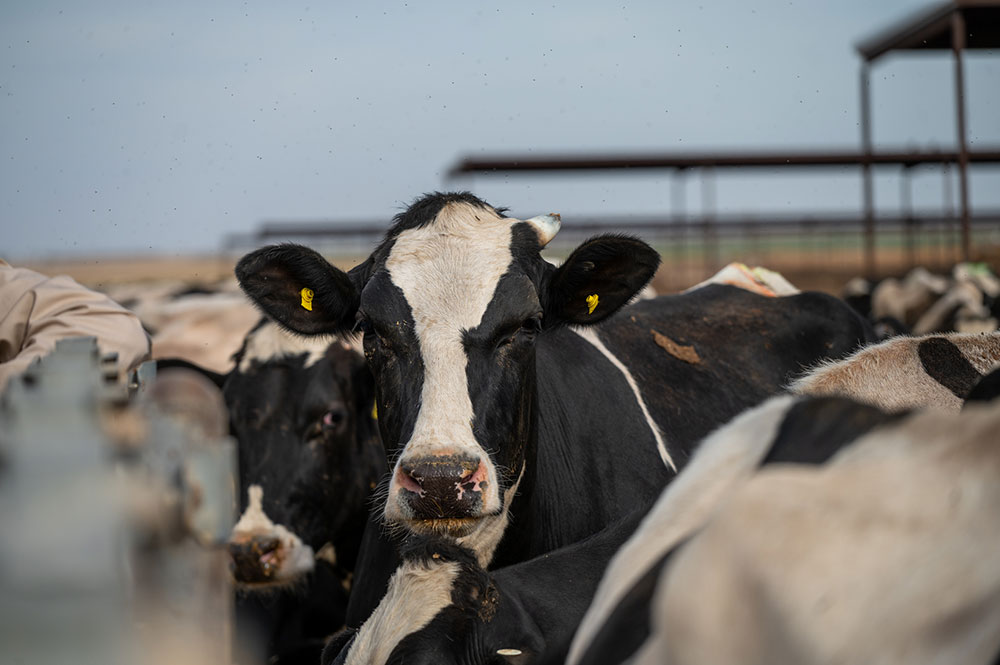
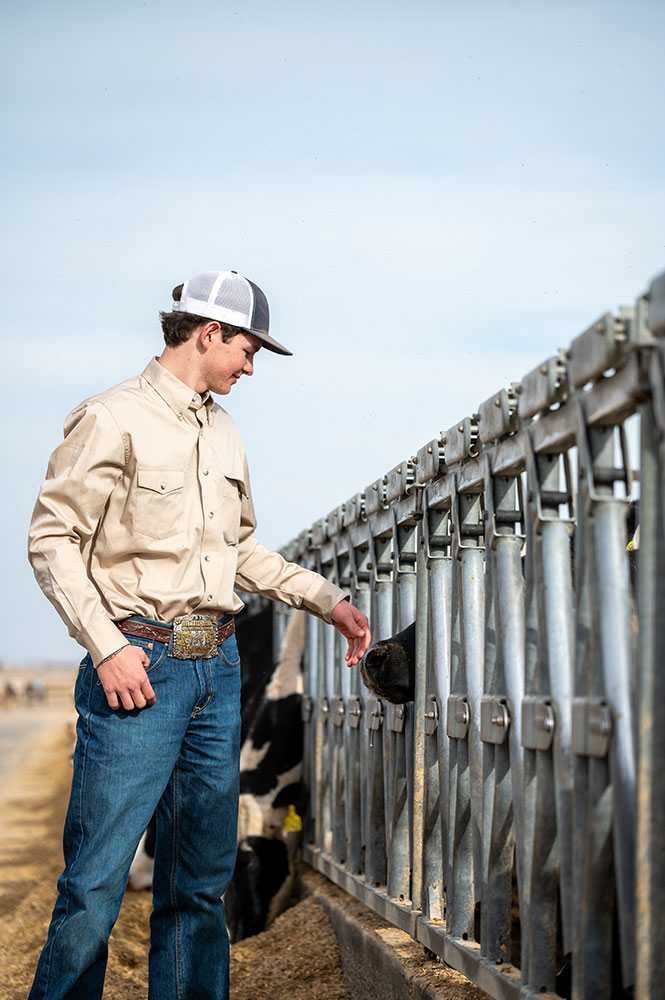
Downs, a junior animal science major, spent his summer in Hartley, Texas, interning with AgriVision, a family-run farm management company operating multiple large-scale dairy operations across the state. Over the course of three months, he worked with thousands of head of cattle and rotated through nearly every aspect of the operations, from milking parlors to herd health management. He was even given full responsibility for a research project analyzing feed intake in organic dairy calves.
“When you're in a high-stress situation where you're not being supervised in any way and you have to get something done, you have to figure out a way,” Downs said. “I had to be confident in my own abilities to get things done to a high degree.”
Downs said navigating language barriers with Spanish-speaking coworkers and adapting to high-pressure situations pushed him to grow both personally and professionally.
“I like being comfortable where I’m at,” Downs said. “But getting uncomfortable in those situations grew me a lot.”
Downs said even though dairy management may not be his long-term career path, his internship experience sparked a deeper interest in livestock nutrition and helped him build industry connections.
“If you don’t take advantage of the opportunities you’re given, you’re not going to
grow,” Downs said.
Figuring it Out
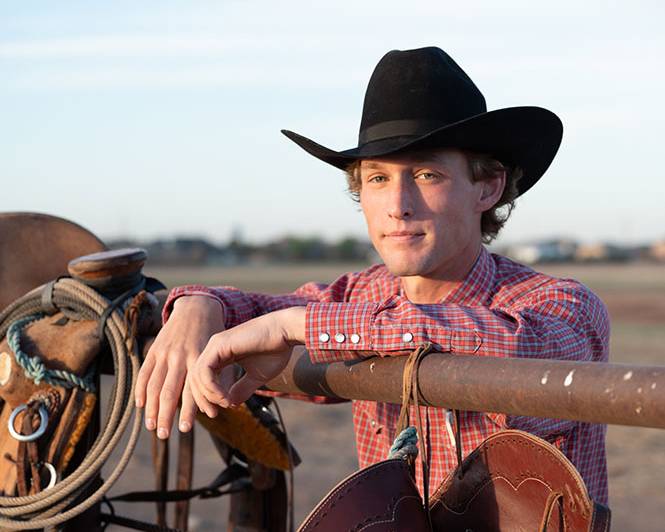
While some Davis College students, like Downs, enter internships with a strong agricultural background, others start from scratch. With no ranching experience, Brance Bolden, a Texas Tech ranch management master's student, had to rely on determination.
A Mustang, Oklahoma native, Bolden joined Texas Tech’s new ranch management graduate program after getting a degree in agricultural systems technology from Oklahoma State University. He said despite not growing up in agriculture, he knew he belonged in the industry and was determined to leave an impact.
“I knew nothing, but I wanted it bad enough. I knew I was going to meet a lot of good people, and I think that’s worthwhile, Bolden said.
As part of the master’s program, Bolden completed an internship with a large-scale cattle operation, working first in Florida before transitioning to a second location in Waco, Texas.
“It was very big,” Bolden said of the Florida ranch. “It was very overwhelming. They gave me a horse and said, ‘This is your horse,’ and I told myself, ‘I’m going to figure this out.”
Bolden said one of the biggest challenges was stepping into a role where he was expected to learn by doing, often without prior experience.
“You don’t know what you don’t know, and it was hard to figure out,” Bolden said.
Over time, challenges such as learning to ride, navigating unfamiliar pastures and participating in branding helped him gain confidence in an industry that once felt entirely new.
“By the middle of the summer, I was starting to get it,” Bolden said. “I had more independence and responsibility.”
For Bolden, the internship was more than learning skills. It was about finding his place in an industry he once knew little about.
“This is an awesome opportunity,” Bolden said. “It helps build connections if you’re willing to go out there, get your hands dirty, and want it bad enough. It’s absolutely worth it.”
By connecting students with industry professionals and immersive learning environments,
internships allow individuals from all backgrounds to develop the skills, confidence
and relationships needed to get involved in the industry and succeed.
Connections That Shape Careers
For some students, those industry connections become the most valuable part of the experience.
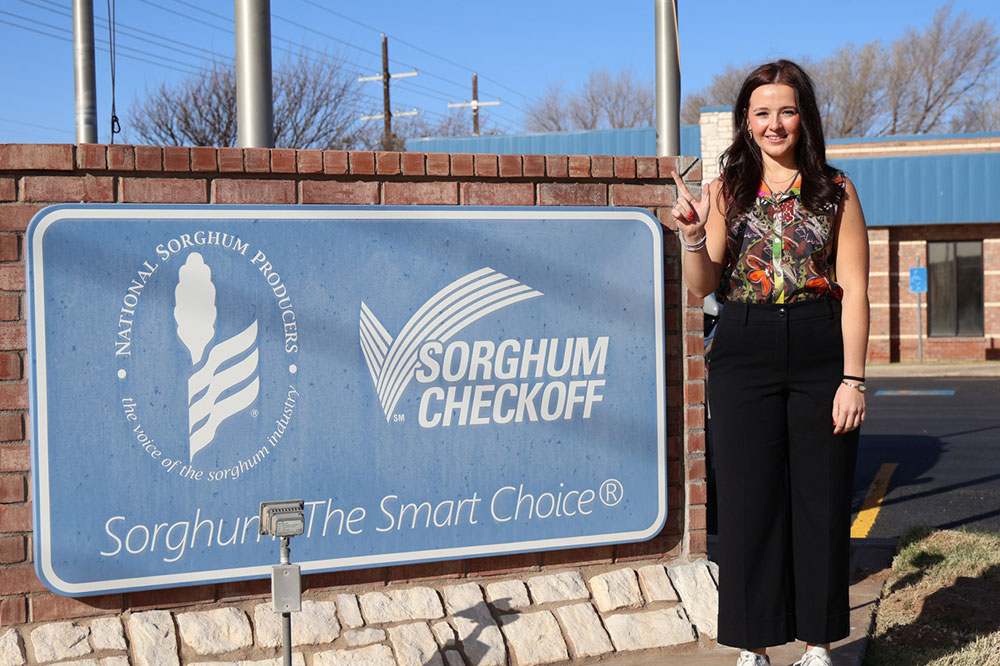
Faith Geistweidt, a senior agricultural and applied economics major from Fredericksburg, Texas, interned with the National Sorghum Producers and the United Sorghum Checkoff Program in Lubbock, Texas, where her work spanned across both policy and industry outreach.
Geistweidt said she gained exposure to how research, advocacy and global trade intersect in an industry she once knew little about. Her work supported conversations with organizations such as the U.S. Trade Representative’s Office, connecting classroom knowledge to real-world impact.
Just hours into her first day, Geistweidt said NSP and USCP CEO, Tim Lust, tasked her with preparing briefing materials on phytosanitary policy, something she had never heard of before.
“You never know who you’re going to meet, what you’re going to see, or what you’re going to get to do that’s going to shape the next 10 years of your life.”
“I didn’t even know what phytosanitary meant,” Geistweidt said. “So, I stayed up until 2 a.m. doing this research.”
After submitting her work, Geistweidt said she had to go back and correct mistakes identified in her briefing materials. The experience pushed her to adapt quickly in a fast-paced environment where mistakes are part of the learning process.
“[Lust] being able to show me the grace of, ‘Hey, this is what you did wrong, or this is incorrect, but this is how you fix it,’ was really eye-opening,” Geistweidt said. “That was really humbling to me because I haven’t seen that kind of two-way communication develop in such a short period of time.”
Geistweidt said the mentorship she received during her experience from industry leaders, including Lust, continued to guide her even beyond the internship.
“He was an excellent mentor to me throughout my time at NSP, but also as I’m deciding what I’m going to do in my future career,” Geistweidt said. “There’s not many people I feel like I can relate to on a real level who can give sound guidance, morally and ethically, and he’s one of those for me.”
For Geistweidt, like many students who complete internships, the hands-on learning experience opened doors to a new professional network.
Geistweidt encourages students to seek out these types of opportunities.
“You never know who you’re going to meet, what you’re going to see, or what you’re
going to get to do that’s going to shape the next 10 years of your life,” Geistweidt
said.
Designing a Perfect Fit
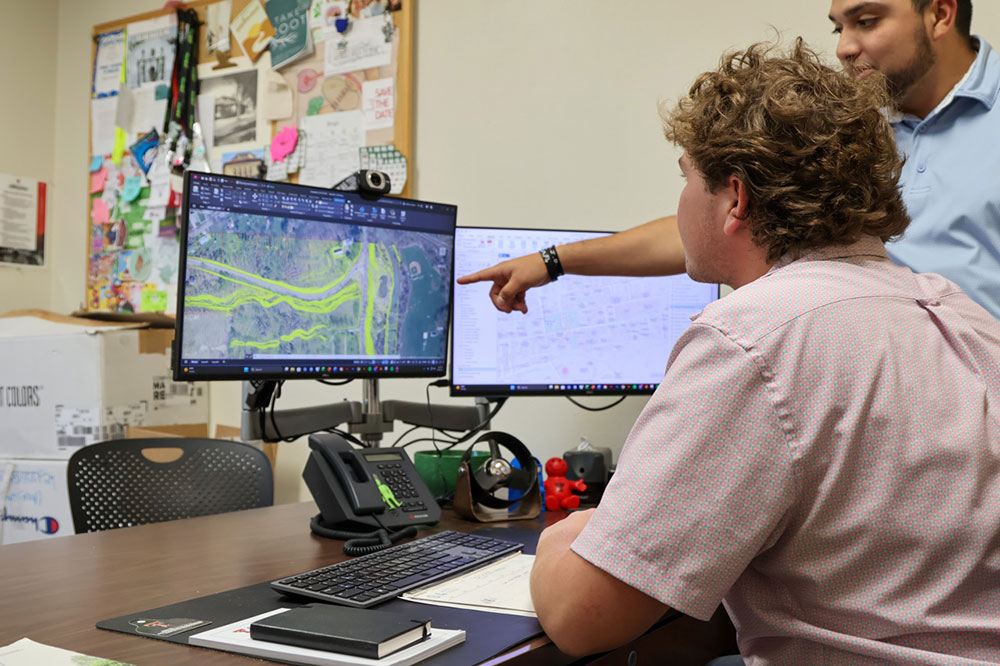
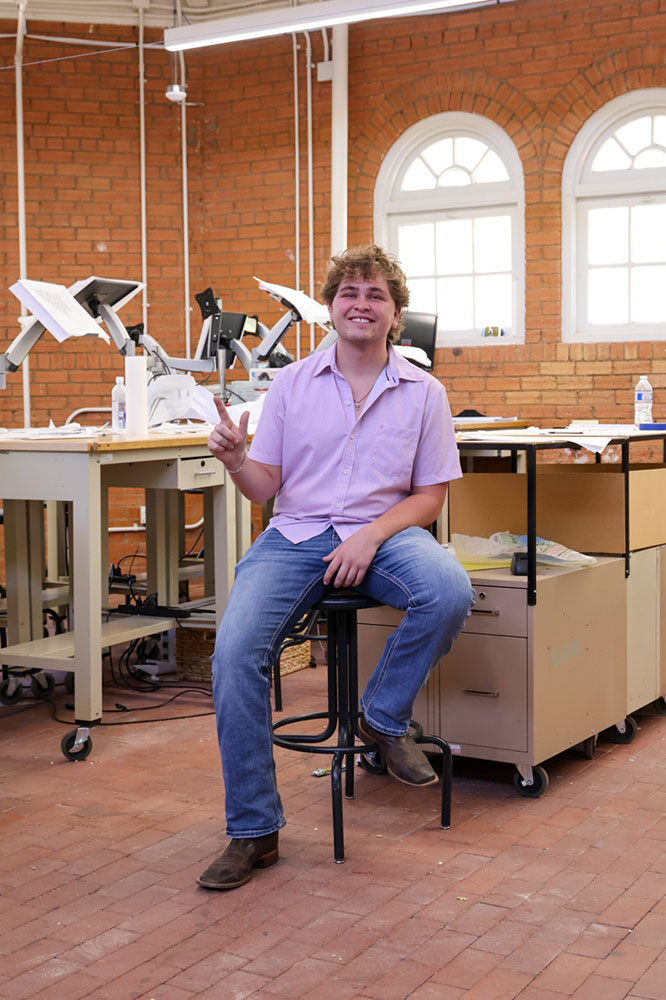
Senior landscape architecture major, Kollier Miller, spent his summer stepping out of his comfort zone and more than 1,500 miles from home. While completing his internship at the West Palm Beach, Florida office of Kimley-Horn, he lived six months with a host family he had never met. Even though he was surrounded by a completely new environment, he felt right at home drafting up designs for commercial, recreational and private spaces.
“I wanted to go somewhere fun I’d never been,” Miller said. “It was only six months, not anything permanent.”
Working just minutes from the beach, Miller spent his weekdays immersed in design work and his weekends exploring his new surroundings.
“It was so much fun because I’d never been to Florida before,” Miller said. “Being able to live like 15 minutes from the beach was awesome.”
The transition from Lubbock to South Florida meant adjusting to a different culture, climate and new people.
“Working a full-time job, I wasn’t able to meet as many new people,” Miller said. “One thing I noticed about myself is that I want to be around my friends.”
During his internship, Miller contributed to a variety of projects rather than focusing
on just one. He revised project plans, collaborated with different teams, and worked
in AutoCAD; a software used for precise drafting and modeling of architectural landscape
designs. He said he felt prepared with foundational skills learned in the classroom,
but the experience pushed him to apply that knowledge on a much deeper level.
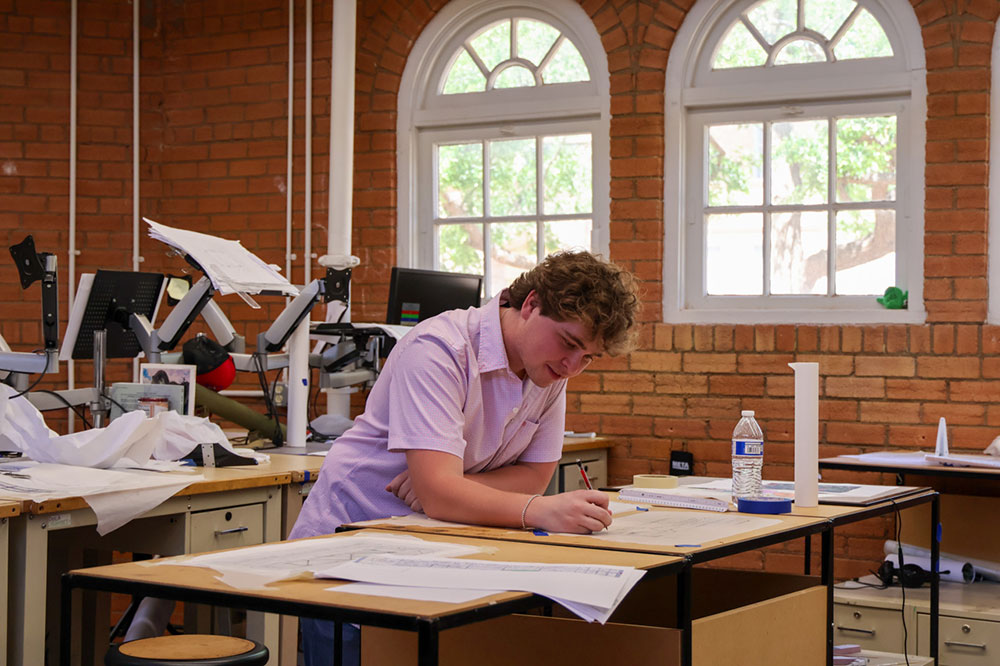
“In college, they teach you the basics,” Miller said. “Getting there, I kind of knew how to do everything — it was the depth that I didn’t know it at.”
Miller said the experience gave him a clearer understanding of the scale, cost and complexity behind professional design work, which is difficult to fully grasp in a classroom setting.
Reflecting on his coursework, Miller compared the pace of classroom projects to real-world timelines.
“Here, when we work on imaginative projects, we’d get them done in three weeks,” Miller said. “There, it takes four years to get a project done.”
Toward the end of his internship, Miller got to assist with engineering-focused projects, an area he had initially considered before choosing landscape architecture as a major. Ultimately, the experience reaffirmed his decision.
“They were doing straight cut, no design,” Miller said. “Just lines and very dimensional things on the construction documents. We do that plus make it look pretty, and I like making it look pretty.”
Along with career clarity, Miller said he grew personally during his internship.
With graduation on the horizon, Miller said he has accepted a full-time position with the Frisco office of Kimley-Horn, where he can do what he loves while being close to friends.
Beyond the Classroom
Irlbeck said experiences like these highlight why internships are so valuable for Davis College students.
“If you go into an internship and do a good job, you have a strong opportunity to turn that into a full-time position,” Irlbeck said.
Beyond job offers, she emphasized that internships help students grow in ways that cannot always be taught in a classroom. Through hands-on coursework, student organizations and close interaction with faculty, Davis College plays a key role in preparing students to succeed when those opportunities arise.
“We consistently hear from employers, ‘Send us more Tech students,’” Irlbeck said. “They’re prepared, they’re professional and they’re ready to work.”
Irlbeck said she encourages every student to apply for internships, despite personal doubts about qualifications. She said just being willing to learn takes students a lot further than they could have ever imagined.
“Don’t ever take yourself out of the pool,” Irlbeck said. “Let the employer decide
if you’re qualified.”
Full-circle moment:
Transforming from intern into mentor
By: Caitlyn Black, Torrance Thedford, Sterlin Richardson, Madyson Clark
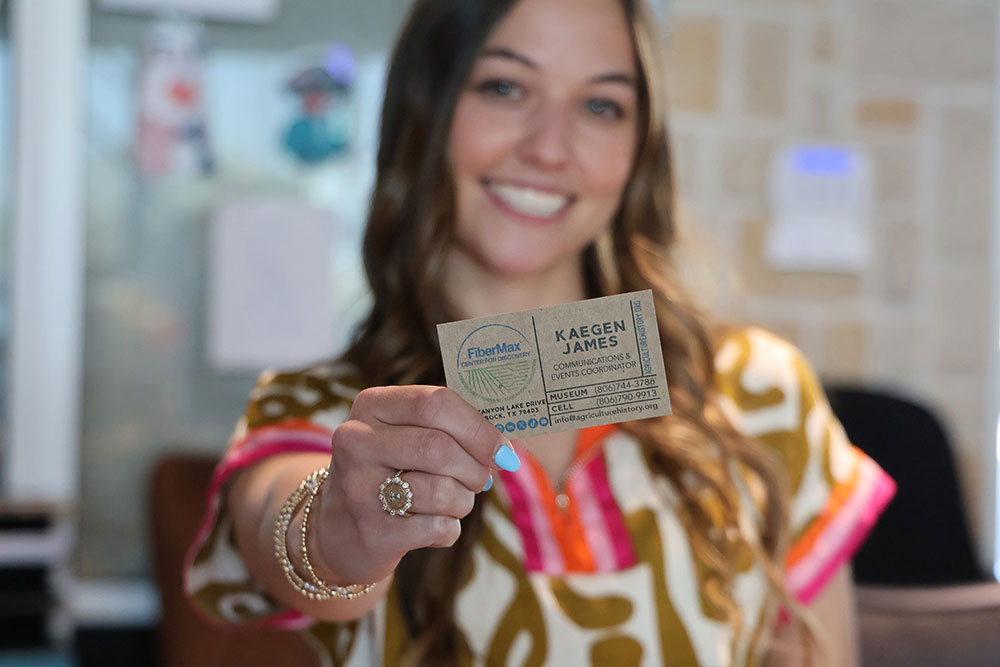
Between answering emails and coordinating event details at the FiberMax Center for Discovery, Kaegen James balances a phone on her shoulder as she connects with a potential donor. Before she can hang up, curious eyes peek over the front desk. With a smile, she rises to greet the last tour of the day.
She guides students past rows of cotton gins, wrangling those with wandering feet until they reach the towering, two-story cotton gin machine positioned in the heart of the exhibit. Standing at the center, she holds their attention with ease, explaining how cotton moves from field to fabric. Just a few years ago, speaking to so many might have been intimidating. Now, it’s second nature.
“To me, this is the perfect job,” she said.
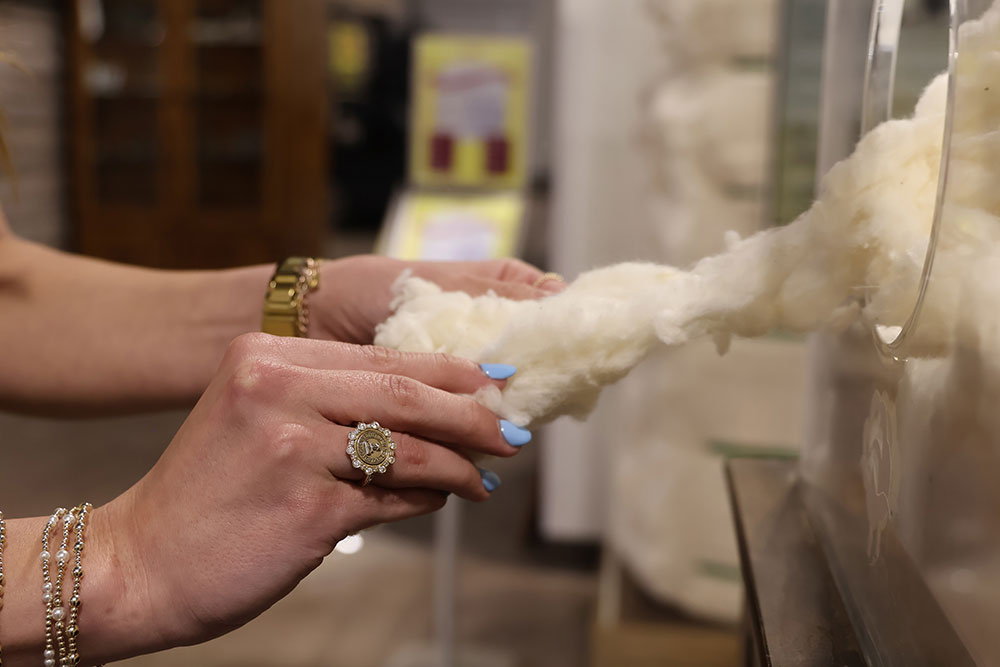
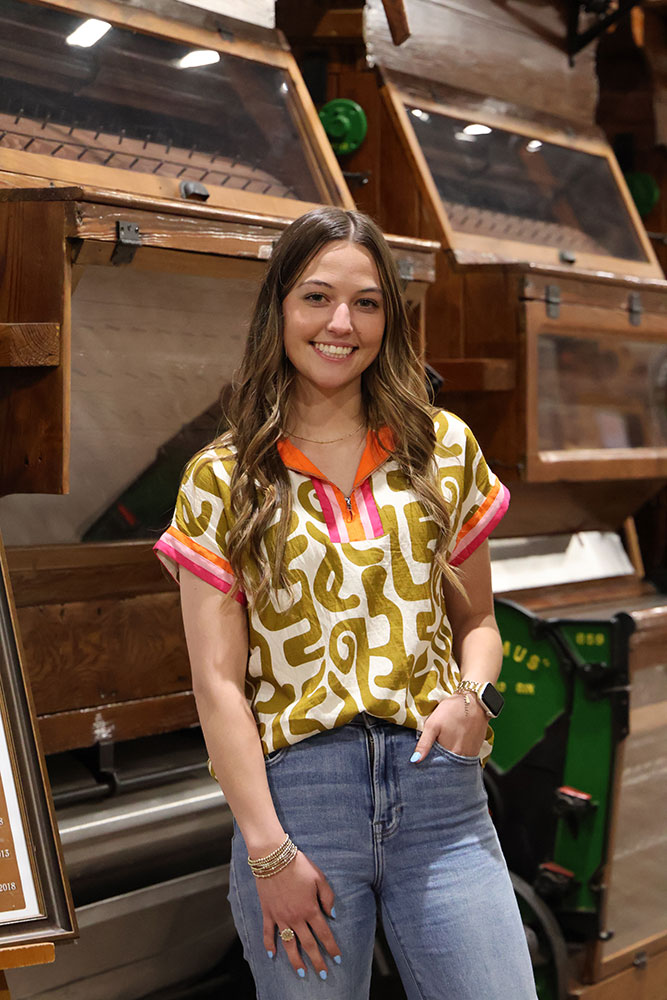
James joined the Center in Lubbock, Texas, in May 2024 as a communications intern hoping to find direction in her career.
“I went into my internship wanting to find one thing that I loved so that I could take my career from there,” James said. “But I ended up enjoying everything.”
During her internship, she gained experience across all areas of communications, building skills in writing, photography and content creation while developing strengths in public speaking, donor relations and event planning.
She said her willingness to learn and take on new challenges quickly set her apart. After completing her internship, she was offered a part-time position and continued working throughout the school year. One week before graduating from Texas Tech University, she stepped into the full-time role as communications and event coordinator.
Now, just a year later, James mentors interns in the same position she once held.
“As much as we’re teaching them, they’re also teaching us,” she said. “They bring fresh ideas, new perspectives and creativity that make a real impact.”
While the classroom provides a strong foundation in design, writing and communication, she said the internship brings those skills to life.
“In school, you’re often working for a grade,” she said. “But in an internship, you’re creating something that people actually see. It changes how much effort you put in and how much you grow.”
James credits the Davis College of Agricultural Sciences and Natural Resources for preparing her to succeed. She said the college’s emphasis on work ethic and real-world experience gives her confidence when hiring student interns.
“Tech students stand out,” she said. “They come in with strong skills, a good work ethic and a willingness to learn.”
That reputation has helped create a pipeline between the college and industry, where internships often lead to long-term opportunities.
James said applying those skills professionally helped her build confidence, something she now prioritizes in the interns she leads. She encourages them to ask questions, embrace mistakes and step outside their comfort zones.
“Don’t be afraid to ask questions or make mistakes,” she said. “The whole point of internships is to learn.”
Read more from The Agriculturist
“You don’t want to be the generation that loses the family farm. The way it was done before isn’t how we’re going to keep it going.”
By: Brooke Poole, Cash Martin, Abigail Albracht, Christian Purcell
“The image of that horse running down the field draws people in, makes people have chills.”
Read 'Riding Through Tradition'
By: Coleman Mitchell, Carly Watson, Clara Mechem, Carley Smith
Developed a decade ago by agricultural communications faculty at Texas Tech, a four-course structure of senior-level capstone experiences was designed to create a coordinated learning environment that mirrors the realities of modern communication careers. Rather than completing upper-level coursework independently, students take these four courses simultaneously. Students and faculty refer to this experience as the “ACOM Block.”
Read 'A Decade of Development'
By: Savannah Sinclair, Garren Hamby, Madeline Braman, Tate Walker
Morning light breaks over the pens as Katie Day swings into the saddle, settling in for another day of work. By the time most people are starting their morning, Day has already checked cattle, moved stock and handled whatever the morning demanded. She has no single job description, only the expectation to get the work done.
By: Kyra Holt, Emma Roberts, Brock Jonas, Cutter Bishop
Texas Tech University’s's Davis College of Agricultural Sciences and Natural Resources has named its inaugural 30 Under 30 cohort, recognizing young alumni making early impacts. Representing six departments and 11 undergraduate majors, these graduates are refining the ‘From Here, It’s Possible’ mentality as they thrive as communicators, scientists, educators and leaders.
By: Trista Stanley, Ashlynn O’Bannion, Ally Smitley, Reagan Sanders
The road to graduation is long, winding and can look very different for each student at Texas Tech University. But in the Davis College of Agricultural Sciences and Natural Resources, students do not have to travel that road alone. With a tradition of prioritizing student success, the college’s advisors make sure students are supported academically and personally.
By: Caleb McDonald, Elizabeth Rone, Madi Lindley, Brooke Brittain
For three undergraduate students in the Davis College of Agricultural Sciences and Natural Resources, the college experience at Texas Tech University has meant much more than just going to class and getting a degree. While each student may be taking a different path on their educational journey, all three are making the most of their time at Texas Tech to prepare for their careers.
Read 'From Classroom to Career'
By: Marlee Montalvo, Hannah Torres, Natalie Dietrich, Madilyn Howell
“Research at Davis College is designed around pressing challenges faced by producers, communities, and ecosystems, particularly in water-limited and climate-stressed regions like the Texas High Plains.”
By: Abigail Garza, Braylee Brooks, Mylen Garza, Cheyenne Davis, Sofia Perez
“That experience of being surrounded by like-minded individuals who are driven, not only does that help them stay driven and stay connected, but it also makes them feel welcome in Davis College.”
Read 'A Recipe for Student Success'
By: Natalie Brennan, Cooper Bennett, Preslee Minter, Landry Roberts

The Agriculturist
-
Address
Department of Agricultural Education & Communications, Box 42131, Lubbock, TX 79409-2131 -
Phone
806.742.2816 -
Email
lindsay.kennedy@ttu.edu