

Department of Environmental ToxicologyChemical Counter Measures and Advanced Materials Laboratory
 Dr. Seshadri Ramkumar
Dr. Seshadri Ramkumar is currently a full professor in the Department of Environmental Toxicology at Texas Tech University. His research focuses on developing value-added materials using nonwoven and nanotechnology. He supervises the Nonwoven and Advanced Materials Laboratory at The Institute of Environmental and Human Health, TTU. He currently holds two US patents and two US pending applications. He is the editor of a comprehensive magazine on technical textiles: Nonwoven and Technical Textiles that will be published from Fall 2007. He is the editorial board chairman of Nonwoven and Technical Textiles Journal. He serves in the editorial boards of three international peer-reviewed journals. He is the Co-chairman of The Association of Nonwoven Industry’s India committee. He has successfully organized four international conferences on advances in fibrous materials. To date, he has graduated 13 MS and PhD students at Texas Tech University. His research on nonwoven decontamination wipe has resulted in technology transfer and will be commercialized very soon.


FiberTect®
Decontamination WipeS
Ramkumar is a creator of Fibertect®, a nonwoven decontamination wipe developed by researchers at Texas Tech capable of cleaning chemical and biological agents. Vinitkumar Singh, a doctoral candidate working under Ramkumar, performed the experiments in this study.
TexSnips®
TexSnips (Textile Snippets) are brief write-ups on new research & development and market information concerning fiber and related disciplines written and distributed by Dr. Seshadri Ramkumar of the Nonwovens and Advanced Materials Laboratory at Texas Tech University, USA. TexSnips articles are picked-up by media outlets such as Commodity Online, India, WTiN, England, and Cotton24/7.com, USA.TexSnips was created by Dr. Ramkumar in September 2010 and is distributed to interested parties via e-mail. If you are interested in receiving the free TexSnips e-news, please contact him at: s.ramkumar@ttu.edu
FiberTect Nonwoven Wipe Becomes Life Saving Default Technology
By: Seshadri Ramkumar, Professor, Texas Tech University, USA
(Lubbock, USA, September 11, 2026)—Nonwoven wipes become a valuable tool to fight toxic threats.
September 11 marks 25th anniversary of cold-blooded terrorist attacks on American soil. We pay tributes to those who were victims and offer respects to first responders who put their lives on the first line of defense on September 11, 2001. It is a sad reality that threats persist in many parts of the world. There is need to develop multifunctional countermeasure products to protect lives. Textile structures are front and center in offering first line of protection against high-speed projectiles, fire hazards, chemical and biological threats.
Nonwoven wipe, “FiberTect,” has become a default protection tool against chemical and toxic particle threats. Thanks to the efforts of Fredericksburg, VA-based First Line Technology (FLT), dry decontamination is gaining momentum as an immediate decontamination protocol after an incident.

Figure Showing Victim is Decontaminated in an Isolated Area Away from the Incident
Using FiberTect. [Source: FLT]
Kevin Flood retired as a Special Agent with Drug Enforcement Administration with 26-years of experience, who is now a training specialist at FLT highlighted latest developments in the decontamination process to protect VIPs, civilians and first responders in an online event on September 09, 2026.
“First 5-minutes after a threat incident is critical to save lives,” stated Kevin Flood. Once the contaminated personnel are removed from the scene, after removing clothes in isolated area, dry decontamination using tested wipes such as FiberTect must be carried out. Decontamination process must happen quickly and must be finished in 2 minutes. Dry decontamination can also be carried out “on the go” when the victim is transported to the hospital.
Dry decontamination both in technical and logical aspects is better than wet decontamination immediately after the incident. In the case of personnel decontamination, immediate decon using absorbent-adsorbent wipe is preferred as the dry wipe will not chemically react with human body leading to safe and effective decontamination. Wet decontamination with water may in fact push toxic agents through skin leading to complications. “In most cases dry decon is go to technology,” stated Kevin Flood.
In tests undertaken by many agencies, FiberTect wipe showed 90-95% wiping efficiency, while paper towels are not effective. Depending on the threat incident, “Hybrid” process involving dry and wet countermeasure products can be used effectively. First Line Technology offers hybrid process with the help of FiberTect wipes and Dahlgren Decon formulation. The decontamination process has become highly efficient with the use of dry wipe as primary decon followed by wet/reactive decon depending on the need.
The process involves three steps: 1) Blotting the agent with FiberTect dry wipe; 2) Applying wet formulation and 3) Removing excess agent using dry wipe.
In addition to being the countermeasure technology during the first five minutes of the incident, dry wipe can be used on sensitive equipment such as radar and other electronics. In the case of sensitive equipment decon, reactive agents may have some challenges.
Kevin Flood recommended step by step time sensitive actions: 1) Recognizing threat; 2) Isolating the victim; 3) Dry decontamination; 4) Transporting victims for medical care and 5) Conducting recovery operations.
Dry decontamination has been proven to be highly effective, with a shelf life of 15 years and can be used in subzero temperatures such as in Alaska.
FiberTect wipe has been found effective not only to address chemical threats such as sulfur mustard, but it can also wipe away toxic fine particles such as synthetic opioids.
FiberTect evolved out of funding from the United States of Defense based on the invention at Texas Tech University and has been taken to multiple markets by First Line Technology. It is a model for translational research involving academia and industry.
Cotton & Nonwovens in Technical Textiles
By: Seshadri Ramkumar, Professor, Texas Tech University, USA
(Lubbock, USA, August 17, 2026)---Interest is growing in developing advanced textile products in a sustainable fashion.
On August 13, 2026, Coimbatore, India-based Kumaraguru College of Technology [KCT] as part of American Association of Textile Chemists and Colorists’ (AATCC) Student Chapter inauguration, organized a technical event to interact with students on the applications of cotton and nonwovens in technical textiles. I was delighted to address students and faculty via online although it was late night for me in Lubbock, Texas on August 12, 2026.
While welcoming students and other participants, Dr. M. Saravanan, Head, Department of Textile Technology, KCT mentioned that the student chapter is first of its kind at KCT, which emphasizes the need for international collaboration when India is implementing free trade agreements with many countries around the world, like United Kingdom.

Photo: Students and faculty at the event in Coimbatore.
In talking about the need for sustainable technical textiles, Professor A. Pavendhan,
Associate Dean-Textile Cluster at KCT stated, “In textiles sector, for growth, it
is vitally important to develop sustainable technical textiles using cotton and other
fibers such as milkweed and innovative nonwoven technologies.” The KCT-AATCC collaborative
platform will play a pivotal role in strengthening global academic network, empowering
our engineering students with advanced industry exposure and practical research insights.
The technical presentation involved live demonstration of industrial products from cotton as well as showcasing nonwoven wipes. Such efforts are aimed at not only enhancing technical knowledge but also to increase interest in textiles among high school and college students. The presentation began with an understanding on sustainability which is built on four legs [4Es]: 1) Environmental; 2) Energy; 3) Economic; 4) Elemental (Material and Manufacturing). The highlight of the talk was that there are opportunities for textiles in developing smart materials, defense textiles and high-tech medical textiles. A good example is University-Industry collaboration that led to the commercialization of a wipe developed at Texas Tech University. USA-based First Line Technology diversified the application of FiberTect wipe beyond decontamination to be part of a standard dry wipe procedure including wiping toxic particles like Fentanyl.
Students were able to visualize oil absorption by raw cotton-based needlepunched fabric. A welcoming aspect of the presentation was interaction by students on technical aspects like what is the oil absorption value of different cottons. An interesting question has been how Kapok is different from cotton in absorption. These interactions show that undergraduate students are interested in developing functional textiles from alternative fibers.
Leading organizations like USA-based Cotton Incorporated and National Cotton Council are involved in efforts to find alternative applications for cotton and more importantly engage with Gen Z and new consumers. The event focused on such efforts by addressing students in a textile manufacturing region in India.
Commenting on the program, Professor Pavendhan stated, “The live virtual demonstration of cotton-oil absorbency, alongside the showcasing of developed prototypes like cotton face masks, brought abstract concepts into clear focus. It was inspiring to see how established, scalable technologies—specifically needlepunching—can be repurposed to engineer innovative, value-added products for filtration, healthcare, and protective textiles.”
The talk endeavored to reach out to young students who are from textile belt in India such as Coimbatore and kindled interest among them to think about technical textiles from cotton wherever applicable. In addition, the talk highlighted the different supportive schemes AATCC can offer to enhance their research experience, and global engagement.
Highlighting the collaboration with AATCC, Professor M. Saravan pointed out, “KCT-AATCC collaboration focuses on professional engagement through technical learning and promoting innovation among students. The event embodied this vision by providing our final-year students with direct exposure to global research standards, bridging foundational academia with cutting-edge industry practices.”
The event can be viewed at:
AATCC Serves as Ambassador between the United States and India in Textiles
By: Seshadri Ramkumar, Professor, Texas Tech University, USA
(Lubbock, USA, August 13, 2026) How about a technical lecture at 12 AM, in the United States?
Recently, American Association of Textile Chemists and Colorists [AATCC] worked towards building new student chapters in colleges in India. In the state of Tamil Nadu, Coimbatore-based Kumaraguru College of Technology [KCT] became one of the first institutes to establish student chapter. It is the first ever AATCC student chapter at KCT.
On August 13, 2026, KCT-AATCC Student Chapter organized its inaugural activity with a technical presentation on, “Cotton & Nonwovens in Technical Textiles,” by Professor Seshadri Ramkumar of Texas Tech University, USA. Professor A. Pavendhan, Associate Dean-Textile Cluster, KCT chaired the event, which was coordinated by Dr. M. Saravanan, Department of Textile Technology, KCT. About sixty students attended the event along with a few faculty.
Dr. Ramkumar opened the talk on the importance of establishing AATCC Student Chapters in India. How does it benefit students and Indian industry?
AATCC is endeavoring to support young minds in India with international exposure in the textiles field. This is dream come true for Mr. Kanti Jasani, Chairman of the Membership Committee of AATCC.
The inaugural brief provides a glimpse of the global organization, AATCC.
https://www.youtube.com/watch?v=L4A3CyDfv_c
Skill Development in Research and Manufacturing
By: Seshadri Ramkumar, Professor, Texas Tech University, USA
(Lubbock, USA, August 06, 2026)---Research needs to be strengthened in the manufacturing sector, and research interest needs to be boosted among undergraduates and high school students.
Research in basic sciences, health care and engineering subjects like IT, AI get major support from governments. The manufacturing sector is gaining attention in developed countries as well as in developing regions because of its ability to provide jobs for a non-college educated population.
In manufacturing, applied and multidisciplinary research enables new products that can improve the health, safety, and lifestyle of consumers. “Researchers with multidisciplinary training are often in a better position to understand the complexities and contribute ideas based on emerging technologies as well as recent theoretical developments and cultural trends, which can spark innovation,” stated Dr. Amelia Talley, Associate Dean for Research and Engaged Scholarship in the College of Arts & Sciences [CAS], Texas Tech University [TTU], USA.

Photo Caption: Launch of Multidisciplinary Journal by Dean Tosha Dupras of CAS, TTU
Countries like United States and India are boosting manufacturing and multidisciplinary research in areas which can enable job growth. The manufacturing sector has many subsectors such as textiles, which need skill enhancement, boost in applied R & D, and translational research. Among different areas within textiles, opportunities are there for education and training in the technical textiles sector which grows above the GDP of nations. Additionally, this sector is heavily oriented towards small and medium scale enterprises, which need support from public institutions like universities.
Higher education institutes have been conducting research in basic, engineering, and medical fields which has enabled lifesaving technologies such as mRNA vaccines, nonwoven decontamination wipes, etc. The next phase of research should focus on boosting research aptitude among high school students and undergraduates. Emphasis should be placed on multidisciplinary research as well as effective communication.
“In our global economy, interdisciplinary and multidisciplinary problem-solving approaches are more important than ever. The time to bring ideas from conception to market has vastly decreased, and efforts to mitigate climate change, increase energy efficiency and independence, and address national security needs such as biodefense and rare earths all rely on research to power the next generation of innovations. The relationship between research and the economy is highly symbiotic—we require each to be robust for both to be prosperous,” stated Dr. Kelsie Jackson, Director of Research Proposal Development in CAS, TTU, USA.
“Multidisciplinary and interdisciplinary approaches result in the facilitation and development of significantly broader impacts across education, society, and workforce development,” stated Dr. Ernest Smith, Associate Dean for Undergraduate Research and Experiential Learning at CAS, TTU.
Skill enhancement must be a collective effort involving industry and government. This is critical in emerging areas such as advanced manufacturing, AI, genetic engineering, nanotoxicology, etc. In the case of technical textiles, as it is research intensive, training in multidisciplinary approaches will be helpful. Industrial associations like INDA-Association of Nonwoven Fabrics Industry are offering basic and advanced level training programs for industry workforce and personnel from allied fields. In 2007, I was the Co-Chair for the India Committee of INDA and coordinated its first ever knowledge transfer workshop on nonwovens in Mumbai, India. This effort led to the growth of nonwovens and technical textiles in India. Today, Indian government prioritizes this field as a growth engine. States that are strong in conventional textiles like Tamil Nadu are implementing schemes for knowledge transfer to grow this area. On August 5, 2026, the newly elected government headed by Chief Minister C. Joseph Vijay is prioritizing training and knowledge transfer for
the benefit of SMEs by inviting collaborations with funds that have been allocated in the 2026-27 budget.
Having these needs in mind, Lubbock, USA-based Texas Tech University’s College of Arts & Sciences, has initiated two programs that are aimed at imparting research interest among undergraduates and publishing an open-source multidisciplinary journal. The unique aspect of this journal is that it is free for authors to publish as well as to readers. The college has developed a program, “CASURA,” that provides short term stipends for undergraduates to engage in laboratories throughout the year to carry out research. The Nonwovens & Advanced Materials Laboratory at TTU has recently engaged undergraduates in physics and biology to rope in multidisciplinary talents on developing sustainable products from cotton and other natural materials.
Efforts like CASURA can serve as models for industry and academia to impart research interest and communication skills. In an event hosted by the U.S. National Academy of Inventors, Professor Ishwar Aggarwal, a leading inventor with over 70 patents stressed the importance of communication, which is essential to obtain support from government agencies. This stresses the importance of not only scientific publication but also communication about modern technologies to the public. Since 2010, our laboratory has been involved in communicating scientific developments to the public through “TexSnips” newsletter.
As interest in manufacturing is growing in developed and developing countries, the next-generation workforce must be trained in research and vocational aspects from high school level. Effective communication skills must be imparted to undergraduates so that new developments can reach the public. “By engaging students in collaborative, interdisciplinary focused research, next-generation workforce who are equipped to address complex global challenges can be developed,” opined Dr. Ernest Smith.
Academia and industry must join hands in this collective effort to grow sectors that can provide jobs as well as impart advanced skill sets in burgeoning sectors.
Cotton Research Attracting High Achieving Undergraduates
By: Seshadri Ramkumar, Professor, Texas Tech University, USA
(Lubbock, USA, July 09, 2026)---Investing in science and next generation talent is vital for economy and defense of nations.
There is a general sentiment that next generation talents in developed nations are not interested in demanding fields science as science, while this is not the case in China. Recent experience at Texas Tech University has shown that the above may not be true provided the system supports attracting and encouraging high school students and undergraduates in research.
This summer, our laboratory welcomed two TrUE scholars to undertake research on cotton
for advanced applications such as environmental protection.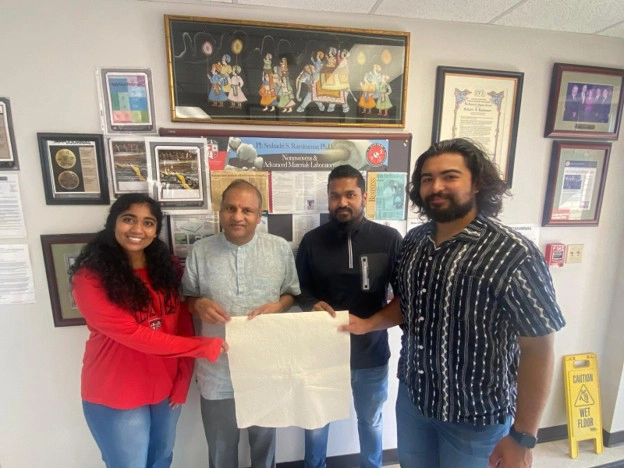
([L-R] Voshita Parvathaneni, Ramkumar, Mirza Khyum and Juan Garcia with Cotton Nonwoven Sample)
Juan Garcia, who will major in Physics and Math and Voshita Parvathaneni, Pre-Med are enthusiastic in conducting experiments, and contribute to writing journal papers. The ecosystem such as the welcoming aspect of Nonwovens & Advanced Materials Laboratory, incentive mechanisms like TrUE scholarships and interest by students has enabled this positive research story.
The College of Arts and Sciences at Texas Tech University has established Undergraduate Research Academy to foster multidisciplinary collaboration among students who are conducting their undergraduate studies. At the university level, Transformative Research Undergraduate Experience [TrUE] program supports undergraduates from first year in research and providing financial support as an encouragement to undertake research in laboratories.
Juan Garcia, having grown up in Plainview, Texas, which is a cotton growing area, has been amazed with new applications of cotton. Voshita Parvathaneni is from Dallas and is a University-Medical School Initiative scholar, a highly competitive medical school program, although not aware of production agriculture was thrilled to bring her research experience to cotton. These high achievers engage in research with the help of graduate student Mirza Khyum whose research is focused on using sustainable processes to find new cotton products. Engagement with undergraduates also helps graduate researchers like Mirza Khyum to develop their tutoring abilities which is needed for their career in academia or research laboratories.
“I had known of the many uses of cotton but had not realized the full extent of its utility,” stated Juan Garcia. On cotton research Voshita added, “Research experience in cotton has made me to understand how versatile it is. This is the beauty of research.”
On research encouragement at undergraduate level, Juan Garcia stated, “It opens up windows into the world of ideas, which undergraduates may not find on their own.”
Voshita is thankful for the research support, and stated, “By encouraging creativity and providing a welcoming atmosphere, students will be encouraged to take their curiosity to next level.”
Research needs support but it need not be just funding alone. Active engagement with society, solving problems that are relevant, outreach to high school students and undergraduates through undergraduate research academy and financial and in-kind support by the end-user community all will develop a welcoming and supportive R & D ecosystem. Importantly, science communication to the public is needed to buy in support from society and policy makers.
While in majority of countries, research is supported by government programs, in the United States, stakeholders like industry and commodity groups support research. United States’ cotton producers support research in laboratories like Nonwovens & Advanced Materials Laboratory through Cotton Incorporated and Texas State Support Programs.
Recent experience with high school and undergraduate students in our laboratory has shown that an engaging and supportive system will enthuse students towards science and technology.
Economic might of nations depends on talented next generation workforce which is interested in science and technology.
Global Trade and Technical Collaboration in Textile Sector
By: Seshadri Ramkumar, Professor, Texas Tech University, USA
(Lubbock, USA, July 07, 2026)—Textile trade will play an important role in enhancing the trade between the United States and India.
In a recent meeting, Honorable Piyush Goyal, Minister of Commerce, Government of India stated that India should aim at reaching exports valued at US$ one trillion in 2026-27. Currently, India’s total export value is US$ 441.75 billion, and has an overall trade deficit of US$ 334.27 billion. United States remains the number one trading partner with a total value of US$ 140.80 billion. Unites States hopes that the trade will increase to US$500 billion soon. Of the total exports, textiles and apparels are about US$ 40 billion, which is about 10 percent of the total export value. For India and the United States to reach their expectations, sectors like textiles and leather should double their exports.
To increase exports, there is a need to enhance opportunities to market products and exchange technical and product knowledge. Indian textile-related bodies with the support of Government of India are organizing the third edition of Bharat Tex in New Delhi from July -14-17, 2026. In addition to products expo, multiple knowledge sessions are arranged for technical and marketing information exchanges.
Indian Prime Minister Honorable Narendra Modi has come up with a 5F vision for the industry, “Farm to Fiber, -to Fabric, -to Fashion and -to Foreign.” Major international events that attract not only industry, and academia, but also trade and professional associations will enable the vision of the Prime Minister to boost trade and technical knowledge.
While the trade deal between India and the United States is not yet sealed, both parties are eager to get it done soon. Recently, speaking at an event in Washington, DC, United States’ Ambassador to India, Honorable Sergio Gor indicated the importance of the deal and said only 1-2% of the negotiation is pending.
Industry and trade associations are focused on marketing their products, while focusing on the next generation workforce and students is vital for the industry. United States-based American Association of Textile Chemists and Colorists (AATCC) will be participating in the Bhart Tex event to strengthen collaboration with industry and academia. AATCC will be having a team of four people to engage in technical and education collaborations.
AATCC is having interest in building a strong partnership with India as it is a textile powerhouse. In 2006, when I organized a major international conference on “Advances in Fibrous Materials, Nonwovens and Technical Textiles-AFNT-2006,” in Coimbatore, AATCC
Indian Cotton Sector in Play
By: Seshadri Ramkumar, Professor, Texas Tech University
(Lubbock, USA, July 01, 2026)—India’s appetite for imported cotton is growing, while cost and need for quality fiber will influence its imports.
China and India are both leading cotton and textile producers, while cotton made-up goods from India is a major exporting item for India.
India’s cotton demand depends on macro-economic picture, trade agreements with major importers like United States, EU, and United Kingdom as well as its domestic consumption. In terms of dependency on imported cotton as is the case with China, Vietnam, Bangladesh and Turkey, India needs cotton with high quality primarily for its fine count spinning catering to home textiles and export markets.
India imports about 9% of its total cotton consumption as against 16-17% by China. The need for cost competitive quality cotton gives opportunity for cotton exporting countries like United States, Brazil and Australia to proactively engage with India.
While India’s cotton production can feed to its consumption, the need for higher quality and higher realization in spinning necessitates importing cotton. Increase in demand for cotton and shortfall in its production due to weather and insects can impact cotton price and demand.
Aruppukkottai, India-based Jayalakshmi Textiles has been blending about 20% or more of imported cotton to spin fine count yarns. “Lower trash content in imported cotton from United States is a convincing aspect provided they could procure at a competitive price,” stated Velmurugan Shanmugam, general manager at Jayalakshmi Textiles, which is a 100% fine count cotton spinning mill. This mill consumes about 4000 bales (170 Kg) of cotton monthly, and the need for high-quality cotton imports provides opportunities for cotton exporters.
This has been the case recently since February when the demand for textiles started to increase due to United States Supreme Court ruling on IEEPA as illegal, when Chinese textile exports started to increase. China in turn had to import cotton yarns from India, which put pressure on price and cotton availability. After the surge in demand started settling, the late start of monsoon in India during this Kharif planting season is being considered as a major influencing factor in cotton demand and price.
India started the monsoon season with 42% deficit which in general is not a favorable situation for agriculture. But it may not influence cotton as much as rice, cereals and
sugarcane. Farmers in India might switch from high water demanding crops such as pulses and rice to cotton. This possibility needs to be taken into consideration, which will influence pricing and availability.
Indian cotton scenario will determine the global market and futures stated Kaushik Gnanasekar, Research Analyst at Mumbai-based Commtrendz, a commodity research and analysis firm. Late monsoon is being talked about in agricultural sector, which is hoped to push commodity prices upward, which in general is true. “In the Indian context, greater influence will be on food crops sown in Kharif season such as pulses and sugarcane,“ added Kaushik Gnanasekar.
It all depends on El Nino which is already reflected in the late start of monsoon this year, stated Gnanasekar Thiagarajan, Director, Commtrendz. Given than monsoon has picked in cotton growing areas such as Karnataka, and Maharashtra, Gnanasekar Thiagarajan predicts that the new crop in Indian (October 2026-September 2027) may be above 320 lakh bales (170 Kg each). In his conservative estimate, he opined that the cotton crop will be more than last year as against the deficit projection based on monsoon pattern.
Another important influencing factor is the ensuing trade deal between India and United States, which is expected to include procurement of agriculture products at certain quantity levels. This deal will be favorable to cotton as it is not a food crop and will not be affected by non-tariff barriers such as GMO restrictions. Indian cotton crop is 90-95% GMO and hence it makes it convenient to add cotton in the trade equation. Furthermore, Indian spinning industry organizations like The South India Mills’ Association demand duty free import of cotton to stay competitive against Bangladesh.
In a recent gathering in Washington, DC, U. S. Ambassador to India Sergio Gor stated that only 1-2% of the deal is yet to be negotiated and the deal should be sealed soon. Cotton is going to be an important player in the trade between the two nations as United States wants to increase total trade from the current level of US$220 billion to US$ 500 billion in short-medium term.
Many factors such as a win-win U.S.-India trade deal, India’s need for quality cotton particularly for spinning 50s Ne and above, campaigns about environmental friendliness by global cotton organizations like Cotton Incorporated should influence cotton in positive direction.
India is an important market which the global cotton and textile sectors should pay close attention.
FiberTect Wipe as a Standby in FIFA World Cup Football Games
By: Seshadri Ramkumar, Professor, Texas Tech University, USA
(Lubbock, USA, June 24, 2026)—Nonwoven wipe to help with safety at FIFA World Cup Football games.
The 2026 FIFA world cup is considered to be world’s biggest sporting event with 48 teams competing in games to be played in 16 cities spread over three countries. Eleven of those venues are in the United States and the U. S. government has invested about US$ one billion towards safety, and emergency preparations through grants from agencies such as Federal Emergency Management Agency.
FiberTect is an invention from the Nonwovens & Advanced Materials Laboratory at Texas Tech University and has been taken to market by First Line Technology (FLT). FLT has taken the product to multiple areas such as national defense, medical, and emergency preparedness.
According to First Line Technology, local agencies and cities have procured FiberTect
wipes as part of FIFA world cup safety preparations and emergency preparedness.
The picture shows FiberTect being used in a hospital setting in Orlanda to simulate
human skin decontamination as part of First Receiver Operations training.
Dry decontamination procedure has been found to have technical and logistical advantages
over wet decontamination and is vital for immediate toxic chemical decontamination.
United States Army has shown the wipes can remove fine particles that may be synthetic
opioids and can be used in sub zero temperatures.
“One of the greatest strengths of Dry Decon is that it gives responders the ability to act immediately. By reducing contamination in the first few minutes following an exposure, responders can improve outcomes, reduce secondary contamination risks, and bridge the gap until more comprehensive decontamination resources are available,” stated Frank Roberts, Senior Training Specialist at FLT
In the recent International Fire Chiefs Association Hazmat conference in Baltimore, USA, Frank Roberts showed how dry decontamination can be used as practical field capability for mass casualty scenarios.
“Our key messaging at the conference was related to chemical, biological, and radiological contamination response at the ongoing FIFA World Cup, the upcoming America 250 celebrations, the LA Olympics, and other special events such as sporting events, races, concerts, political gatherings, etc. If there ever was a mass contamination incident at one of these events the only practical way to rapidly perform immediate decontamination of large numbers of people with limited first responders is victim self-decontamination using dry absorbents such as FiberTect,” stated Corey Collings, Director of Technical and Training at FLT.
Dry decontamination procedure using absorbents such as FiberTect is no longer viewed by the user community as an alternative to wet protocols, but a necessary first step towards saving lives and avoiding causalities.
FiberTect is a model for University-Industry collaboration which has translated laboratory research into a life-saving product.
Now, it is finding applications in global events such as FIFA world cup games.
Training Undergraduate and School Students in Research
By: Seshadri Ramkumar, Texas Tech University, USA
(Lubbock, USA, June 08, 2026)—Research culture needs to grow from high school level to build innovation ecosystem.
The Nonwovens & Advanced Materials Laboratory at Texas Tech University has been engaged with school students to cultivate research curiosity for a few years now.
Summer is the best time to have undergraduates and high school students in laboratories. Faculty will have more time to engage one-on-one in research with upcoming researchers.
In the annual speech on June 2, 2026, the United States’ National Academy of Sciences’ President Marcia McNutt emphasized the importance of strengthening STEM pipeline and boosting innovation for the U. S. to remain a top leader in STEM and innovation.
Texas Tech University through the College of Arts & Sciences Undergraduate Research
Academy (CASURA) is endeavoring to build research interest among undergraduates and
boost innovation by supporting undergraduate research. The program provides short
term summer fellowships to undergraduates to get connected with research laboratories
and be involved in research.
[Photo: Juan Garcia (Left) and Mirza Khyum (Right) in the Nonwovens & Advanced Materials
Lab, TTU]
The laboratory has been fortunate to obtain two CASURA fellowships to support undergraduates
in research. Juan Garcia, majoring in Physics and Mathematics at Texas Tech University,
is undertaking research on cotton nonwovens for advanced applications.
It was such a relish to watch Juan learning the mechanical testing of nonwovens taught by my graduate student Mirza Khyum.
Programs like CASURA needs to be encouraged so that a research pipeline is established in academia and entice more students to graduate studies in STEM disciplines.
The video taken in Nonwovens Laboratory shows how the student is quick to grasp the technique. Such enthusiasm in research must be encouraged.
Pediatric Decontamination for Children’s Health & Safety
By: Seshadri Ramkumar, Professor, Texas Tech University, USA
(Lubbock, USA, May 28, 2026)—Children specific toxic chemical decontamination product and procedure developed.
First Line Technology [FLT] recently announced a dry wipe technology procedure for wiping away toxic chemicals and particles from the skin and body of children helping with the safety of infants and children. This can be achieved using a skin friendly three-layered nonwoven wipe which is now a recognized dry wipe technology.
A new field of pediatrics decontamination is emerging with the proven nonwoven wipe technology that lends itself to different fibers with activated carbon for instantaneous bulk removal of agents and fine particles like opioids. This dry wipe is also part of Hybrid Decontamination procedure.
Dr. Jayanthi Parthasarathy, Department of Radiology at Columbus, USA-based Nationwide Children’s Hospital, clearly explained the need for pediatrics decontamination. Dr. Parthasarathy stated, “As with all medical devices adult sizes cannot be simply scaled down to their needs as seen in my personal experience treating both adult and pediatric population. In children in emergency scenarios, three things need additional consideration: 1) significantly larger skin surface area exposure, 2) high respiratory rate, and 3) proximity of the vital organs to the surface. Also, infants’ skin is much thinner than adults and chemicals permeate faster.”

Dry Wipe for Pediatrics Decontamination [Courtesy: First Line Technology]
Hybrid Decontamination has become a default process for effective decontamination. “This is the process that has been used countless times by emergency agencies to decontaminate small fentanyl releases after overdoses, clean police cars, police and EMS equipment, hospital rooms, etc.,” stated Corey Collings, Director of Technical and Training at FLT.
Paul Shaw of First Line Technology and a former U. S. Army medic of 27 years highlighted the importance of dry decon and introduced it as viable and effective pediatric decontamination tool.
It is important to come up with pediatric decontamination method for young people as children have high mortality risks. Toxic exposure at adult levels leads to worse outcomes in children due to different anatomical characteristics. “Children’s skin is not well developed and has more surface area to body mass, which necessitates quick decon,” stated Paul Shaw. Water decontamination increases the absorption of toxins, which may be problematic. Dry decon can effectively remove 80-95% of toxin in one minute and the process is about four times quicker than wet process which can take 15-20 minutes.
“A dry decon approach using materials such as FiberTect provides a rapid, low-logistics, low-runoff solution that can reduce exposure, limit secondary contamination, and improve survivability while minimizing additional stress on the child. In many cases, speed matters more than perfection in the first few minutes of exposure,” added Paul Shaw.
“Children are also not capable of effective self-decontamination and families being in a highly anxious mental status, additional effective support from them may not be forthcoming. All the above factors cumulatively lead to faster penetration of toxic material from the skin and reach the vital organs faster than adults demanding the care giver in the emergent situation seek quick and effective decontamination,” pointed Dr. Jayanthi Parthasarathy. These factors demand effective children friendly decontamination process and products.
FLT has developed Personal Decontamination Kits [PDK] which has FiberTect nonwoven dry wipe as a key component. These kits can be conveniently used for wiping toxins from infants to adults and are field deployable.
“Numerous agencies are using the First Line PDK as a standard response for dealing with Fentanyl contamination on surfaces. This PDK kit is issued to every police officer in many jurisdictions,” stated Corey Collings.
FLT also offers training courses for first responders, law enforcement, and hospital
responders in adopting hybrid decontamination techniques.
FiberTect is a patented invention from the Nonwovens & Advanced Materials Laboratory
at Texas Tech University. First Line Technology has effectively translated the technology
to many sectors saving lives including that of children when exposed to chemical toxins.
Holistic Education is Needed
By: Professor Seshadri Ramkumar, Texas Tech University
(Lubbock, USA, May 15, 2026)-Flexible and holistic educational approaches in schools to colleges help with career success.
There has been a shift since the 1990s towards professional courses such as engineering and medicine in countries like India. This has however enabled many thousand youngsters to have opportunities in the United States, Europe and elsewhere. This has been the case with yours truly as well.
In India, the new education policy of Honorable Narendra Modi’s government realizing global needs has been framed to help next generation to nurture their talents, while acquiring marketable skills. Ancient system of India recognized music, arts, sports as part of broader learning recognizing about sixty-four types of educational arts.
When I moved to the United States in December of 1998, I started realizing the value of comprehensive university system. I did not have this opportunity having educated in a competitive technical higher education institution in India.
Situation is slowly changing and the current job market is changing with the advent of AI, global economy, rising nationalism, and other factors. Team approaches, understanding of the world, economic analysis and communication skills are being recognized as value adding tools to one’s core competencies.
Music and sports do have value in building one’s collaborative and individual spirits. American school systems still follow this approach enabling students to choose their extracurricular activities in schools which give credit based on their interest.
With the school year ending, on May 14, 2026, I witnessed the year ending orchestra recital at Lubbock High School, where my son Aditya Ramkumar, freshman at the high school played Violin-I in the Chamber Orchestra. I could witness the passion in young minds as well as in Mr. Alejos Anaya, Orchestra Director of the school. Many students in the orchestra are high achievers in STEM disciplines participating in National Science Olympiads. This shows encouragement and support by teachers and parents for extracurricular activities that enable students’ success.
Music provides academic and mental discipline and enriches academic success. I am delighted to see American Universities evaluate students with a comprehensive approach giving opportunities for students based not only on academic performance, but also in areas such as leadership, volunteering, and extracurriculars. Flexibility, which helps
students to chase their dreams as well as providing chances if first attempt in one’s career is unsuccessful has been the basis of American education system.
“Flexible education system and holistic approach help with success,” stated Dr. Manickavasagam Sundaram, a successful physician in Toronto, Canada, who has benefited with the flexible approach in medical admissions without sacrificing academic rigor in North America.
Overall development and flexible educational approach are needed to bring up future leaders who can take countries forward.
Technology and arts need to have symbiotic relationship for economic and social improvements.
What a joy to listen to the Lubbock High School’s Orchestra playing!
https://www.youtube.com/watch?v=ygog5JGxWqc
Technology Improves Productivity and Margins in Textiles Sector
(Lubbock, USA, May 05, 2026)---Investments in technology and modernization are the ways forward for the textiles sector.
Textile industry in developed economies like the United State are reinventing themselves by focusing of advanced products, textiles that can be used in personnel and environmental protection.
Textiles industry in India and other major manufacturing countries has been upgrading to remain competitive with China with government initiatives such as Technology Upgradation Fund, National Technical Textiles Mission, etc.
Modernization and technology adaptation are seen as positive routes for survivability and growth.
There is some uneasiness among manufacturing sectors that AI may bring dent in employment, which is important for countries like India. Technology development over the years enables productivity and increases per capita income, stated Senator Phil Gramm who was the Chairman of Banking Committee in the United States Senate. Senator Gramm was the author of President Reagan’s budget enabling tax cuts providing cash for discretionary spending.
On May 04, 2026, speaking in Lubbock at his book signing event, “The Triumph of Economic Freedom,” Senator Gramm briefed that technology revolutions such as industrial revolution increased productivity and per capita income. Citing AI revolution, he said while it may wipe out some present-day jobs, it will lead to more and better jobs as was the case during 1840s in England and early 1900s in the United States.
Textile industry in export-oriented countries should now focus on support for research and development, new product development, interaction with academia and training workforce. The recent trade war issues have revealed that situations can be volatile anytime which will affect the industry. Research pays-offs may not be immediate, but it is time for the industry to orient themselves towards boosting research, importantly applied and translational. In countries like India, such efforts will help the sector to improve its product basket and strengthen its presence in advanced textiles. Industry should also focus on domestic consumption and export and interactions with academia, and research organizations. Those countries that have competitiveness in cost and have broad product basket not only in commodity segments will have edge both in domestic and international markets. Additionally, research and interaction with industry associations by participating in research and trade events will help the researcher, entrepreneur, and industry.

Photo Caption: Ramkumar with Senator Phil Gramm (center) and Carey Hobbs (right)
I am witness to positive effects of investments in research and boosting innovation. United States’ Department of Defense supported my research in the 2000s, which led to the patented invention, “FiberTect.” Industry associations play a part in connecting the stakeholders as was the case for me. I presented my wipe technology at a needlepunch conference organized by the INDA, Association of the Nonwoven Fabrics Industry in early 2000s in Savannah, USA, where Larry Hobbs, son of Carey Hobbs, founder of Waco, USA-based Hobbs Bonded Fibers, a leading needlepunching industry heard my technology presentation which led to transfer of technology.
Carey Hobbs and Larry Hobbs believed in our work and licensed FiberTect from Texas Tech University. The product through technology expositions like those organized by Booz Allen Hamilton brought Fredericksburg-based First line Technology, which does business in defense and emergency sectors to connect with manufacturer, Hobbs Bonded Fibers. This collaboration took FiberTect wipe from manufacturing stage to commercialization.
Carey Hobbs believed in my invention back in early 2000s when he licensed my FiberTect invention and started manufacturing the wipe. Today, First Line Technology has taken FiberTect to many sectors including decontaminating opioids.
Carey Hobbs is 90 years young now and will be receiving INDA’s Lifetime Technical Achievement Award. I had an opportunity to visit Carey Hobbs on May 04, 2026, at the book signing event. Maintaining connections not only helps professionally but also personally as is the case with many like me.
Free trade has been an enabler and raised standards of living. Open trade requires products and services which are needed at competitive prices and hence constant innovation helps.
Research, outreach and collaboration enable products from laboratory to market space. Technology is an enabler and should be handled properly for the benefit of industry and public.
Cotton Outreach by High School Student Shines
By: Seshadri Ramkumar, Professor, Texas Tech University, USA
(Lubbock, March 02, 2026)—Cotton advanced nonwoven product research gains recognition
in science competition. On February 27, 2026, elementary, middle, and high school
students from many counties in South Plains participated in the South Plains Regional
Science & Engineering Fair held in Lubbock. Projects ranging from robotics to AI in
medicine, microplastics to advanced cotton textiles conducted by students were part
of the competition. Aditya R, a 9th grade student at Lubbock High School is conducting
research in the Nonwovens & Advanced Cotton Laboratory at Texas Tech University on
proving the superiority of untreated cotton against synthetic wipes in absorbing oil.
The goal of the project is to establish the sustainability attributes of cotton in
environmental clean-up.

Photo Caption: Aditya with Cotton Research Poster at the Science Fair
Aditya’s project on “Raw Cotton in Absorbing Nonpolar Molecules,” received Blue Ribbon
First Place in the 9th grade in physical sciences category. It also advanced to “Trophy”
stage
and won a place to proceed to Texas State Science and Engineering Fair in March 2026.
Cotton being the backbone of the economy in Texas, it is pleasing to know that a cotton
project that highlights cotton’s applications in saving lives and protecting the environment
has advanced to the State level. Aditya also acknowledged earlier value-added cotton
research conducted at the Advanced Cotton Laboratory, TTU emphasizing the need to
take
cotton beyond commodity marketplace.
“It is about discovery and learning. It is not about competition,” stated Professor
Sung-Won
Lee, Chairperson of the Department of Physics and Astronomy, TTU, during the award
ceremony. Many organizations encouraged students by presenting Special Awards, which
is noteworthy.
Advanced application of cotton has gained a spot in the larger science space where
a wide
range of projects in general science, water filtration, psychology, engineering, and
biomedical sciences are competing.
Agriculture related projects conducted by high school students at The Center for Advancing
Sustainable and Distributed Fertilizer Production, TTU such as electrolytic separation
of
hydrogen from ammonia, and water purification using electromagnetic methods were
discussed by students at the science fair.
Based on the number of agriculture related projects presented, it is evident that
stakeholders like commodity groups should encourage more students to participate in
broad-based science fairs to bring visibility to sustainable agriculture and its value
in
society.
It is important to note that the recent science fair is the 70th annual edition, which
highlights the importance of cultivating science and engineering interest among school
students.
United States-India Trade Agreement Reached
(Lubbock, USA, February 02, 2026)---Two major democracies come to an agreement on
trade.
United States and India have announced a trade pact which will provide win-win
opportunities for both nations.
The announcement of the trade agreement came after President Donald Trump and Prime
Minister spoke on February 2nd, 2026. Prior to this agreement, Indian exports to the United
States were tariffed at 50% that included 25% penalty for Russian oil imports by India.
Announcing on February 2nd (late evening IST), via social media post, President Trump
recognizing the importance of India in trade, population and geopolitical scenario has
lowered the tariff to 18%.
*In my column on November 21, 2025, “India-United States Textile Trade Collaboration,” I
predicted that the tariff range will be between 15 to 20%, which fortuitously has occurred.*
While it took time to get an agreement, given the size of the economies and complicated
issues to be managed such as agriculture, it is a sign of relief to Indian exporters and the
United States’ consumers that there is a clear picture on the bilateral trade.
Ambassador Sergio Gor in an interview with a major Indian media outlet clarified that
eighteen percent tariff rate will be final tariff rate.
In his social media statement Prime Minister Modi stated, “When two large economies and
the world’s largest democracies work together, it benefits our people and unlocks immense
opportunities for mutually beneficial cooperation.”
Both leaders have expressed their warm friendships and have recognized India-USA
relationship in their posts.
It is a diplomatic and trade victory for Prime Minister Modi who handled the situation well
without any immediate retaliation or reciprocal tariffs. It is clear that a lot of back-room
discussions and negotiations would have occurred to come to this agreement.
While details are yet to be known, it is a positive sign that a certainty has been reached.
The cumulative tariff for imports into the United States will be 18%, which will bring India
into a competitive position with other major exporters.
Show & Tell: Demand Enhancement for Cotton
(Lubbock, USA, February 02, 2026)—Engagement and outreach, policy support, and new
market creation will push cotton consumption upward.
Producer organizations, textile associations, and brands in two leading cotton producing
nations, India and United States are engaged in good outreach to consumers and more
importantly to Gen Z populations to create awareness on the uniqueness and advantages
of cotton. The Nonwovens & Advanced Materials at Texas Tech University is outreaching to
school students to create interest in cotton and showcasing unique advantages of cotton.
If knowledge on cotton is created in the minds of young people at school level, not only will
it help with increasing market share over few years, research interest in cotton as a
sustainable and advanced fiber can be nurtured.
For three years, the laboratory has been involved in showcasing the high-tech application
of cotton to school children using hands-on and eye-catching demonstrations.
On January 30th 2026, amidst chilly weather, school children, parents, and academics
assembled at the Ramirez Elementary School in Lubbock for STEM Night.
Why cotton and what new applications can be evolved were the themes of the show and
tell by the Nonwovens & Advanced Materials Laboratory at Texas Tech University.
Oil absorption by cotton, which protects the environment was explained by a 9th grade
student Aditya R of Lubbock High School with the support of Mirza Khyum, a graduate
student in the laboratory. The aim of the presentation was to educate the audience in a
simple way about cotton and take cotton beyond its established status as a commodity
fiber.
Professionals like librarians who are not in the field of cotton, elementary school children,
cotton researchers, and senior citizens participated in the engagement as the interaction
was assisted with live demonstrations.
Tom Rohrig, librarian at Texas Tech University with 40-years of experience engaged in the
live discussion along with Jenny Harland, Co-Chair of the Organizing Committee of STEM
Night at Ramirez Elementary School.
It was such a relish to have Arsheen Suhayla, a second-grade student at Ramirez
Elementary who was able to connect cotton with her father, Dr. Md. Abu Sayeed, who has
done research in cotton. Arsheen interacted with Aditya to know how the product was
made and was astonished to see the instantaneous absorption of oil by raw cotton.
It will help the cotton industry to take cotton to school students using demonstrations
which will not only attract young minds but also public, who are important consumers.
Cathrine Prenot, the Chair of the Organizing Committee of STEM Night stopped for the live
demonstration and was quick to point out that such applications are good for local crops,
like cotton. It is clear from our years of engagement using demonstrations that it is easy to
reach new consumers using touch and feel or demonstrations.
Education and marketing outreach should also focus young minds, and the industry must
strategize to take cotton into advanced applications such as in the fields of medicine,
environmental protection and industrial applications.
A three-minute demonstration and engagement with audience is available in the YouTube
link:
https://www.youtube.com/watch?v=EkKkVGlBWgg
Responder Decon Kit Wipe
(December 24, 2025)—Color coded nonwoven adsorbent-absorbent wipe is part of
Responder Decon Kit [RDK].
A three-layered wipe with high surface area core is part of Hybrid Decon and has become a
default technology to clean up toxins and wipe away micro sized particles.
A recent U.S. Army report showed that dry wipe functions effectively in sub-zero
temperatures and the technology has been field tested in Alaska.
Fredericksburg-based First Line Technology [FLT] has the RDK in the market which can be
used stand alone or with chemical formulation depending upon the situation and needs.
Results have shown that where skin decontamination of toxic chemicals and micro sized
particles are needed, dry decontamination is a viable method.
Photo: Responder Decon Kit with Three Color Coded Wipes [Source FLT]
Years of research, field evaluation and marketing have led the nonwoven wipe technology to find applications in defense, emergency response, and medical markets.
In laboratory experiments, the three-layered FiberTect wipe showed decontamination efficiency between 78% to 95%. In cold temperatures as low as 50 F, toxin removal (or reduction) efficiency was as high as 94% even at high concentration of 10 g/m2.
RDK has three wipes which are color coded enabling user-friendly environment. Red coded wipes are to be used during the start of decontamination, yellow coded wipes are to be used to clean face and neck, and final decon should be conducted with a larger wipe coded in green. This kit can be used in mass casualty scenarios and is safe on skin.
Dry wipe offers advantages such as skin friendliness and long shelf life as high as 15 years.
With the 2026 FIFA World Cup, co-hosted by the United States, emergency management agencies are preparing well for combating mass casualties, and hybrid decontamination with dry wipe as an integral component has a vital role to play.
FiberTect is a model for translating laboratory research to save lives and enabling applications in emergency management and protecting people in huge gatherings such as world cup games.
Textile Wipe Becoming a Default Decontamination Technology
(Lubbock, USA, December 17, 2025)—Modernized decontamination procedure emphasizes dry decontamination procedure involving dry nonwoven textile wipes.
Skin friendly adsorbent-absorbent nonwoven wipe, FiberTect is a part of default dry decontamination procedure recommended in guidelines such as Primary Response Incident Scene Management (PRISM). In the field of textile materials, to have a technology recognized in such influential reports is a translational milestone.
On December 16, 2025, about 155 people representing defense, national security, emergency preparedness, and medical response, attended a presentation by Corey Collings, Director, Technical and Training at First Line Technology (FLT), LLC on dry decontamination. Dry decontamination is receiving much attention as this field is in the modernization phase.
The presentation revealed information in the field of decontamination which was not widely known, and the talk provided status of the field. Highlighting the lack of substantial developments in decontamination for 100 years from 1918 to 2018, efforts that led to improvement in decontamination have brought dry decon as a priority protocol for personnel and sensitive equipment decontamination. FLT is advocating “Hybrid Decon,” which has dry wipe and a chemical formulation. Improvised dry decontamination is the default if the contaminant is non-caustic liquid according to the PRISM guidelines (Volume 2), which came out of a project funded by the Office of the Assistant Secretary for Preparedness and Response, BARDA, USA with technical contributions from Public Health England and other institutions.

FiberTect wipe also finds applications in the medical field during decontamination in the case of mass casualty situations. Results from a U.S. Army laboratory shows that FiberTect dry wipe can wipe away ultrafine particles like fentanyl from skin and other contaminated surface. The dry wipe is found to be more effective than vacuum process, proving the multifunctionality of layered nonwoven wipe.
“FiberTect represents the state-of-the art in dry decontamination technology, with its unique ability to remove, trap, absorb, and adsorb all types of contamination, whether it be powder, liquid, or gas,” stated Corey Collings.
Dry wipe FiberTect is an important component of the improvised decontamination process, which was developed at the Nonwovens and Advanced Materials Laboratory at Texas Tech University. Originally developed as a toxic chemical countermeasure’s technology funded by the United States’ Department of Defense, it is a platform technology that finds applications in oil spill clean-up, emergency, and medical response.
FiberTect invention is backed by peer-reviewed science and is a model for translation research from lab to reality, saving lives, protecting the environment, and contributing to national security.
Commenting on breakthroughs in science in a recent meeting, Dr. Sudip Parikh, CEO of the American Association for the Advancement of Science stated that breakthrough research reflects work of decades in science and technology. FiberTect invention fits this view as it involved years of work since its invention. Since its public launch in 2005, it has taken two decades to be recognized as a default dry decon for contaminants as guided by the PRISM report.
FiberTect technology exhibits collaboration between academia and industry, which is important to take lab inventions to real world applications.
Horizon's
Horizons is a column, written by Dr. Seshadri Ramkumar of the Nonwovens and Advanced Materials Laboratory at Texas Tech University, USA, which appears in the well-read educational monthly magazine, Pallikkutam Educational Observer (www.pallikkutam.com), India.
Department of Environmental Toxicology
-
Address
Department of Environmental Toxicology, Texas Tech University, Box 41163, Lubbock, TX 79409 -
Phone
806.742.4567