
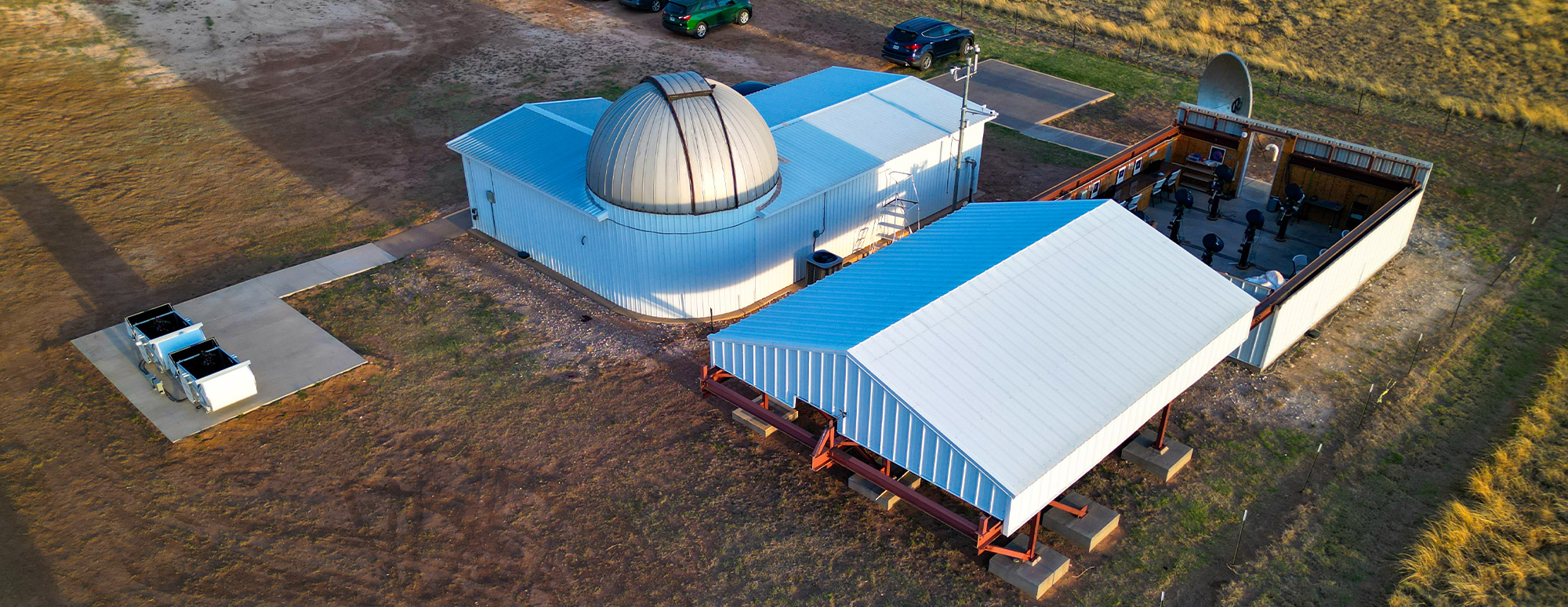
Observatory NameThe Preston Gott Skyview Observatory
Overview
Lorem ipsum dolor sit amet, consectetur adipiscing elit. Sed do eiusmod tempor incididunt ut labore et dolore magna aliqua. Ut enim ad minim veniam, quis nostrud exercitation ullamco laboris nisi ut aliquip ex ea commodo consequat. Duis aute irure dolor in reprehenderit in voluptate velit esse cillum dolore eu fugiat nulla pariatur. Excepteur sint occaecat cupidatat non proident, sunt in culpa qui officia deserunt mollit anim id est laborum.
Watch Video
Find your purpose in unlocking the secrets of the universe a the Preston Gott
Explore Program OptionsAstronomy Courses Offered At Texas Tech
ASTR-1400: Solar System Astronomy
From the Sun's fiery core to the icy edge of our solar system, ASTR 1400 - Solar System Astronomy tours everything that orbits our star: planets, moons, asteroids, and comets. Explore the gravitation that holds it all together and the processes that formed our solar system billions of years ago. An Honors section is offered, and the course partially fulfills the core Life and Physical Sciences requirement.
Hands-On Labs
Learn to navigate the night sky: identifying constellations, understanding celestial coordinates, and determining angles and angular separations between celestial objects.
Travel to the Moody Planetarium to explore how constellations originated and what's visible in tonight's sky, followed by an introduction to celestial grids.
Discover what the Moon is and how it formed, using telescopes to examine its geological characteristics and uncover insight into how the Moon became what it is today.
ASTR-1401:Stellar Astronomy
From the birth of stars to the structure of the cosmos itself, ASTR 1401 - Stellar Astronomy traces how stars are born, evolve, and die, and how galaxies come together to shape the models that describe our universe. Explore the physics of stellar evolution and the cosmological ideas astronomers use to understand the universe's past and future. An Honors section is offered, the course partially fulfills the core Life and Physical Sciences requirement, and it's also a requirement for the Astrophysics concentration.
Hands-On Labs
Learn what constellations are, how to find them, and how to determine their nature, as well as identifying bright stars and determining their spectral types.
Use telescopes to observe the nature and morphology of various celestial objects, from galaxies to globular clusters, and compare the reasoning behind why long-exposure images look different from what you see through the eyepiece.
ASTR-2401:Observational Astronomy
Get hands-on with the tools of modern astronomy. ASTR 2401 - Observational Astronomy teaches you how professional astronomers actually collect and analyze data: operating research-grade telescopes and CCD/CMOS cameras, planning an observing run, reducing and calibrating images, and extracting real scientific measurements from the night sky. You'll work directly with TTU's own observatory facilities, applying what you learn to real targets rather than textbook problems.
This course is required for the Astrophysics concentration, but it's also open to any student who wants direct, hands-on experience with a working observatory - no concentration required.
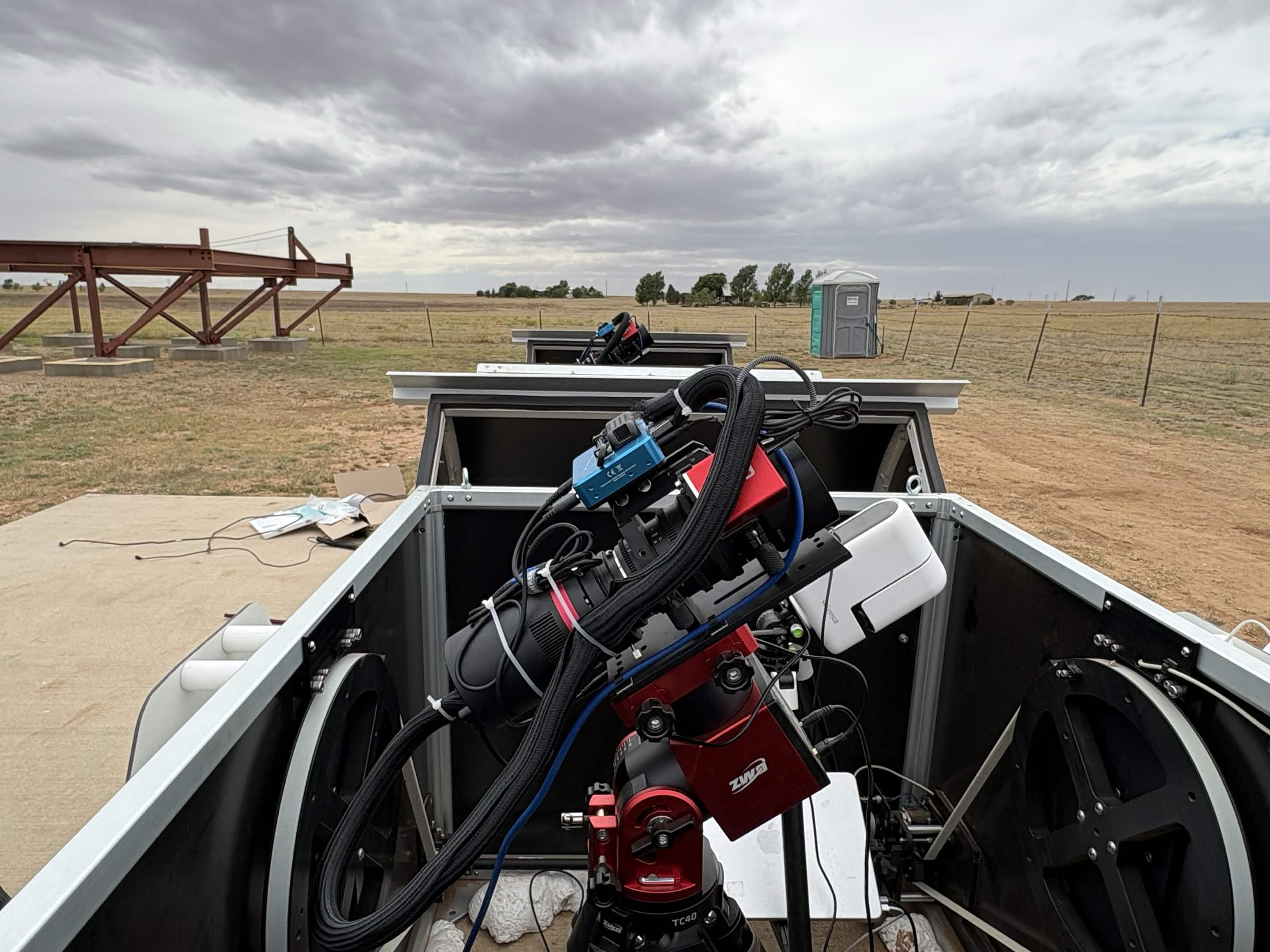
The NMW-TTU Transit Survey operates remotely, discovering cataclysmic variables and registering novae with the IAU.
Learn More About the Survey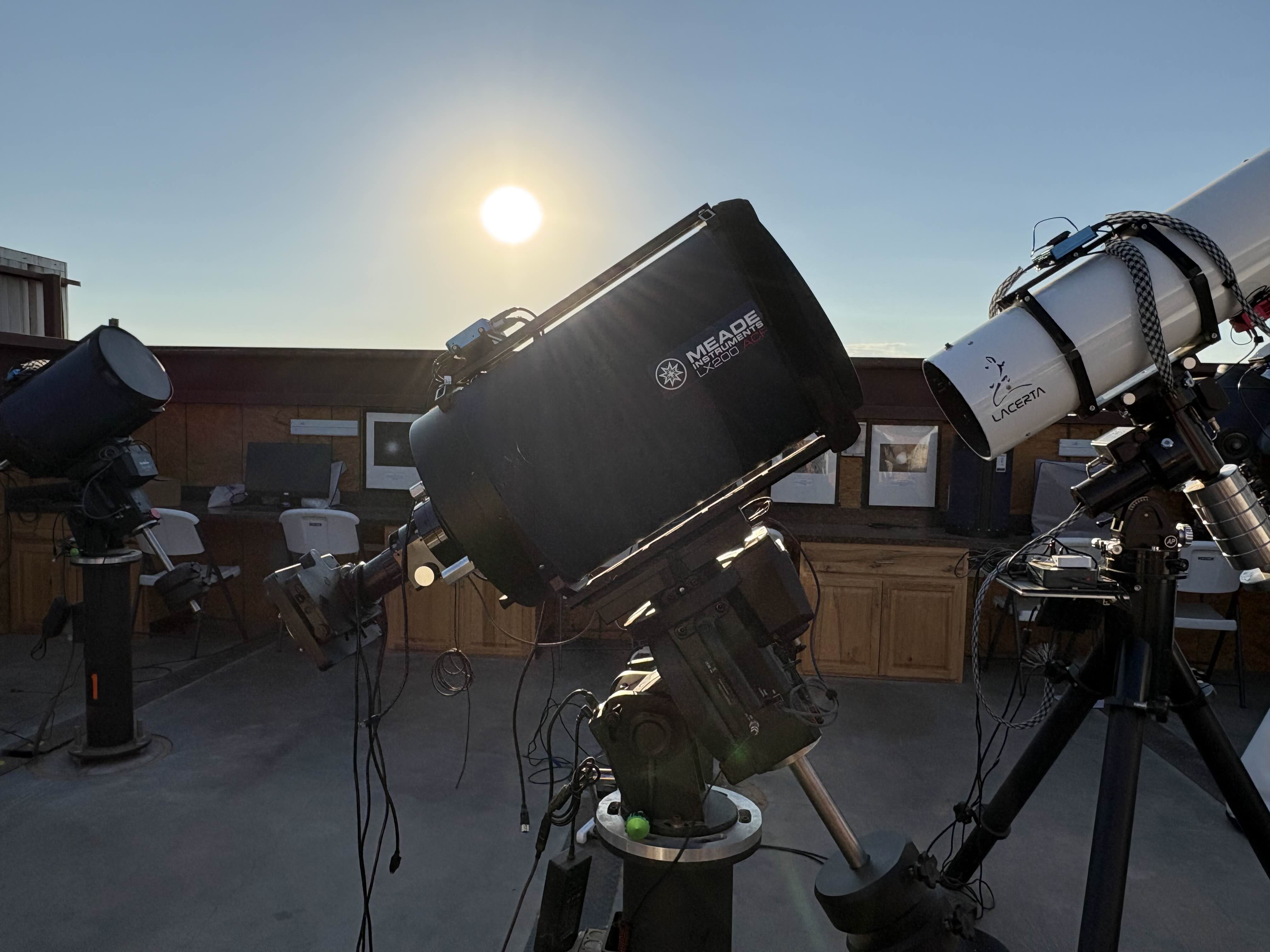
A roll-off roof dome housing LX200 Meade telescopes and QHY CMOS cameras, this observatory has confirmed a Fermi optical counter part.
Discover the capabilites of our systems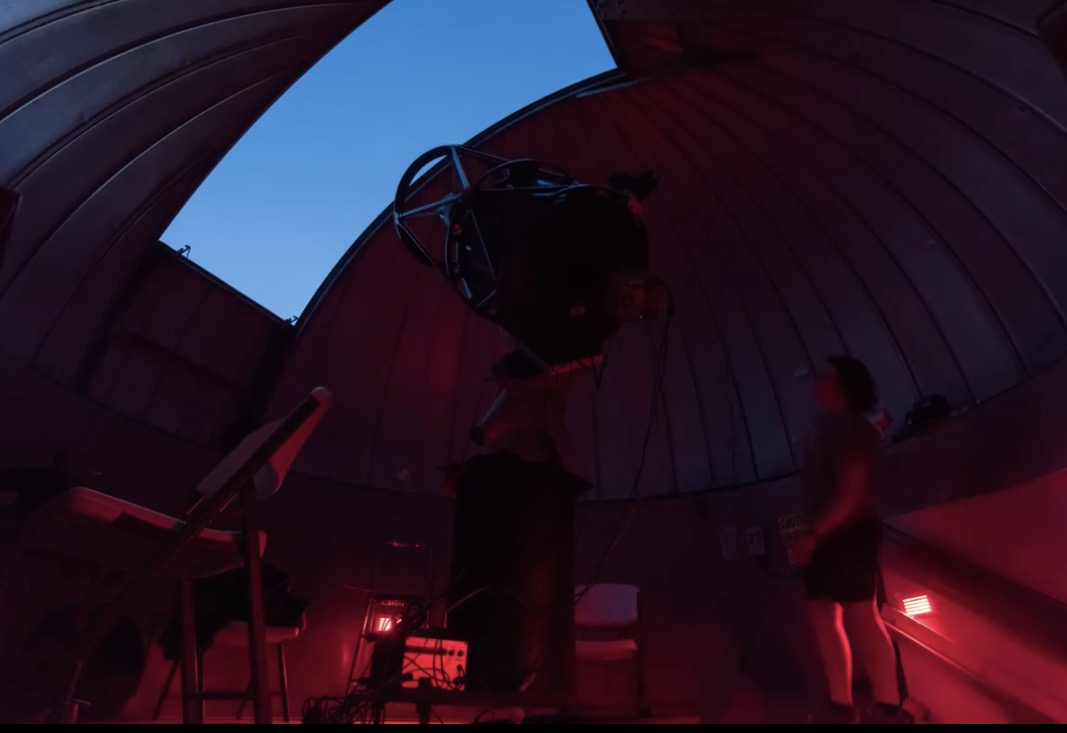
A 20-inch flagship telescope now undergoing upgrades toward state-of-the-art, research-grade observing capability.
Learn More About Its FutureResearch Members




Intrested In Research Opportunities?
As an Astrophysics concentration student, you won't just study the universe, you'll help discover it. From operating research-grade telescopes to contributing real findings to an active international survey, Skyview gives undergraduate and graduate students a direct hand in astronomical discovery. Your work here doesn't stay in the classroom, it reaches the sky.

Want To Persue a degree in astrophysics?
Texas Tech's Astrophysics concentration puts you at the center of active research, from cataclysmic variables and novae to active galactic nuclei, gamma-ray bursts, and the hunt for gravitational waves. You'll learn alongside faculty doing real, funded work in high-energy and time-domain astrophysics, with access to ground-based, space-based, and commercial observing facilities and ongoing survey projects.
Department of Physics and Astronomy
-
Address
Texas Tech University, Department of Physics & Astronomy, Box 41051, Lubbock, TX 79409-1051 -
Phone
806.742.3767 -
Email
physics.astronomy.webmasters@ttu.edu