College of Education K-12 International Education Outreach

From Stones to Euros Curriculum

Following the domestication of cattle and cultivation of crops between 11,000 and 8,000 years ago, some societies used the cattle as capital. Other ancient societies traded rice, tea or cocoa beans, or whales' teeth, cowrie shells and stones. The Roman Empire covered much of the known world, therefore, our monetary vocabulary is derived mainly from Latin.

The early colonists adopted the use of wampum from the Native Americans, and, during the 18th century, tobacco leaves, salt, dried fish and feathers became legal tender. Barter systems existed in parts of the world until the 1960s, but today trade is carried out worldwide in currencies.


Pre-Visit

Have a discussion with your students about how we get the things we need. Ask them several questions to start the discussion.

  If you need food, how do you get it? How do your parents get the food or anything
      else they need?

      What do you think people did to get what they needed before they had money?

Use the resources on our website to explore the history of money.

Top

Resources
History of Money
A timeline of American money is on this site.
Think Quest
This site is a “kid friendly” explanation on the history of money.
Bank of Minneapolis
“The direct exchange of one good for another” is called bartering.
Money is an item, or commodity, that is agreed to be accepted in trade. Over the years, people have used a wide variety of items for money, such as seashells, beads, tea, fish hooks, fur, cattle and even tobacco.
PBS - History of Money
This site breaks the history of money down into time periods. It starts with the beginning of time with bartering and ends with the future of money-digital cash.
Rubicon Int'l
This site offers the user an easy to use conversion tool for several world currencies.
Unicode
Currency symbols from world monies.
The Financials
This site list world currencies with unit names and value vs. US dollars.
Ron Wise's World Paper Money
Examples of the Euro from different countries.
Int'l Bank Note Society

Excellent site for EURO information.
Euro Notes
Pictures of Asian and Middle East money.
The EURO A brief history of the EURO with links to other sites. Go to “Children’s Zone” for activities and games for students. Also check the links for the currency and coins. This gives you pictures of all the different coins and paper currencies. The Euro - Europe's New Currency
On this site you will find a chart that gives the sizes of all Euro coins and paper currency. It also has pictures of the front and back of each coin and paper bills.


Top
Post-Visit

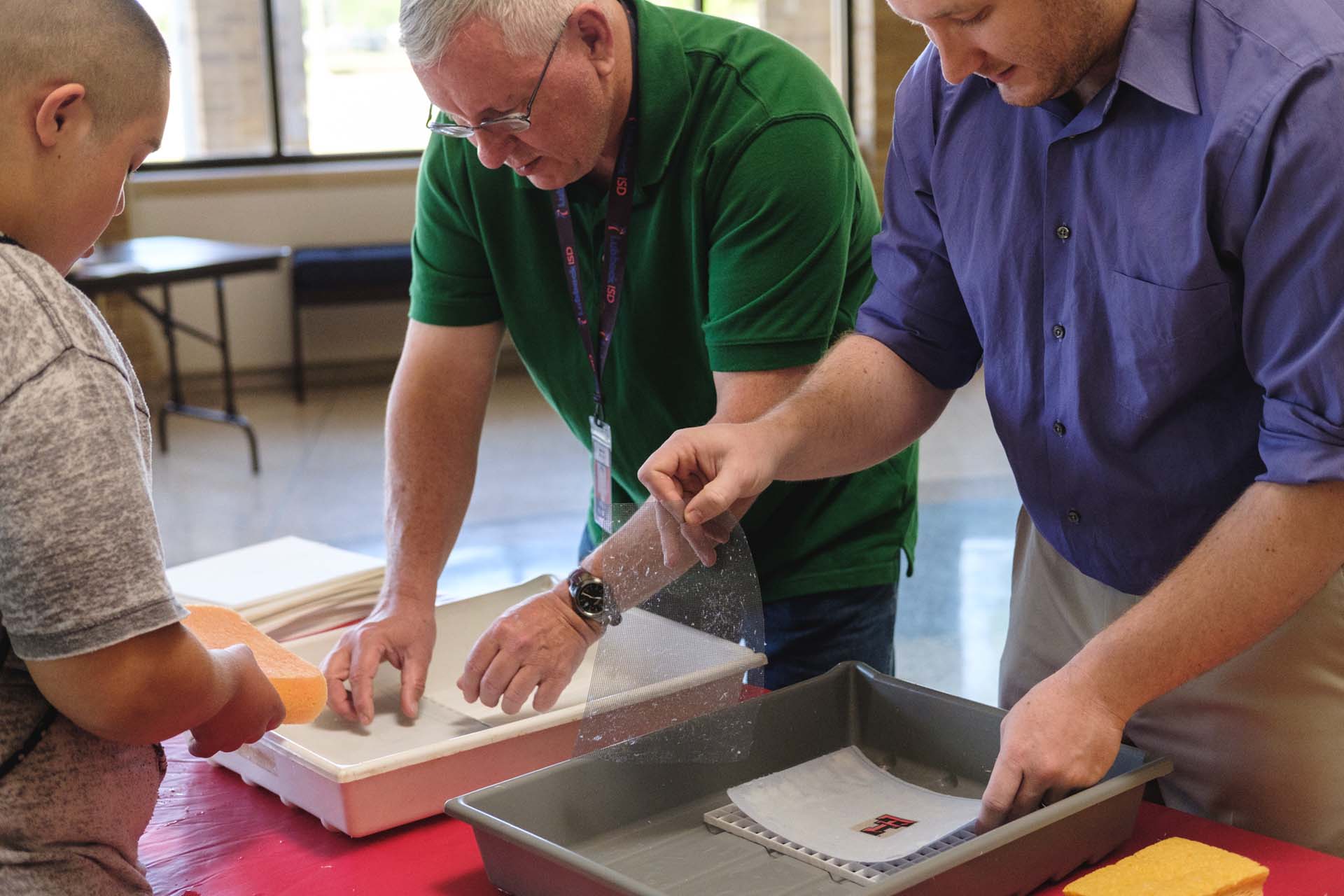
While you were at the International Cultural Center, you saw a Power Point about the history of money and you got to make your own money. Now get in groups of 4 or 5 and brainstorm about what you think the future of money will be. Will we have money or will we use a different way to acquire the things we need? If we use money will it be made out of paper or metal, or will it be made out of something totally different? Draw an example of the way things will be bought in the future.

Money Around the World” Worksheet

Teachers: This worksheet shows the exchange rate for 8 countries around the world. Talk to your students about exchange rates and how they change daily. Look at the link (http://www.exchangerate.com/ ) to see how the exchange rates have changed since the date the worksheet shows.

Have your students read through the top chart and ask any questions they may have. They will then look at the bottom chart and do the conversions using calculators. Work individually, in pairs, or as a class, depending on the grade level.

Answer Key for "Money Around the World" Worksheet

Top