Texas Tech University


TTU Therapeutic Riding Center

The Texas Tech Therapeutic Riding Center provides high-quality equine-assisted services for people with disabilities, special needs, and veterans. Since it was founded in 1998, the center has supported nearly 5,000 individuals through hippotherapy, therapeutic riding, and community outreach.

Why The Horse?

A popular question that lingers throughout therapy sessions is, "Why the horse?". The horse is a powerful and spiritual motivator, bringing emotional and physical stimulation to participants who are unable to move certain parts of their body or speak certain words, said Kelcee Heinrich, TTRC lead administrator.

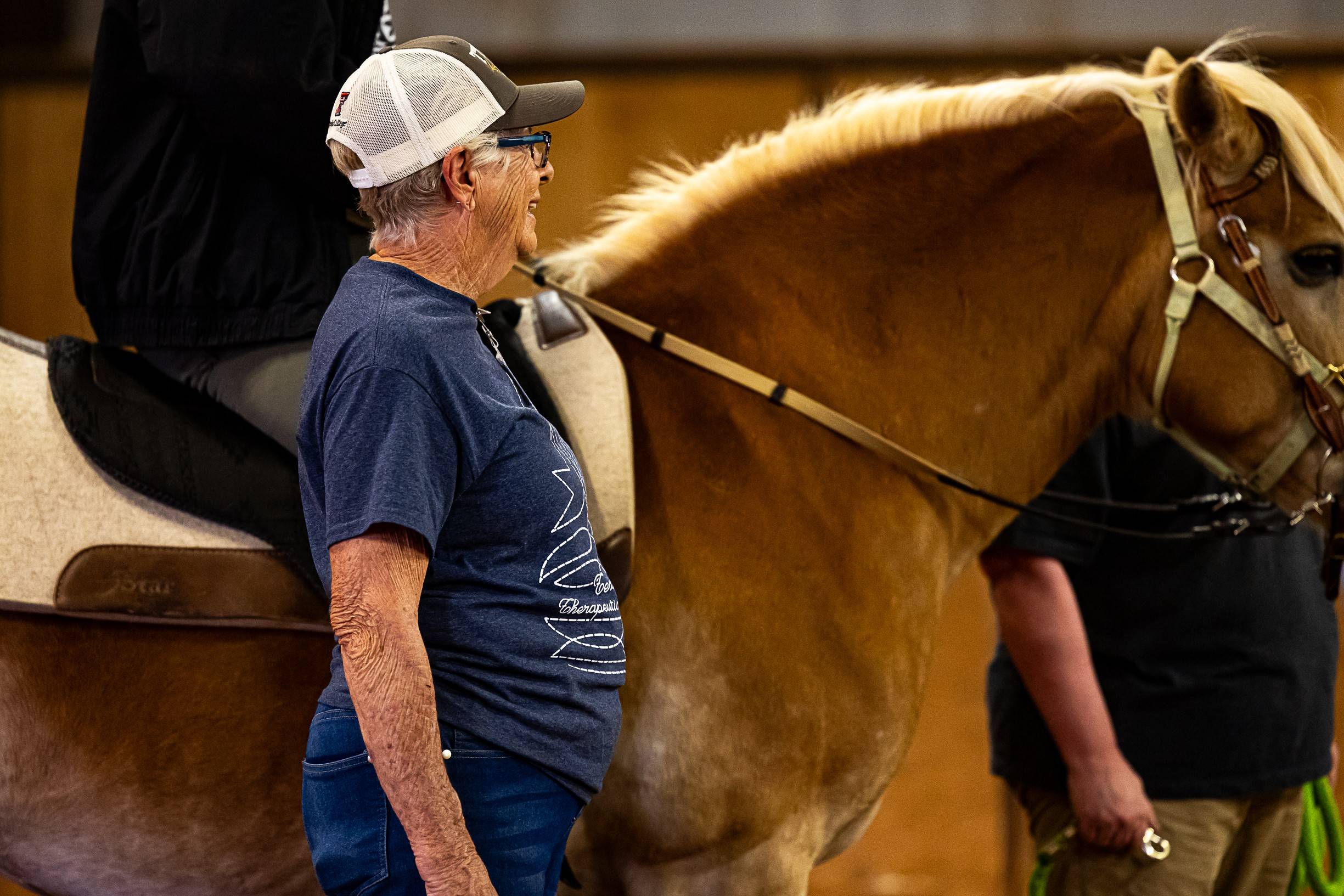
"Horses are very sensitive and so in tune with people they're with and around," Heinrich said. "They can match your breathing pattern and even match your heart rate. They are such sensitive animals and the biggest thing that they can do dor our program is, of course, the movement that they're providing to our participants."

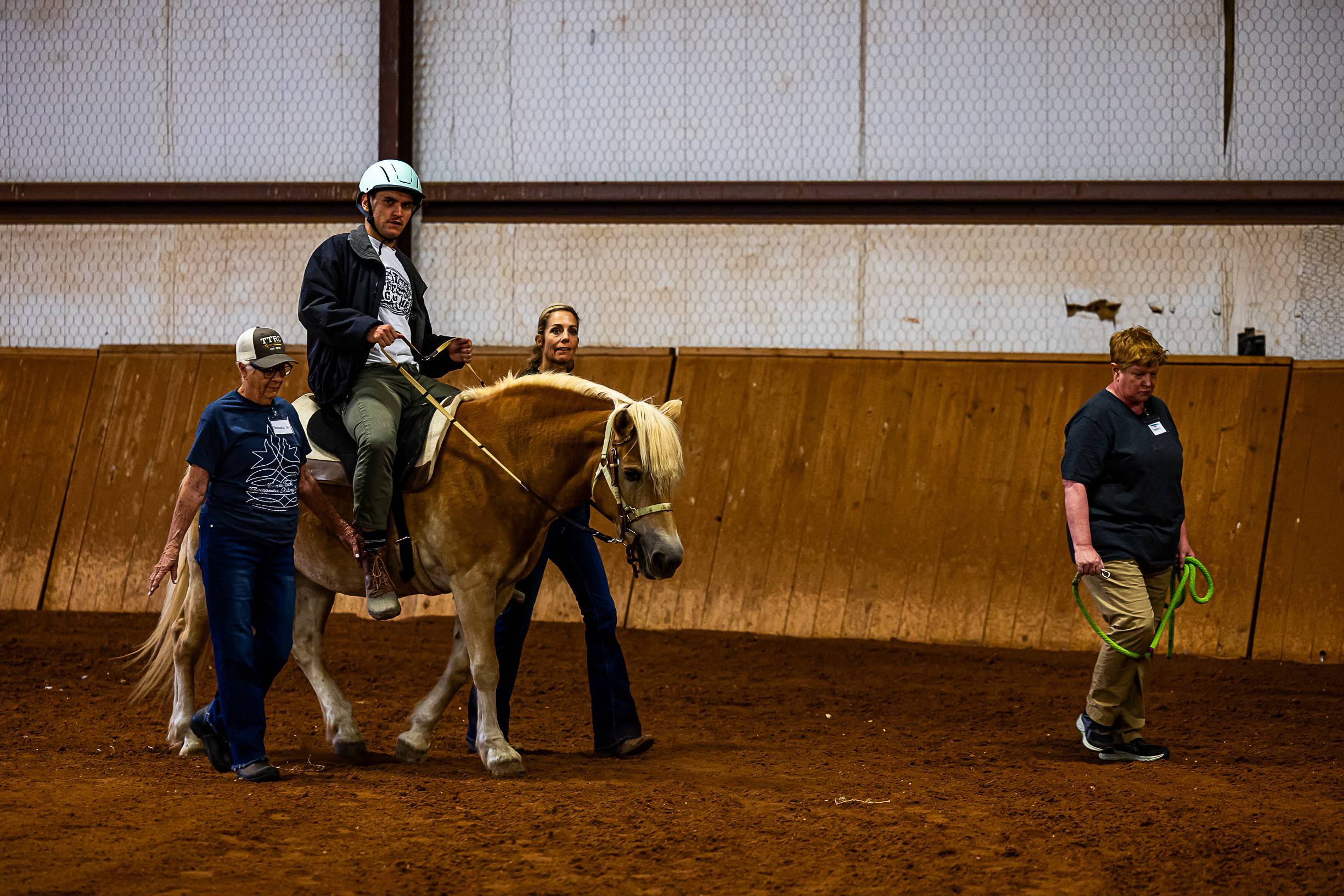
By providing concussive movement when they walk, horses help participants feel the pounding sensation throughout their bodies, according to Heinrich. When riding a horse in the proper position, participants' hips and pelvis move in the same way as if they were walking. This motion helps those who have never experienced the sensation of walking and builds muscles that aid in ambulation.

"Past therapists have stated clients can sometimes get stagnant in their progress in a clinical setting - they'll tell us 'I've been working on this skill or certain area for months, but bring the horse in, and now the participant is excelling again,'" Heinrich said. "So many participants, if they're able to communicate to us or their families, will tell us, 'This doesn't feel like therapy.'"

Anne Bradley, Doctor of Occupational Therapy, provides part-time therapy services at the TTRC. She said she gets to experience the work horses do.  "[The horse] can benefit people in so many ways," Bradley said.

"The physical impact I see on the clients after being on the horses is amazing. It is somthing I cannot replicate solely by myself in a clinical setting. The benefit we have from a horse being a horse, doing its job, creates a very significant impact on the rider immediately."

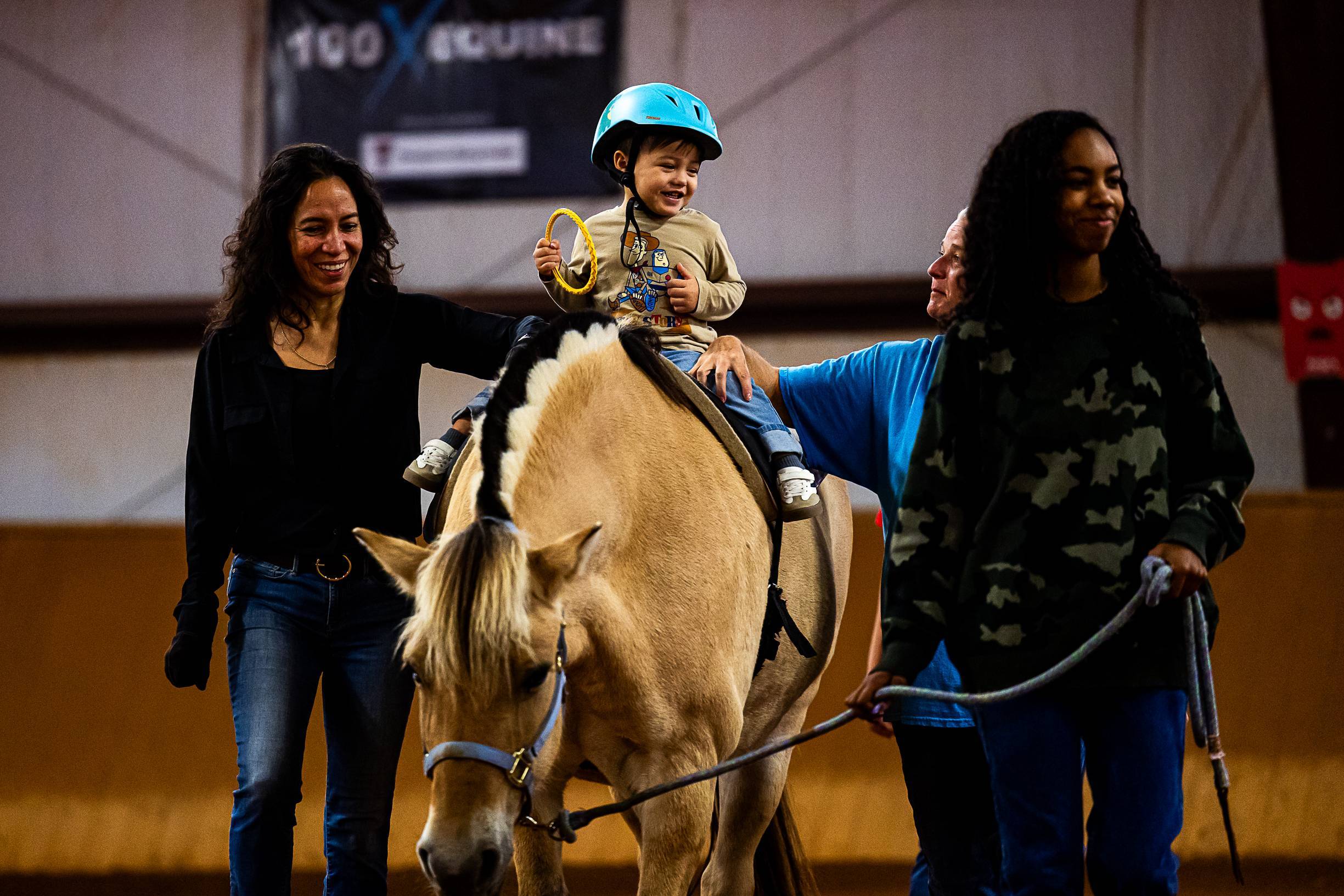
The sense of connection that horses provide amongst staff, volunteers and participants at TTRC is special. Horses keep the program moving forward, one ride at a time. "The most rewarding part of my job is that these horses can help everybody," Heinrich said. "They bring joy and healing to every person they come in contact with, whether that's a participant that's actually riding or doing groundwork with them, a volunteer thats leading or side walking, or someone coming out for a tour and learning about what these horses do for the first time."
Meet Our Horses

Labor of Love

It is all hands and hooves on board when it comes to providing a life-changing experience for TTRC participants. With three full-time staff, 10-12 student workers, three in-house therapists, and over 65 volunteers, it takes teamwork and passion to keep operations running smoothly.

Tangi Inrwin, TTRC program director for the past 21 years, said she originally visited the center for an extra credit opportunity as part of her animal science class taught by Brady. "I came out here and volunteered for an hour the first time, and I don't think I've left since," Irwin said. For Irwin, the feeling of home is what she hopes the center brings to participants and volunteers, just like it did to her when she first set foot in the center. "We don't want it to feel like participants are coming into a clinic or a medical office," Irwin said. "We want it to be something that feels like family and feels like they are coming to a family ranch."

With 60 to 75 therapeutic and hippotherapy lessons each week, it take a total of 12 people, including therapists, volunteers and staff, to make each session possible.

Kelly Walter, a volunteer for seven years, enjoys spending her days making a difference in participants' lives. She said there is nothing about the program she does not love. "Everything is great," she said. "The therapists here are wonderful. Everybody is so in tune, and the training that they provide us with is excellent." Walter purposefully volunteered just to be around the horses, but eventually found a bigger purpose.

"Watching participants and their reactions to the horses, the horses' responses to the children and the adults, and seeing parents' faces light up when their kid rides by and waves is amazing," Walter said. "The impact [the TTRC] has on riders and their families, big or little, it's huge."

For Kai Ometzberger, TTRC full-time instructor, being able to work with staff that feel like family is what makes the TTRC feel more than just a workplace. "It's just a great environment," Ometzberger said. "Being able to work out here, especially seeing the community side of it has been wonderful. The people here are great, and our staff feel like family. We all care about what we do here."

Heinrich said although multiple staff and volunteers have experienced impactful moments throughout their time at the center, the excitement never fades. "We get to see it every day, and there's some people that ask us, 'Because you see it every day, does it kind of lose its luster?'" she said.

"No, it doesn't. You don't lose that amazement seeing someone take their first steps, say their first words, improve their gait pattern, or improve their communication skills with their family."

 The work that goes into impacting participants' lives starts with a horse - but the impact continues with a therapist. Bradley said experiencing positive change behind the scenes makes the hard work worth it. "I want to be a part of it, personally and professionally, because I know all the scientific and evidence-based research and the impact it has," she said. "I also recognize that it takes funds to keep horses fed and to keep well-trained staff and have equipment that's functional. I see it from all aspects. I want to make sure that this facility has what it needs in terms of staffing and horses, to keep providing such an amazing service to the people in the area.

For staff and volunteers at the TTRC, each participant's journey is a labor of love, passion and purpose.

Testimonials

Top Gradient

Join the Journey

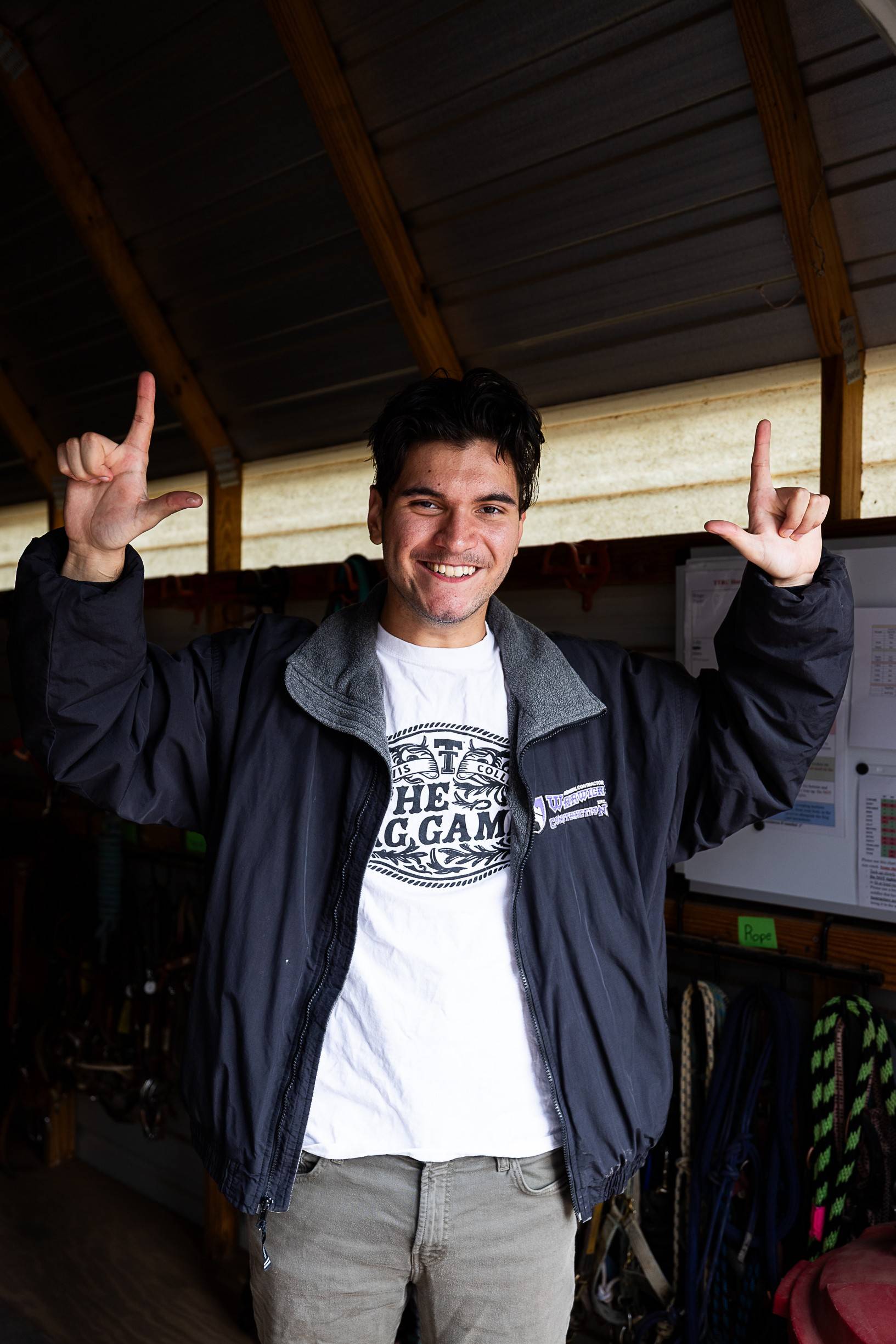
Whether it is volunteering, sponsoring a horse, or donating, no form of support is too small or too big. Efforts like these continue to impact the lives of participants such as Stephen Logsdon and Jack McDonald. No horse experience is needed to join the journey. As for volunteers, the TTRC is always looking for people to help with weekly sessions and outreach events. 

"If you want to see how the kids react, if you're interested in working with children, or if you're just looking for a volunteer program, it's a very flexible program," Walter said. "No horse experience is required, just a passion for helping."

Every therapy session comes with a price tag, and unfortunately, the TTRC does not accept insurance - making it difficult for some families to afford sessions, Heinrich said. That is where support from donors is crucial. "To break it down, for us to hold a 30-minute hippotherapy lesson, the total cost to us is $300," Heinrich said. "That's to cover the therapist and horse care. No family is expected to pay that amount. The most they pay out of pocket is $75 per session, and the remainder is covered by riderships. We have the same kind of formula for our therapeutic riding program. Those sessions cost about $250 per session, but the most a family will pay is $50." 

Whether support is through time or donation, nothing goes unnoticed. 

"Anytime you can give any part of yourself out here, we first of all appreciate it, but know that it's going to something that we all care deeply about," Irwin said. "We put 200% of ourselves into it, and know that at the end of the day, it's changing lives, not just for the participant, but for everybody involved and the horses." 

With horses being the heart of the center, donations can be made for specific horses and the horse herd in general. 

"[Donations] can also help with supplements, veterinary care, chiropractic work and acupuncture. [The horses] are very well loved and maintaining them is important for the work they do," Ometzberger said. The TTRC is living proof of the difference every lesson, volunteer hour and donation makes. Behind every statistic is a face, a family and a moment that changes everything. The TTRC's mission continues to touch hearts and transform lives, one ride at a time. 

"My why is because I see it," Bradley said. "I can see how much my financial giving impacts them. I can see what impact it has on the families."

Are you ready to be a part of the movement to help transform lives?

Donate to the TTRC Today!