
Our History
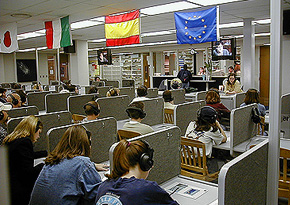
The Language Laboratory & Research Center, in its current, modern incarnation, is the result of decades of evolution and development. It has existed to assure Texas Tech's language programs are top flight—the additional learning and skills refinement that occurs in lab facilities are crucial to many programs, and crucial to many types of student learners.
Over the many years of Texas Tech's history, one strategic goal common to all language programs has been that there should always be a well-developed, robust language lab at Texas Tech University.
Technology Driven
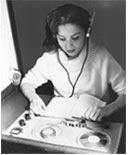
From its earliest beginnings decades ago, the LLRC has always been driven by the technology of the time and a pursuit to continually improve—to always remain current and abreast of late-breaking innovations. Emerging technologies in equipment and educational resources have been fundamental parts of its operation, from early reel-to-reel recorders to today's modern digital sound files and computerized speech recognition.
Language laboratory facilities are commonly described as bearing a level of capability and service, such as Level I, II, and so on. As is likely the case at many institutions, the LLRC has evolved through all levels, starting as a Level I operation many years ago, and ending today at the highest Level V.
The Evolution of the LL&RC
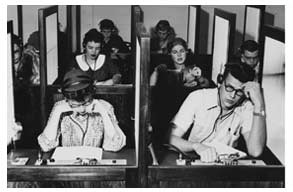
The earliest dawning of the modern day LLRC occurred in the late 1950s, when Tech's first Language Laboratory director, Dr. Harley Oberhelman, purchased reel-to-reel tape players so that students could listen to language training tapes (read Dr. Oberhelman's account, "The Early Years"). The language department at the time was in the Administration Building, and space was allocated in the basement to house the equipment.
During the mid-1960s, while designing the current Foreign Languages Building, the University specifically included plans for a well-thought-out and permanent lab facility. Professors Ted Alexander, who worked in German, and Bea Alexander, in French, were instrumental in not only campaigning for a substantive lab, but also materially contributed to the overall design of the original facility (they also had the vision to include designs for what would eventually become the Qualia Room, a fully equipped theatrical presentation room). The new "Foreign Languages / Math" building was completed in 1969, and the carefully designed Language Laboratory began serving students. The original lab facility included what is now the Central Practice Theatre (which was outfitted with 56 student cubicles, arranged in rows), the HelpDesk, the Private Booths, the Equipment Room, the Service Bay, and a recording studio.
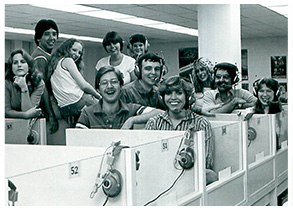
The Lab always strove to implement the contemporaneous teaching/learning technology of the time. Over the 1970s and into the 1980s, the facility operated an elaborate "dial-a-language" audio track distribution and recording system based on reel-to-reel technology (also read a tribute to Dr. Wolodymyr Zyla, Director during the time). As cassette recorders evolved and became mainstream, the facility explored various applications of the technology so that, in select stations, students could both play and record audio material on demand much more easily. The Lab also began planning for the eventual adoption of an integrated lab system designed for more robust teacher- and student-interactive activities.
A significant upgrade to the LLRC occurred during 1986-1987 when Director Greg Geis initiated sweeping updates to the facility. The core of the upgrades included replacing the aging reel-to-reel tape system with a Sony language lab console and student recorder stations, which advanced the facility to language lab "Level III" capability. The teacher control console was relocated amidst the new cubicle arrangement, allowing instructors to be much closer to their students. A room adjacent to the Central Practice Theatre was annexed to become the "Computer Lab," providing a new teaching/learning resource with Apple and IBM computers (which were an emerging technology in language teaching at the time). Read more about the updates from a spring 1986 issue of Umlaut.
Other updates included the addition of a soothing blue and gray color palette, most notably anchored in new carpet, covering the vast expanses of tile floor (carpet is very important in language facilities due to the obvious noise buffering it provides). The student cubicles were repainted dark blue, and stylish new graphics were added to the facility (all made by Director Geiss and his staff), completing the updated, modern feel of the facility (read a farewell message about Greg from the Spring 1989 edition of Umlaut, the newsletter of the Department of Germanic & Slavic Languages). Mr. Geis worked tirelessly to recruit support for the renovations and progress achieved during his time, and many thanks are due to the College of Arts & Sciences, especially Dean Joe Goodin, for sharing the vision and supporting the LLRC.
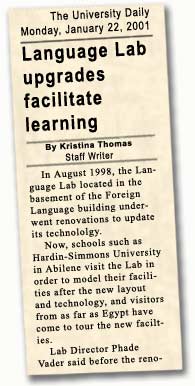
During the early 1990s, under the direction of Director Phade Vader, the facility invested a great deal in maintaining its central lab services and in developing a full score of educational media services. The video and other educational materials collection was more than quadrupled in size, a professional materials accessioning system was adopted, and the entire facility was networked and began using a customized data information system. The LLRC also became a subscribing member of SCOLA, providing services to the entire institution (see the Lab's original SCOLA Brochure, and an example article, of which several appeared in the University Daily). The LLRC also implemented a regularized marketing strategy, and expanded its staff and hours to serve growing requests for its various services. The Lab also expended a great deal of energy researching rapidly-evolving integrated lab equipment and planning for the next generation of its central system.
During 1997-1998, success saw another sweeping change for the LLRC—the existing student cubicle system was replaced with ASC DI8, a "digital-analog hybrid" system (taking the LLRC to Level IV). Though the 60-station ASC DI8 continued to provide traditional tape-based services, the individual recorders were controlled by on-board computers and the supervisory system was completely computerized, which allowed integration and expansion into full digital services (another emerging technology for the time). The system also featured "dual instructor" capability, which meant that two separate classes could work in the Lab simultaneously, while still more students worked independently. The finishing touches came in the form of new student cubicles and the system's large dual-instructor console. As it turned out, the LLRC's ASC system was the largest of its kind and capabilities ever built.
Other additions during this time included expanding the Equipment Room, adding a new Instructional Media Processing area, and adding a new SCOLA Control Center (pictured above), important since the LLRC was the hub provider of SCOLA programming to the entire TTU System. Additional space was annexed to the central facility, and a few areas not directly adjacent to the original facility became part of the LLRC. The Lab also began the process of placing commonly-used A/V equipment in classrooms (such as overhead projectors), relieving faculty and instructors from having to withdraw them for each class period.
During this time, the facility became noted nationally and internationally for its progressive and proactive facility development. Other institutions dispatched faculty to tour the LLRC, with one coming from as far away as Egypt. There are several labs now in existence which modeled the LLRC (even down to its color scheme and custom forms used at the time). Along with the LLRC's years-long campaign to obtain the new system and the other major upgrades and expansions of the late 1990s, many other individuals joined in the quest, and their crucial contributions and support will never be forgotten—CMLL Chairperson Peder Christiansen; CMLL Business Manager Ms. Margie Salazar; Arts & Sciences Associate Dean Otto Nelson and Dean Jane Winer; and Provost John Burns.
During 2006-2007, at the hand of Director Terry Martin, the ASC DI8/Esprit system was upgraded to ReLANpro, from ASC Direct, and the facility entered yet another new realm of modern computerized capability. The new completely computerized system allowed the facility to work with all types of digital media files, including audio, video, presentation and document files. The system also allowed integrated exercises, tests and other assessments to be "pushed" out to the student stations, with data supplied by students stored on the Lab's central server. The information was then easily provided to the instructor in several digital forms.
The capabilities of the new system opened up possibilities for the LLRC to break previous spatial constraints in two ways: 1), with the ability, if ever needed, to expand the central student learning system to a teaching/learning resource spread through several rooms in the building; and 2), through companion modules and resources which allow students to complete assignments and interact with their instructor's lessons through the Internet, and through hand-held devices, such as smartphones and tablets, anywhere and anytime (Level V).
The LLRC also continued the installation of mainstay equipment in all classrooms of the Foreign Languages Building, including digital projectors and sound systems. Another significant advance involved the installation of a closed-circuit video/television signal distribution system. Controlled from the SCOLA Control Center, it allowed distribution of video broadcasts to all first floor classrooms via three selectable television channels.
This paved the way for a variety of creative pedagogical and research projects, and offered the ability to simultaneously distribute material to multiple classrooms (including video, presentation, and examination material). The Lab also added a professional-grade recording facility for the production of quality custom audio material, including the ability to record and edit several tracks in a single session.
During the spring of 2012, Acting Interim Director and Lab Faculty Liaison Stefanie Borst spearheaded acquiring funds to significantly upgrade the student station computers in the Practice Theatre. Along with the new equipment at the main instructional Console came a significant upgrade in the ReLANpro system.
A new addition to the facility, planned during the fall of 2012 and implemented the following spring, was a collaborative learning center where students can work together, in remote connection to students or faculty over the Internet, in a variety of pedagogical and research-oriented projects.
Starting with the spring 2013 semester and continuing through most of the following summer, the department (through a special arrangement) enlisted the assistance of Phade Vader to help retool various Lab initiatives, provide training for staff and instructional personnel, and help reestablish and promote overall LLRC utilization. The Lab made great strides in transitioning once again to readiness for deploying the latest language teaching technologies and ever-evolving pedagogical strategies. The facility also committed further to assisting both faculty and graduate students in research.
The Tradition of Innovation Continues
The Language Laboratory & Research Center, as the epicenter for teaching and learning technology for the Classical & Modern Languages & Literatures Building and its resident programs, will continue to add services and resources. Immediate plans include adding new online resources for students and faculty and continued adoption and implementation of cutting-edge innovations in language learning equipment, software, and teaching strategies.
Language Lab & Research Center
-
Address
CMLL 19 -
Email
CMLL.LAB@ttu.edu