
2026-2027 Annual Theme
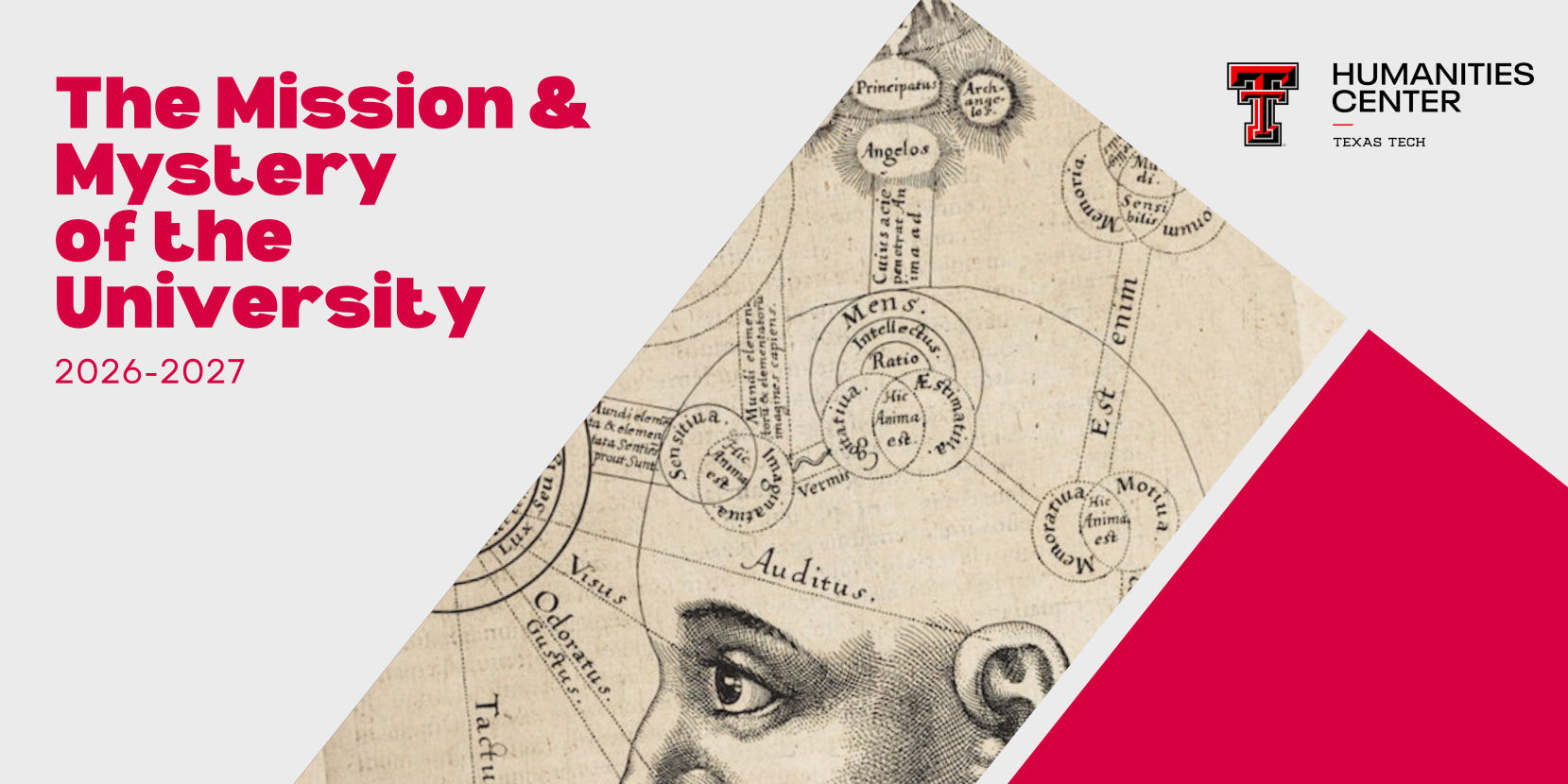
At the heart of the University lies a relationship, that of teacher and student; in its essence, then, the university is a community of scholars. In its pursuit of truth, of course, each university also produces a “mission statement.” Most, like Texas Tech’s, claim that their purpose and value lie in producing knowledge and fostering students as ethical agents who will enrich our larger communities. But, despite their overt simplicity, these mission statements entail an implicit mystery: how exactly are knowledge and ethical agents produced? Historically, this mystery has remained relatively unexamined; however, in the face of rising costs and the expansion of digital technologies, among other cultural, economic, political, and social changes, unraveling the mystery has gained some urgency. Instead of exposing and exploring this mystery, we have rested on the laurels of our historical strength, the fact that, up until recently, a university education has enabled graduates to earn money and live comfortably. However, we have long known that easy answers about a university’s purpose often turn on simplifications that skirt the mystery and the true value at the heart of the enterprise. The center of a university community is an ethics of knowledge, a respect for both old and new knowledge, and for the methods by which knowledge earns that name. Of course, promoting such an ethics of knowledge, besides being somewhat mysterious itself, certainly defies the simplified metrics and techniques of quantification society increasingly demands, even as it remains essential for the success of the societies which universities serve. This current moment of change—characterized so often by quantification and fierce conflict—presents an ideal opportunity for us to think harder about this mystery and, in particular, what role we humanists have played, currently play, and should play in realizing the goals of the university.
Humanities Center
-
Address
Texas Tech University, 2508 15th Street, Weeks Hall 221, Lubbock, TX 79409-1002 -
Phone
806.742.3028 -
Email
humanitiescenter@ttu.edu