

Department of EngishLinguistics
The field of linguistics refers to the scientific and cultural study of languages and the sub-disciplines of language form, meaning, and context. Students at the undergraduate and graduate levels have the opportunity to study linguistics with a minor, a graduate certificate, or an emphasis in their degree program.
Study Linguistics at Texas Tech
The Interdisciplinary Minor in Linguistics provides training in a broad variety of useful language-related skills by offering courses from wide range of programs on campus including English, Spanish, CMLL, Philosophy, Psychology, Sociology, Anthropology, Media and Communications, and HDFS.
Learn More About the Undergraduate MinorStudents earning a BA in English have many opportunities to take Linguistics classes in the English department at the lower-division and upper-division levels
Learn More About the BA in EnglishThe MA in English with concentration in Linguistics is distinguished for its faculty's expertise in a variety of areas, including phonology, syntax, morphology, sociolinguistics (especially American English dialects), linguistics and literature, and the history of English.
Learn More About the MA in English with a Concentration in LinguisticsThe PhD with a specialization in Linguistics is distinguished for its faculty's expertise in a variety of areas, including phonology, syntax, morphology, sociolinguistics (especially American English dialects), linguistics and literature, and the history of English.
Learn More About the PhD in English with a Concentration in LinguisticsThe Graduate Certificate in Linguistics requires 12 graduate credit hours in linguistics. This option is open to anyone eligible to take graduate courses, including non-degree seeking students. The main goal of the certificate is to provide a meaningful and internally coherent course of study of language and linguistics to match the background, interests, and needs of the individual student.
Learn More About the Graduate Certificate in LinguisticsCore Linguistics Faculty


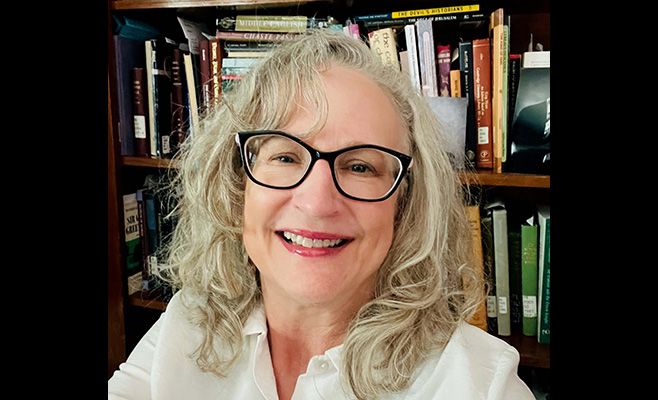

Linguistics Faculty in Other Departments
| Name | Department | Specializations | |
|---|---|---|---|
| Dr. Stefanie Borst | Classical and Modern Languages and Literatures | German linguistics, technology in language instruction | stefanie.borst@ttu.edu |
| Dr. Erin Collopy | Classical and Modern Languages and Literatures | Russian, Russian linguistics | erin.collopy@ttu.edu |
| Dr. Idoia Elola | Classical and Modern Languages and Literatures | Second language writing, Spanish linguistics | idoia.elola@ttu.edu |
| Dr. James Lee | Classical and Modern Languages and Literatures | Second language acquisition | james3.lee@ttu.edu |
| Dr. Kristen Michelson | Classical and Modern Languages and Literatures | Second language acquisition, pedagogical and technological innovations in foreign language teaching and learning | kristen.michelson@ttu.edu |
| Dr. Meixiu Zhang | Classical and Modern Languages and Literatures | Second language pedagogy, second language writing, corpus linguistics | Meixiu.Zhang@ttu.edu |
| Dr. Sue Ann S. Lee | Speech-Language-Hearing Sciences, TTUHSC | First and second language acquisition, phonetics, bilingualism | sueann.lee@ttuhsc.edu |
| Dr. Comfort Pratt | Curriculum & Instruction, College of Education | Spanish & Portuguese, Applied Linguistics | c.pratt@ttu.edu |
| Dr. Patrick C. Hughes | Communication Studies | Intercultural communication, interpersonal communication | patrick.hughes@ttu.edu |
| Dr. Christopher Hom | Philosophy | Philosophy of language and linguistics, epistemology, metaphysics | christopher.hom@ttu.edu |
| Dr. Joel Velasco | Philosophy | Philosophy of Biology, Philosophy of Science, and Epistemology | joel.velasco@ttu.edu |
| Dr. Roman Taraban | Psychological Sciences | Neuroimaging (fMRI/PET/EEG), cognitive, affective and social neuroscience, computational neuroscience | roman.taraban@ttu.edu |
Department of English
-
Address
P.O. Box 43091 Lubbock, TX 79409-3091 -
Phone
806.742.2501 -
Email
english@ttu.edu