
Poster Presentation Information
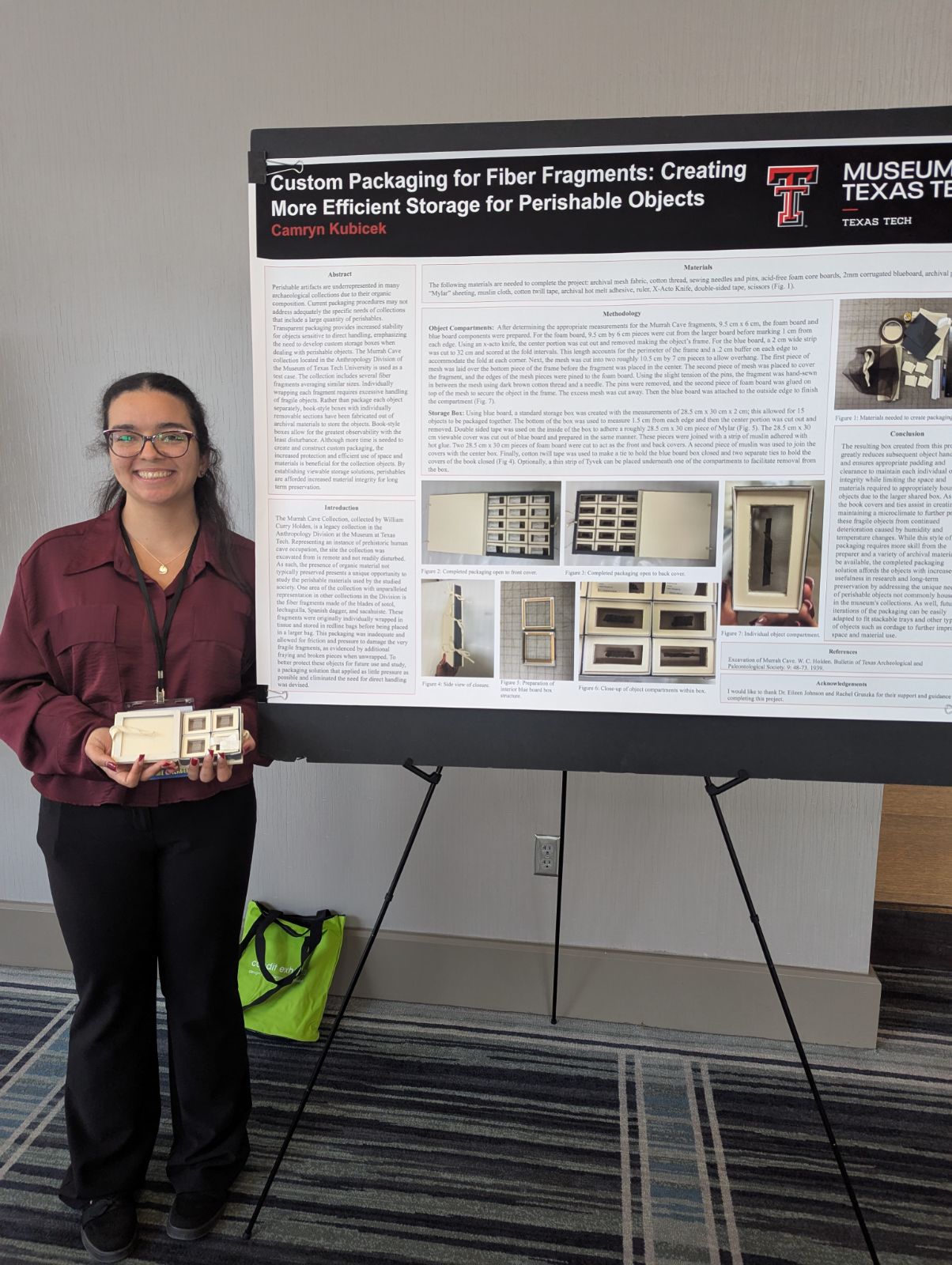
The faculty has put together this resource page for HMS students who will be doing poster presentations for conferences. Please e-mail Dr. Saffell if you have a question this does not answer or if you have some additional tips that we can add to the page.
General Information
University TLPDC: Presenting Conference Papers and Posters in the Humanities.
A really great and detailed guide to every aspect of the process—from proposals to
effective designs. (Posters is part way down the page.) This page has effective
descriptions and suggestions for every part of a poster you need to make.
University Libraries: Poster Design and Presentation Guide
This guide includes workshop training videos and slide shows about what goes into designing a good poster. It also has a list of places (some included below) where you can get your posters printed.
HMS Website: Heritage & Museum Sciences Past Posters
This is a list with photographs of past posters and topics HMS students have presented
on at recent conferences. A great place to get some ideas and inspirations!
Also refer to the brief description Conference Attendance in the HMS Guidelines and Record of Progress.
Poster Topics and Projects
Your poster topic could be just about any kind of museum or heritage project. Maybe it’s an improved way on how to store an object. Or a method for cleaning something not talked about in CCI Notes. An exhibit or research project that you directed. It could be a survey you administer at the Student Union or the mall. The possibilities are almost endless—look at some of the other topics listed on our other HMS pages.
One of the best places to “look” for a project is the division you are working in as an apprentice. Sometimes you will see a problem that needs a different solution. Maybe your supervisor will even point it out to you as a possible poster project. If you think it’s a possibility, ask!
It’s harder to come up with something from scratch. If you’re stuck, think about what you are curious about. Is there some question you’d like to explore more. It really best comes from you. You can ask professors and curators for a project, but most of them do not keep a list of projects around (or save work projects to be a poster project). And start on this early—don’t put it off until right before the proposal deadline.
Go It Alone or Start a Partnership
This is largely a personal choice. Some projects are just you, but it’s also fun to do something with a partner. Most poster competitions will permit groups of two—some will do groups of three, but you have to check those guidelines (see more below). If you decide to do a group, it needs to be a true partnership—everyone needs to be contributing to the project, reaching conclusions together, and agreeing to the poster content and presentation.
Competitions
Graduate School Poster Competition (February/March each year)
This webpage has information on the annual competition sponsored by the Graduate School. 2nd/+ year HMS students are highly encouraged to submit and participate in this to represent the program. 1st-year HMS students can also participate—it’s a good practice run in your second semester before you do your full TAM poster (Mar/Apr) or MPMA (Sept/Oct) later in your school career.
Mountain Plains Museum Association Conference (September/October each year)
Information on the annual competition at MPMA. 2nd/+-year HMS students are virtually required to submit and participate in order to attend this important networking opportunity each fall. Students who have their poster proposal accepted at MPMA are eligible for travel funding from the Graduate School and Heritage & Museum Sciences. (And often HMS pays for your student registration, too!)
Texas Association of Museums Academic Project Showcase and Competition (March/April each year) - 2026
2027 information for the April meeting in Arlington will be released later this year.
Information on the annual competition at TAM each spring. All HMS students are strongly encouraged to submit and participate. For many HMS students, this falls in your second semester—so you have to get on your project idea early. (4th semester students doing an internship in Texas should also participate.) Students who have their poster proposal accepted at TAM are eligible for travel funding from the Graduate School and Heritage & Museum Sciences. (TAM also gives students a special registration rate not usually listed on their website--you have to ask for it. They also have been giving you a one-year TAM membership for accepted proposals!)
Note about travel funding: Generally you are only eligible to receive Graduate School funding once per academic year, and HMS support may be limited for a second conference in a year. IF you hustle and get to TAM in your first year, that’s eligible for travel funds—and then by the time MPMA rolls around in your second year, you’re eligible again for travel funds.
American Association of Museums Poster Showcase (May each year)
AAM has a poster showcase (not a competition) that is open to all museum professionals. HMS encourages seasoned students to consider submitting a proposal for this, which is done at the same time/method as the call for session proposals (usually due in September the preceding year). This is very competitive, so getting selected is a very prestigious note that you can add to your resumé! 2027 Annual Meeting is in Houston (call for proposals due September 21).
Design Templates
Some conferences require you use a general template specific to their meeting. Most just use a general template. We’ve got a general format file with the key aspects (logo, general arrangement) already in place as a Microsoft PowerPoint template file. Just rearrange and relabel to boxes and sections as needed (see the design tips section).
HMS custom poster template (36 x 48, which is most common)
Graduate School general poster template
The TTU College of Health & Human Sciences has some other-sized templates (36x72 and 42x42), but you’ll need to go in and change their logo out for the Heritage & Museum Sciences logo (available from Laura Ray in Museum Marketing & Communications)
Design Notes and Tips
- Follow any published conference rules/guidelines carefully. (These are often found with the “call for papers” from when you wrote your first abstract proposal.) Pay close attention to size and content requirements.
- Use a design template (above), following all the requirements for Tech’s identity guidelines (particularly for logos). See https://www.ttu.edu/brand/visual-identity/index.php
- Use a neutral background.
- Use clear fonts like Arial or Times New Roman and follow recommended font sizes. Have someone (or several someones!) look at your poster before you submit it or print it. The Graduate Writing Center can do this for you, and most of the HMS faculty will too if you give them a few days—don’t do it last minute.
Printing
- Don’t wait until the last minute – it takes time to print and there may be others ahead of you
- Check websites for current hours
The Print Bureau, Huckabee College of Architecture
This is the most common place where HMS students get their posters printed for conferences.
The Print Bureau will require the file be sent to them as a pdf. If you are using
a PowerPoint template, save the file as a PDF—but make sure the converted file keeps
the same dimensions as the template and that it doesn’t move your boxes and images
around.
Lesser cost alternatives (such as for HMS Orientation Potluck) may be available through
Office Depot, the UPS Store, FedEx Office locations, and similar local large-format
printing shops.
TTU Health & Human Services Technology Services also does poster printing, but it may be limited to their students. (No one has tried
them yet or found out how much it costs)
Presenting Your Poster (Tips)
- Prepare a brief elevator pitch that succinctly conveys your poster, and practice it before the session
- If someone looks interested in reading your poster when they walk up to you, let them read. You can ask if they have questions and begin a dialogue that way, or ask if they want you to walk them through your poster
- Dress professionally
- Wear shoes you can stand in for a couple hours
- Bring a water bottle
- Stay with your poster for the entire session
- Check out poster presentation tips from the TLPDC page (described at the top of this web page)
- Remember you are representing the Museum and the Heritage and Museum Sciences program. You may be applying for internships or jobs at institutions represented at the conference down the road.
Other General Conference Tips
- Read the conference program (usually found online) in advance so you can prioritize what you want to go to
- Dress professionally
- Wear your name badge – this ensures conference organizers know you are supposed to be there, but also lets other conference goers know they can interact with you
- Get to the registration desk early
- Sometimes there are meals and coffee breaks as a part of the conference, sometimes there are not. Check in advance and carry snacks
- Bring pens and notepads so you can take notes
- Write down your questions and the speakers name during a session. Talk to speakers and ask questions, but do it at an appropriate time – that may be at the session, or you might bump into them later
- Don’t spend too much time on your phone – this makes you look bored, and you could miss networking opportunities
- Keep negative comments to yourself
- Sit by yourself at coffee breaks or meals some of the time, especially if you are attending the conference with friends. Others will approach and ask to join you, and it’s a great way to meet people
- Go to an evening event if you can. You may have to pay for that as part of registration—and it’s worth investing in at least one evening if it’s not part of the total registration
- Look for scholarship, volunteer, and mentor opportunities at your conference
Heritage and Museum Sciences
-
Address
3301 4th Street, Lubbock, TX 79415 -
Phone
806-742-0627 -
Email
heritage.museum.sciences@ttu.edu