
Dino Day
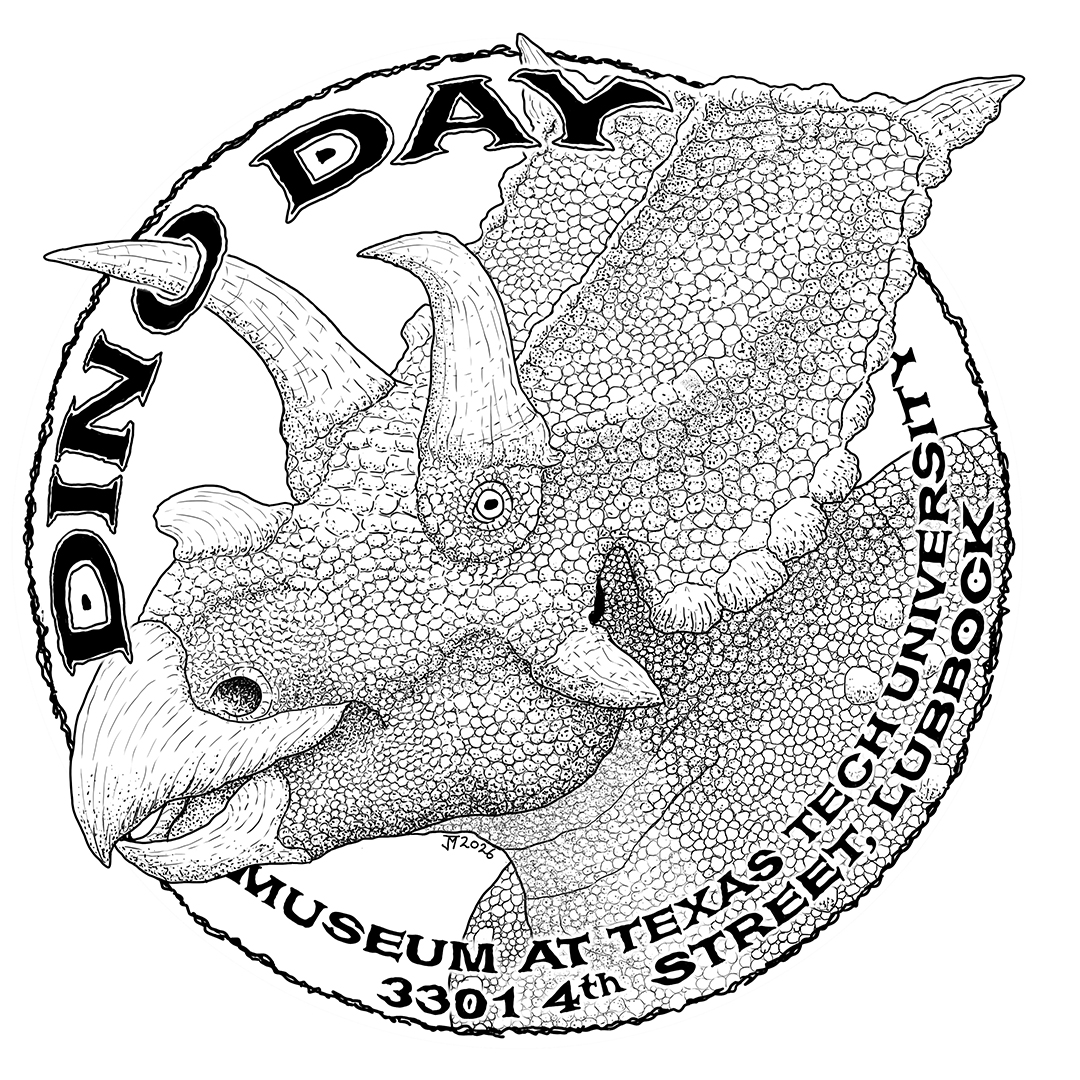
May 2, 2026
11 AM – 4 PM
FREE ADMISSION & PARKING • COME & GO AS YOU PLEASE
Step into a world millions of years in the making at Dino Day—an immersive, hands-on celebration of prehistoric life for all ages. From towering dinosaurs to ancient oceans teeming with life, discover the stories fossils tell and the science that brings them back to life.
Meet real paleontologists, including visiting scientists Robert Boessenecker and Thomas Adams, and hear firsthand about their discoveries in the field. Learn what it truly means to be a paleontologist—from excavating fossils in remote locations to analyzing specimens in the lab.
Experience the full fossil journey through live demonstrations: watch how fossils are uncovered, carefully removed using professional techniques like plaster jacketing, and prepared in the museum lab. Follow their path from discovery to research to exhibition and explore how these finds help us understand Texas’s ancient past—from prehistoric seas and swamps to the age of dinosaurs and early mammals.
Families and young explorers can dive into hands-on fun with interactive crafts, games, and activities designed to spark curiosity and creativity. Touch real fossil replicas, examine specimens up close, and engage with scientists through informal talks and demonstrations.
Whether you’re a future scientist, a curious kid, or a lifelong dinosaur enthusiast, Dino Day is your chance to explore, learn, and be inspired.
What You’ll Experience
- Meet the Experts: Talk with paleontologists and Natural Science Research Lab specialists
- Live Demonstrations: Fossil excavation, plaster jacketing, mapping, and prep lab techniques
- Fossil Journey: See how fossils go from discovery to research to museum display
- Hands-On Activities:
◦ Create trace fossils (tracks & imprints)
◦ Make your own “insect in amber”
◦ Dinosaur-themed scavenger hunt - Interactive Exploration: Touchable fossil replicas and real specimen displays
- Mini Science Talks: Informal, engaging chats for curious minds of all ages
- Free Planetarium Show: Dinosaur Prophecy running every 30 minutes from 11:30 AM to 3:30 PM
- For Every Age:
◦ Kids: Crafts and simple, fun demos
◦ Teens: Fossil ID and ecosystem exploration
◦ Adults: Research insights and career conversations
Don’t miss this prehistoric adventure—join us for a ROAR-ing good time!
PRE-EVENT LECTURE
Requiem for a Giant: What Happened to Carcharocles megalodon?
April 30, 2026
6 PM
SPEAKER: Dr. Robert W. Boessenecker
Gigantic teeth of the gigantic shark Carcharocles megalodon are found in late Cenozoic rocks on every continent except Antarctica, dating back to about 16 million years ago. These teeth have spawned myths of megalodon survival for over a century—and even several hollywood blockbusters (and B-movies). Even as we explore the depths of the oceans, a live shark still eludes us. All we have left of this ancient giant are teeth, vertebrae, and a few scales from the fossil record. If the largest predator to ever evolve is truly extinct—does the fossil record tell us when it happened? This lecture summarizes recent advances in the paleobiology of "the meg"—how it evolved, lived—and died. The loss of such a gigantic carnivore has implications for our understanding of the formation of the modern marine ecosystem; what might the "when" and "why" of this extinction tell us about modern species?
About Dr. Robert W. Boessenecker:
Robert W. Boessenecker, Ph.D.
Research Associate, University of California Museum of Paleontology, Berkeley, CA
coastalpaleo.blogspot.com
Robert Boessenecker grew up near San Francisco, California, aware that there were few dinosaurs fossil sites in the area, but unaware that there were much younger fossils. As a teen, he began collecting Cenozoic invertebrates, shark teeth, and marine mammals and began researching these fossils during his undergraduate and master's programs at Montana State University. He studied early fossil baleen whales (Eomysticetidae) in New Zealand, naming four new genera and species of these whales. On the east coast, he continued studying early baleen whales and dolphins from Charleston, South Carolina, and naming an additional half dozen species and genera in an attempt to shed light on the early radiation of modern whales. The search for marine mammal fossils inevitably resulted in finding shark teeth and ultimately inspired the search for the youngest Carcharocles megalodon fossils and an estimate of its extinction date.
Pre-Event Lecture
April 30, 2026
6 PM
Requiem for a Giant: What Happened to Carcharocles megalodon?
Speaker: Dr. Robert W. Boessenecker
Scroll down for more details
🡳
Museum at Texas Tech University
-
Address
3301 4th Street, Lubbock, TX 79415 -
Phone
806.742.2490 -
Email
museum.texastech@ttu.edu