
Priority 3: Transform Lives & Communities Through Outreach & Engaged Scholarship
[Goal 1] Communication—Establish outreach and engaged scholarship as essential college commitments by clearly defining them, outlining their value, and demonstrating their mutual benefits.
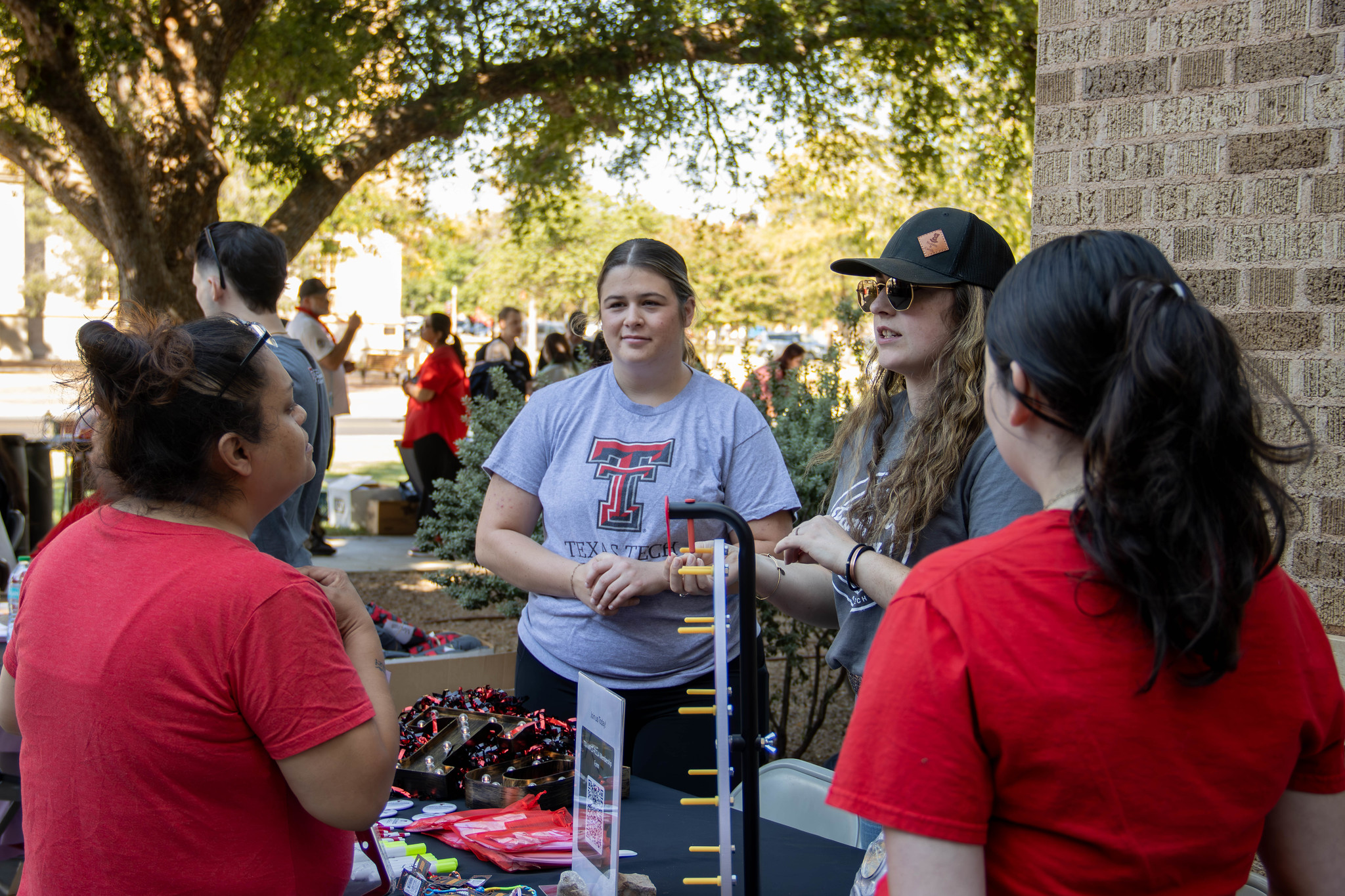
[Goal 1] Transform Lives & Communities Through Outreach & Engaged Scholarship.
We will...
- Develop and share internal examples of outreach, engagement, and engaged scholarship for faculty and staff.
- Integrate clear outreach, engagement, and engaged scholarship language into unit annual plans and faculty and staff expectations in ways appropriate to College of Health & Human Sciences disciplines and roles.
- Promote community engagement opportunities through college communications and reporting.
Key Performance Indicators
- Number of engagement activities reported annually by College of Health & Human Sciences faculty, staff, and students.
- Number of College of Health & Human Sciences Community-Engaged Learning (CeL) courses and student participation in engaged projects.
- External stakeholder feedback demonstrates reciprocal and measurable benefit.
High Impact Practices
- Leverage Community-Engaged Learning (CeL) courses, internships, and practicums, community-based undergraduate research, and capstone projects with community partners, with engagement activities documented through existing TTU systems (e.g., course designations, activity logs, partnership agreements, and student reflections).
- Support faculty in transitioning service-learning, collaborative assignments, and experiential learning projects into CeL-designated offerings.
- Incorporate structured reflective learning into course and student assessments where community perspectives are co-created and inform continuous improvement.
[Goal 2] Sustainability—Support outreach and engaged scholarship by establishing structures and practices that integrate engagement across college activities.
We will...
- Embed outreach and engaged scholarship into faculty roles and expectations through college-level policies, practices, and support to promote continuity and long-term sustainability.
- Support reciprocal community partnerships, including local, regional, national, and global, involving faculty, staff, centers, institutes, and initiatives that align with College of Health & Human Sciences academic strengths and community-identified needs.
- Build faculty capacity for outreach and engaged scholarship through professional development, mentoring, and shared resources.
- Strengthen curricular pathways for outreach and engaged scholarship through Community-Engaged Learning (CeL) courses, internships, practicums, undergraduate research, and capstone experiences.
Key Performance Indicators
- Percentage of College of Health & Human Sciences faculty and staff reporting outreach and engaged scholarship activities annually.
- Evidence of outreach and engaged scholarship reflected in annual faculty reviews, effort allocation/workload, promotion, tenure, and continuing appointment materials at the college and department levels.
- Student participation in CeL courses, internships, practicums, undergraduate research, and community-engaged capstone experiences.
- Number of departments that have at least one CeL-designated course each year.
High Impact Practices
- Community-based undergraduate research and creative activity projects that engage students and faculty in addressing community-identified needs through research, program development, or program evaluation.
- Community-Engaged Learning (CeL) courses that integrate reciprocal community partnerships into the curriculum and provide discipline-specific engagement opportunities for students.
- Community-based internships and practicums that provide sustained, supervised engagement with community partners and create repeatable pathways for student learning, faculty involvement, and long-term partnership development.
[Goal 3] Capacity building & recognition—Enhance recognition, incentives, and professional development for College of Health & Human Sciences faculty, staff, and students engaged in outreach, engagement, and community-engaged scholarship.
We will...
- Build targeted incentives for faculty teaching CeL courses and conducting community-engaged scholarly activities.
- Increase opportunities for students to train in interprofessional teams within and across the College of Health & Human Sciences and institutional units.
- Develop undergraduate and graduate student recognition and awards.
Key Performance Indicators
- Number of faculty receiving support or recognition for developing or offering CeL courses.
- Use of engagement data to inform curricular planning, faculty support, and continuous improvement.
- Consistent documentation of outreach and engaged scholarship activities through institutional reporting systems.
High Impact Practices
- Community-based clinical placements and practicums that provide supervised training in partnership with community organizations, clinics, schools, and agencies, supporting both student learning and community-identified needs.
- Interprofessional education and team-based clinical training that bring together students from multiple College of Health & Human Sciences programs to collaboratively address complex client, family, and community challenges.
- Community-engaged capstone and culminating experiences that synthesize learning across programs and provide documented outcomes for student recognition and faculty engagement reporting.
[Goal 4] Partnership advancement—Increase and strengthen collaborative, mutually beneficial community partnerships that advance college teaching, scholarship, and community impact.
We will...
- Sustain and strengthen reciprocal community partnerships that align with College of Health & Human Sciences academic strengths, disciplinary and professional expertise, and community-identified priorities.
- Increase faculty, staff, and student engagement in collaborative partnership activities that support applied learning, scholarship, creativity, and innovation.
- Enhance the coordination and visibility of College of Health & Human Sciences community partnerships across departments and programs to support continuity, reduce potential duplication, and foster engagement across the college.
Key Performance Indicators
- Number of active and sustained community partnerships involving College of Health & Human Sciences faculty, staff, and students.
- Evidence of reciprocal benefit demonstrated through repeat collaborations, partner feedback, or jointly defined outcomes.
- Faculty, staff, and student participation in partnership-based teaching, research, or clinical training.
- Use of community partnership data to inform resource allocation, continuous improvement, and strategic planning.
High Impact Practices
- Industry and globally engaged community partnership models that support recurring teaching, research, and creative activity, or clinical training.
- Interdisciplinary and interprofessional partnership-based projects that bring together multiple College of Health & Human Sciences programs and institutional units to address complex community challenges.
- Community-engaged applied research, evaluation, and innovation projects co-developed with partners to support shared goals and measurable impact.
College of Health & Human Sciences
-
Address
College of Health & Human Sciences, Texas Tech University, P.O. Box 41162, Lubbock, TX 79409-1162 -
Phone
(806) 742-3031 -
Email
hs.webmaster@ttu.edu