
The National Institutes of Health (NIH) has awarded Wei Li, professor of chemical engineering in the Edward E. Whitacre Jr. College of Engineering at Texas Tech University, a $607,488 R15 grant to study circulating tumor cell (CTC) subtypes and expand undergraduate research experiences in biomedical engineering.
Wei Li and his co-investigators Jay Lu, assistant professor of chemical engineering in the Whitacre College of Engineering (WCOE), and Robert Bright, professor of immunology in the Department of Immunology and Molecular Microbiology at Texas Tech University Health Sciences Center (TTUHSC), will evaluate characteristics of epithelial-mesenchymal transition (EMT) in CTCs, which is believed to be closely related to how cancer spreads from one site to the whole body, a process known as metastasis. Clinical data demonstrates that the majority (60-90%) of cancer-related mortalities are caused by metastasis.
CTCs in blood contain many subtypes and only certain subtypes are critical for cancer metastasis. Epithelial subtypes of CTCs remain local; while mesenchymal subtypes of CTCs migrate into blood and are more aggressive. For the tumor to spread to other parts of the body, the CTCs must transition from epithelial to mesenchymal types. After reaching the remote sites, sometimes EMT may reverse for tumor cells to grow.
“Researchers think this transition is what causes metastasis, but there is limited understanding of how that process happens in CTCs because it has been extremely difficult to separate CTCs from blood,” said Li.
New microfluidic technologies developed in Li’s laboratory show promise for more advanced studies in this area.
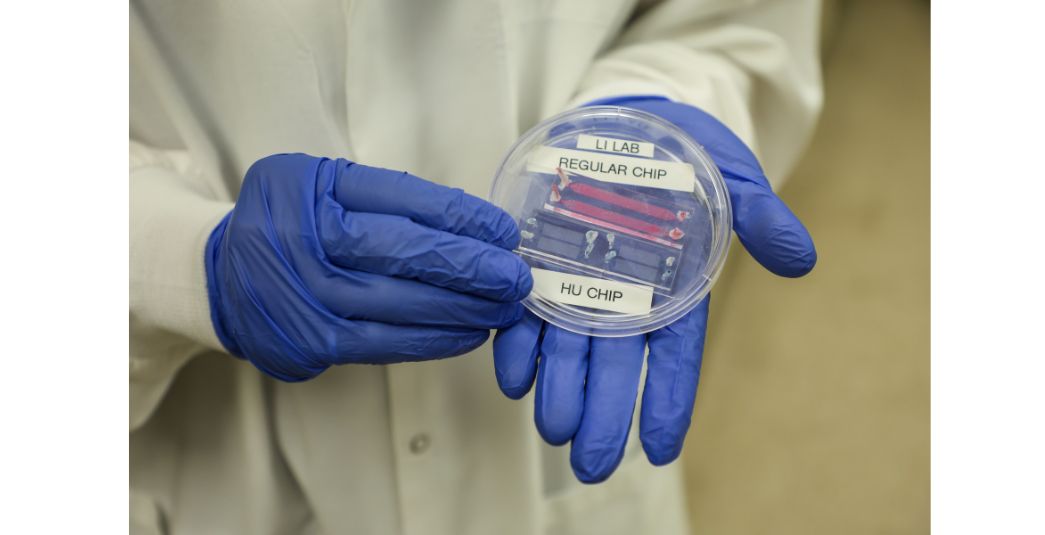
Through this NIH-funded project, Li will develop a specially designed microchip, which will isolate and profile the CTC subtype cells from blood samples. The CTCs will be microscopically photographed at different magnifications so that researchers can understand their features at both the micrometer and nanometer levels.
Once the CTC subtype cells are separated, co-investigator Lu will explore deep learning-based profiling platforms to evaluate the images, which is expected to achieve super-high accuracy for profiling CTC subtypes.
“We expect these innovative multi-scale deep learning strategies will enable effective separation of CTC subtypes that will provide accurate and robust CTC subtype identification and separation,” explained Lu.
“Definitive characterization of CTC subtypes from liquid biopsy using this solid-state platform and deep learning strategy employing differentiating markers of metastasis will have a critical positive impact on prognosis and mortality by advancing early administration of next generation prevention regimens to include immuno-preventive vaccination,” said Bright, a renowned cancer biologist, who will provide further support on metastasis models, CTC identification, and EMT characterization.
Building on the success of this project, researchers expect to develop an integrated system comprising 1) a user-friendly microchip for highly efficient isolation of CTCs from blood samples, and 2) a deep learning-based image analysis platform that can identify CTC subtypes for monitoring cancer progression and support cancer diagnosis and treatment.
“We are excited about this project that combines cutting-edge biomedical engineering technology, machine learning techniques, and cancer biology. The multidisciplinary collaboration will help address an important question in cancer diagnosis and treatment,” added Rajesh Khare, chair and professor for the Department of Chemical Engineering at the WCOE.
The project includes a significant educational component and will expand undergraduate experiences in biomedical engineering and cancer research at TTU and TTUHSC. This R15 grant will also help to train undergraduate students in the fields of bioengineering to play key roles in future careers in pharmaceutical industry or government regulatory agencies.