
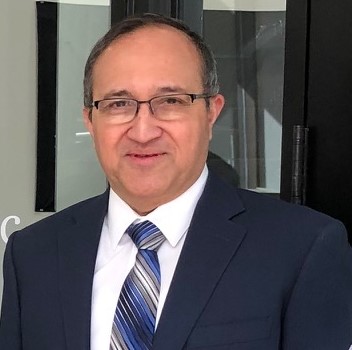
Nikhil Dhurandhar named a Distinguished Fellow of the American Society for Nutrition, capping four decades of pioneering obesity research
A casual conversation once led Nikhil Dhurandhar to discover that a virus could cause obesity. Now, more than 30 years later, that same spirit of curiosity has earned him the highest honor his field can bestow.
Dhurandhar, Paul W. Horn Distinguished Professor, Helen Devitt Jones Endowed Chair of the Department of Nutritional Sciences, and associate dean for innovation in the College of Health and Human Sciences at Texas Tech University, has been named a Distinguished Fellow of the American Society for Nutrition — the highest honor the society bestows, recognizing notable lifetime achievements in the field.
For Dhurandhar, the recognition carries meaning beyond a personal milestone.
"What I feel happy about is that it can draw attention to our cause: helping people with obesity," he said.
A Career Born From Curiosity
Dhurandhar grew up in Mumbai, India, the son of a physician considered a pioneer in obesity medicine and spent eight years there treating more than 15,000 obesity patients before deciding that research could have a broader impact.
That conviction led to one of nutritional science's most unconventional discoveries. During his doctoral work, a fellow researcher's offhand remark prompted a question: Could a virus cause obesity? Dhurandhar pursued it and identified two viruses that cause obesity in animal models and found that humans infected with one of them face a greater risk for the condition.
He coined the term "infectobesity" to describe the emerging field of obesity of infectious origin.
"Those days, nobody believed," he said. "Now it's a field by itself."
From Virus to Potential Drug
The obesity virus research opened another unexpected door. While studying infected animal models, Dhurandhar's team observed that the animals' blood sugar levels improved rather than worsening, as would be expected with obesity. Instead of setting the anomaly aside, he listened to what the data were telling him.
"I could have just neglected it and said something went wrong," he said. "Instead, I had to say, 'Wait a minute — why?' And that led to a completely different dimension of research."
Having yielded over $10 million in grants and endowments for research, and 50 U.S. and international patents on a viral protein with potential as a drug for Type 1 and Type 2 diabetes, the work is advancing toward potential FDA review with support from TTU's Office of Research Commercialization and outside investment.
The Art of Listening — and Selling
When asked what advice he would offer early-career researchers, Dhurandhar frames success less as a single talent and more as a combination of three.
"A researcher has to do three things," he said. "You have to design experiments, you have to conduct the study, and you have to sell the stuff by publishing and presenting."
Too often, he said, the third element gets overlooked. Communicating research to a broad audience — especially in nutrition, a field with enormous public interest — is as essential as the work itself.
His other guiding principle: listen carefully, and never dismiss an unexpected result.
"Data are always telling you something," he said. "Even if it looks wrong at first appearance, it's not necessarily wrong. You just have to listen."
Changing How the World Sees Obesity
Throughout his career, Dhurandhar has made a point of pushing back against the idea that obesity is a failure of willpower.
"Obesity is a chronic condition," he said. "It's just like diabetes, just like blood pressure. It's a disease, and it needs to be treated that way."
Throughout his career, he has published more than 180 scientific papers and delivered more than 150 invited talks and keynote addresses.
"It is such a huge team effort," he said about his accomplishments. "It would be really wrong on my part to take credit for everything we've done. There are so many contributors — students, postdocs, faculty, collaborators, staff, friends — who have helped in so many different ways."
The DFASN honor will be celebrated at the American Society for Nutrition's annual meeting, Nutrition 2026, in Washington D.C.