
Texas Tech University
Winnie Kwofie has built a career defined by learning, leading and impacting her community. Joining Operations as the Assistant Vice President for Facilities and Construction in December 2024, Winnie has already made a lasting impact on the division. In this role, she provides direction and leadership, overseeing a team of 190 employees with over 200 construction projects and over 300 facilities projects.
Winnie was also recognized as a Top Global Facilities Management (FM) Influencer by
the International Facility Management Association (IFMA) in 2025. IFMA recognizes
leaders who are “redefining what is possible in FM with their bold ideas, measurable
results and a commitment to progress, elevating the profession and inspiring a global
network.” Leaders whose “impact extends across smart workplaces, sustainable strategies
and innovating solutions- shaping the built environment across industries and around
the world” (“IFMA’s Top Global FM Influencers”, 2025). This honor further underscores
Winnie’s significant impact and leadership in the FM profession.
Originally from Ghana, she began her career as a civil engineer, working on design
projects ranging from community buildings to roads and infrastructure. Her passion
for advancing her expertise led her to pursue a Master of Science degree in Engineering
Management & Sustainable Infrastructure in Sweden, followed by an MBA from Idaho State
University and a Doctor of Education in Education Leadership in Social Justice from
California State University, East Bay.
Her experience spans both FM and academia, a combination that has shaped her approach to leadership. At City College of San Francisco, she advanced from Project Manager to Senior Project Manager within two years, overseeing the construction of the college’s New Mission Campus, downtown San Francisco and spearheading the college’s sustainability program.
Seeking a more integrated role, she transitioned to the University of California, San Francisco, where she spent six and half years fostering collaboration between the facilities and capital construction project teams. She played a key role in developing UCSF’s Facility Investment Plan, a strategic effort approved and funded at $200 million in annual infrastructure projects by the then Chancellor of the university.
When her tenure ended at UCSF, she saw an opportunity to deepen her expertise in facilities operations, so she joined the San Mateo Community College District as a facilities manager for their Cañada College, where she worked closely with the custodial, grounds and maintenance staff.
The few months in this position, she says, were her “intensive boot camp training session”—giving her firsthand insight into the often invisible yet essential work that keeps our campuses running smoothly.
“Those months allowed me to see and feel the heartbeat of facilities management,” Winnie shared, “and it shaped what I wanted to do in my career and the steps that I needed to take.”
These intentional approaches to success have allowed her to draw on a wide range of experiences and resources- from engineering and FM expertise to business acumen, problem solving and people skills.
Reflecting on her profession, she says one lesson stands out: enjoy your career.
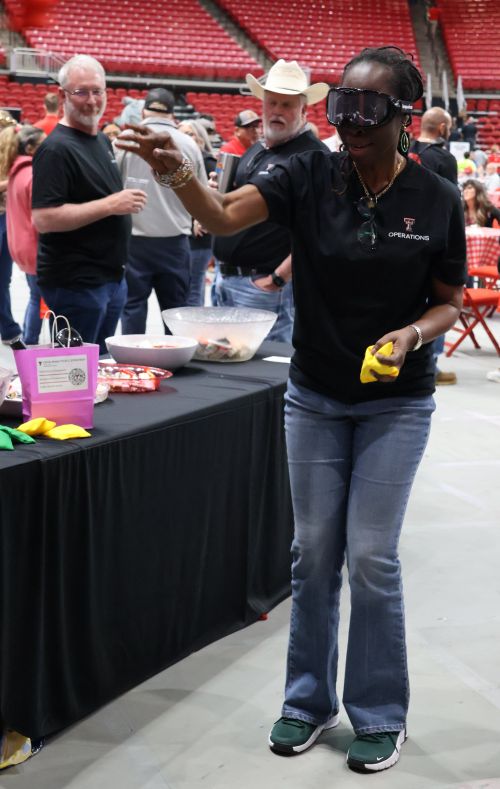
“I wish I had learned it earlier, but no one told me to enjoy my career,” she explains.
“Excitement changes how you approach challenges and that joy will sustain you through difficult times. I don’t do boring and I like to bring energy to the spaces I’m in.”
Her second principle is bringing people with you.
“If I leave my position and it’s an enviable one, I know I did my job,” she says. “If no one wants the job, it means I didn’t do my best. Bringing people with you isn’t just about mentoring—it’s about creating conditions where others engage, grow and thrive after you leave.”
This idea of true leadership and creating opportunities for others led her to launch the Women in Facilities program at the California State University System with 23 universities. She indicated this was a business decision to support the majority of the university community who are women. This program seeks to address this leadership disparity in FM organizations by creating a pathway for more women into the leadership. Within the first year of introducing this program in the systems, over 85% of the women who participated were promoted, a testament to the importance of investing in female leadership development. Their contributions to their various universities were celebrated across the university system.
As she looks ahead, she remains committed to elevating the visibility of FM as a practice and also in research.
“We hold a lot of power in what we do, but nobody realizes it because we’ve never shared how complex our work is,” she explains. “If people don’t understand what we do, they’ll make assumptions—and they won’t always be positive.”
By continuing her research and advocacy, she hopes to showcase the impact of FM to redefine the narratives and to showcase this noble profession. Wherever she moves next, her mission remains clear: to lead with purpose, bring visibility to FM and ensure that those who follow have the tools to thrive.
At the end of the day Winnie remarked, “where I have been, how far I have come, and to me, if I still have community working with me to solve the problems in FM, and we’re still moving forward - then I feel like I’ve done my job.” And “I continue to celebrate every moment with my selfie stick.”