
Forty years after its founding, the center is led by a former student who has more than doubled enrollment, added recovery housing and wants Lubbock to know what it offers.
 William "Buddy" Gerber, Ph.D., knows what the Center for Students in Addiction Recovery can do for a student. It did it for him.
Gerber, an assistant professor and the center's director, was part of the community as a student at Texas Tech, served as the center's graduate assistant while earning his master's degree, and came back to lead it in 2023.
"When the opportunity became available, I jumped at the chance to be part of the place that helped change the trajectory of my life," he said.
Three years later, the center within the College of Health & Human Sciences has more than doubled in size, opened the door to off-campus recovery housing and taken its model overseas. Gerber's next goal is simpler: making sure people know the center exists.
Forty years of second chances
Carl Andersen founded the center in 1986 as the Center for the Study of Addiction, an academic unit that prepared students to become licensed chemical dependency counselors. Many of those students were in recovery themselves, and at the suggestion of his wife, Linda, Andersen built them into one of the country's first collegiate recovery communities.
Kitty Harris, who became director in 2001, wrote the curriculum other universities used to build programs of their own. Today, there are more than 250 collegiate recovery programs in the U.S. Tom Kimball took over in 2014 and expanded outreach to underserved students before Gerber stepped in and renamed what was then the Center for Collegiate Recovery Communities.
The mission has stayed the same.
"The center offers the opportunity for individuals in addiction recovery and eating disorder recovery to get their college education," Gerber said. "This is done by providing academic support, recovery support and financial support. We know through research that education is instrumental in growing recovery."
Peer support is the engine
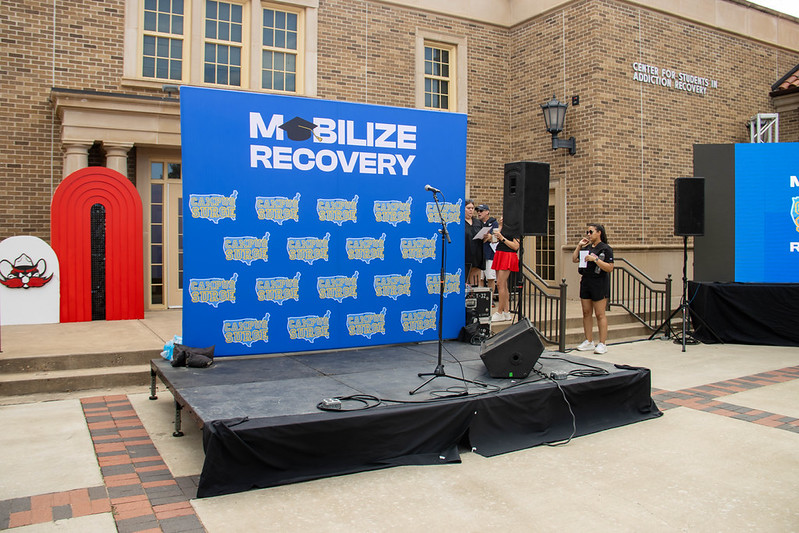
The center serves 112 students this fall and expects approximately 125 in spring 2027. What each student needs depends on where they are.
First-semester students lean on staff for help with academics and recovery. Students close to graduation need less of that and more professional development for life after college.
"Most first-semester students have the same anxieties that all new students have," Gerber said. "However, many of these students have been previously unsuccessful at college and have that additional fear of failure. Providing encouragement and accountability is an important catalyst for their success."
The constant is the community.
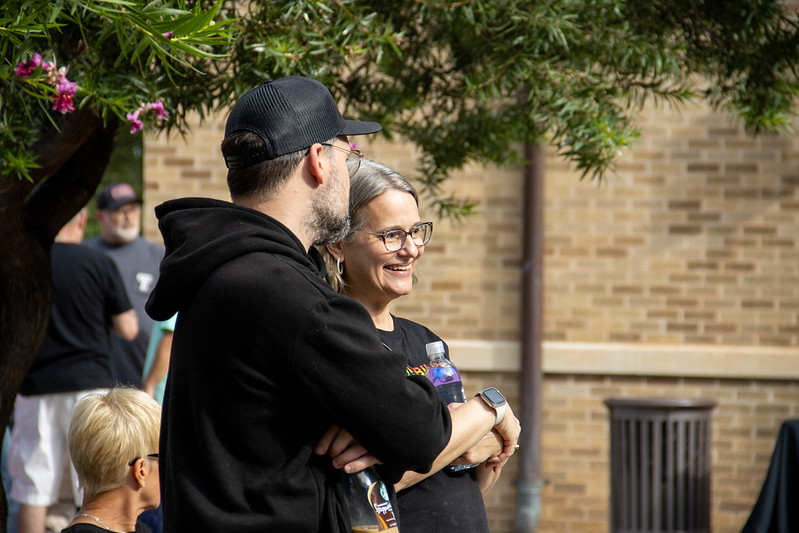
"Peer support is the engine in the center," he said. "Having the space that is all their own, where they can help each other, empowers each other to continue to grow."
Meeting students where they are
Recovery hasn't changed, Gerber said, but the students have. CSAR's students are more diverse and more nontraditional than in years past, and most don't have family financial support, which makes the center's scholarships a lifeline.
Some have jobs and families they can't leave behind to move to Lubbock. For them, the center built an online version of CSAR that offers the same support to students in recovery who are enrolled online.
The center is also changing where students live. A donor purchased several duplexes near campus to serve as off-campus recovery housing for CSAR students.
"This will be highly beneficial for building community," Gerber said. "Additionally, with continued growth in student population at TTU, dorm rooms are becoming harder to come by."
He said more collaborations are in the works but aren't ready to be announced.
Still leading the field
The Association of Recovery in Higher Education, known as ARHE, was founded out of CSAR under Harris. Gerber now serves as the association's treasurer, and April 2-4, 2027, the center will host the association's regional conference for the first time.
The center's reach goes beyond the U.S. This past summer, Gerber and Assistant Professor of Practice Declan Murphy presented in Galway, Ireland, to a European group working to make collegiate recovery part of the Recovery Inclusive City initiative.
"While ARHE strives to grow collegiate recovery internationally, CSAR is called upon for guidance," Gerber said.

'They are not broken'
Ask Gerber what he wants people to understand about students in recovery, and he doesn't hesitate.
"They are not broken," he said. "The students in the center are high achievers and have a resiliency that is not typically found in college students."
CSAR consistently ranks among the top organizations on campus for GPA. Gerber said that's only part of the picture.
He's spent much of the past year with Andersen learning about the center's founding, and he still calls on Harris for advice. ("Dr. Harris is probably tired of me running her down to ask questions," he said.) He had a front-row seat to Kimball's leadership as a student.
What he carries forward from all three, he said, is a legacy of excellence.
"Our job is to help foster the growth of good citizens of the world," Gerber said. "Our goal is to help center students to not only reach their dreams, but to pull others along to reach theirs also."
How to help
Gerber's top priority for the next three to five years is growth, with a caveat.
"Growth is not about how many we can enroll, but rather how many can we help," he said.
That takes support. Alumni are working with the center to build an employment network for current students. Donors fund the scholarships that make college possible for students who often arrive with little money. And the center's facilities will always need updates.
"Donors have been and continue to be the lifeblood of the center," Gerber said. "With their support, we can transform lives, which in turn has a ripple effect."
For faculty, his ask is simple.
"Get to know us. Come by for a visit and a tour," he said. "Faculty are the front lines when a student is in trouble."