Texas Tech University

Emmy Noether Day 2023 - Workshops


Prof. Giorgio Bornia

Music is Math. Sounds Good?

Prof. Giorgio Bornia

Music is the place where sounds meet feelings. We play music because we feel, and we listen to music because we feel.

But mathematics—often thought of as a cold discipline—also plays a role in this emotional process. In this workshop, we will explore the world of music through mathematics.

Along the way, a familiar companion will guide us: the guitar.
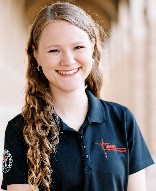

Bridget Mann

Modeling Spider Populations

Bridget Mann, M.S. Student

This activity introduces students to ideas from calculus and differential equations through the study of spider populations.

Two differential equations model the populations of adult and juvenile spiders and display the results graphically.

Students can adjust parameters such as birth rates, development rates, cannibalism rates, and death rates. They will observe in real time how these changes affect population graphs.

Through guided experiments, students will explore the power of mathematical modeling and see how mathematics helps explain real-world systems.


Prof. Raegan Higgins

Next Up!

Prof. Raegan Higgins

This will be a hands-on introduction to difference equations. We will introduce a variety of basic sequences and see how to establish recursive relationships.


Prof. Victoria Howle

The Math Behind AI

Prof. Victoria Howle

ChatGPT—what is it really doing? Is it truly “artificial”? Is it “intelligent”?

This workshop explores the mathematics that underlie artificial intelligence systems and how these models work.


Prof. Alvaro Pampano

Germain’s Variational Problems and Noether’s Symmetries

Prof. Álvaro Pampano

This presentation introduces pioneering variational problems developed by the French mathematician Marie-Sophie Germain in the early 19th century.

We will examine how symmetries help us understand equilibria. These ideas are closely related to Emmy Noether’s famous theorem connecting symmetries and conservation laws.

The presentation will include demonstrations and videos of physical experiments, such as soap films and Chladni plates, that illustrate how these mathematical problems appear naturally in the real world.


Prof. Travis Thompson

Describing the Human Brain

Prof. Travis Thompson

Special proteins help keep our brains functioning properly. Sometimes the brain produces “bad” versions of these proteins. Normally, the brain clears them away, but as we age, this process can break down.

These proteins can then spread their effects, contributing to diseases such as Alzheimer’s.

In this workshop, students will explore how mathematical models help scientists understand these biological processes. Participants will even act out equations that describe the interaction between healthy and harmful proteins in the brain.


Prof. David Weinberg

An Invitation to Projective Geometry

Prof. David Weinberg

By introducing a new coordinate system, a fascinating new world of geometry appears.

This workshop will introduce the projective line, the projective plane, and the concept of points at infinity. Students will see why parallel lines intersect in projective geometry.

If time permits, we will explore how projective geometry unifies many ideas in mathematics by studying conic sections from a projective perspective.


Department of Mathematics & Statistics