Texas Tech University

Emmy Noether Day 2024 - Workshops


Student Workshops

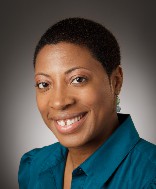
Portrait of Prof. Giorgio Bornia

Music is math. Sounds good?

Prof. Giorgio Bornia

Music is the place where sounds meet feelings. We play music because we feel. We listen to music because we feel. And guess what? Mathematics—apparently such a cold discipline—takes part in this emotional process. We will explore the world of music through mathematics. In this journey, a good old companion will lead us: the guitar.
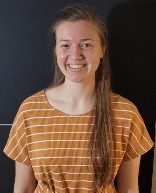
Portrait of Morgan Beetler

A Garden Variety Problem — And Its Impact on Bees and Plant Yields

Morgan Beetler, MS student

How do the types of plants in our garden affect bee activity? How can we increase our garden’s output? We will plant gardens of tomato plants and flowers in a simulation to make observations and explore possible answers to these questions and more. We will discuss the math behind the model the simulation is based on and apply math to draw conclusions from data we collect.

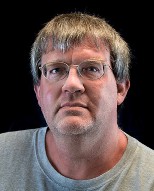
Portrait of Prof. Lars Christensen

Parallel lines never meet, or do they?

Prof. Lars Christensen

We learn in geometry class that parallel lines never meet, but every time we let our eyes follow a straight stretch of highway all the way to the horizon, we doubt it. Mathematics has a way to make sense of what we see. In projective geometry, two parallel lines do meet at a point infinitely far away! And, actually, a line and a parabola always have two intersection points—provided that one looks carefully and counts properly.

Next Up!

Next Up!

Prof. Raegan Higgins

This will be a hands-on introduction to difference equations. We will‬ introduce a variety of basic sequences and see how to establish‬ recursive relationships.

Portrait of Prof. Arne Ledet

Conic sections

Prof. Arne Ledet

Conic sections—circles, ellipses, parabolas, and hyperbolas—have many interesting properties relating to focus and direction. They also help answer questions like “What does a perspective drawing of a sphere look like?”, where the answer is not the obvious one.

Portrait of Prof. Travis Thompson

Describing the Human Brain

Prof. Travis Thompson

Special proteins help keep our brain running smoothly. Sometimes the brain makes “bad” versions of these proteins. A healthy brain clears them out, but as we age, that cleanup process can fail. Bad proteins can then cause good proteins to turn bad too, contributing to diseases like Alzheimer’s. We can model this with simple mathematical equations. In this talk, students will act out a set of equations that describe the tension between good and bad proteins in this neurodegenerative drama.

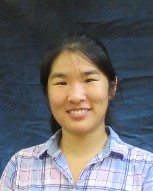
Portrait of Jennifer Wang

Order from Chaos

Jennifer Wang

A single random process is difficult to predict, but patterns can emerge from many random processes. In this workshop, we will act out a human bean machine and generate random data from a Bernoulli process to observe the emergence of order from chaos.


Department of Mathematics & Statistics