
Emmy Noether Day 2025 - Workshops

Mandelbrot and Julia Set Fractals
Dr. Jeffrey Belding
Through the use of complex numbers and simple computer instructions, we explore the generation of intricate and beautiful fractal patterns that exhibit self-similarity and connections to other members of the fractal families.

Math and Juggling
Prof. Ram Iyer and Prof. Arne Ledet
This fun presentation explores the mathematics behind juggling patterns. Participants will see a live juggling demonstration and learn how juggling patterns can be expressed as mathematical codes. We will experiment with patterns using a juggling app and finish with a fun juggling contest.
Order from Chaos
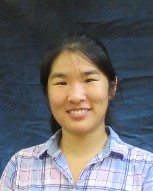
Jennifer Wang
A single random process can be difficult to predict, but patterns emerge when many processes are combined. Participants will take part in a “human bean machine” experiment to generate random data from a Bernoulli process and observe how order can emerge from chaos.

Are Mathematical Functions Smart?
Prof. Chris Monico
Large Language Models such as ChatGPT are essentially enormous mathematical functions. This talk gives a broad overview of how researchers develop these models, how they mimic aspects of intelligence, and what these ideas have to do with Gauss.

Variational Problems and Noether’s Symmetries
Prof. Álvaro Pampano
This presentation introduces classical variational problems and the symmetries associated with them, often called Noether’s Symmetries. Demonstrations using soap films and Chladni plates illustrate how these mathematical ideas appear naturally in physical systems.

10 Trailblazing Women Who Shaped Mathematics
Dr. Erhan Guler and Dr. Kirill Golubnichiy
This workshop highlights the achievements of ten pioneering women mathematicians whose work spans number theory to modern mathematical physics. Their stories illustrate perseverance and inspire future generations to explore mathematics.

Describing the Human Brain
Prof. Travis Thompson
Proteins play a crucial role in keeping the brain functioning properly. When faulty proteins appear, diseases such as Alzheimer’s can develop. This presentation explores how mathematical models help researchers understand these biological processes.
Department of Mathematics & Statistics
-
Address
Texas Tech University, 1108 Memorial Circle, Lubbock, TX 79409-1042 -
Phone
806.742.2566 -
Email
math.dept@ttu.edu