
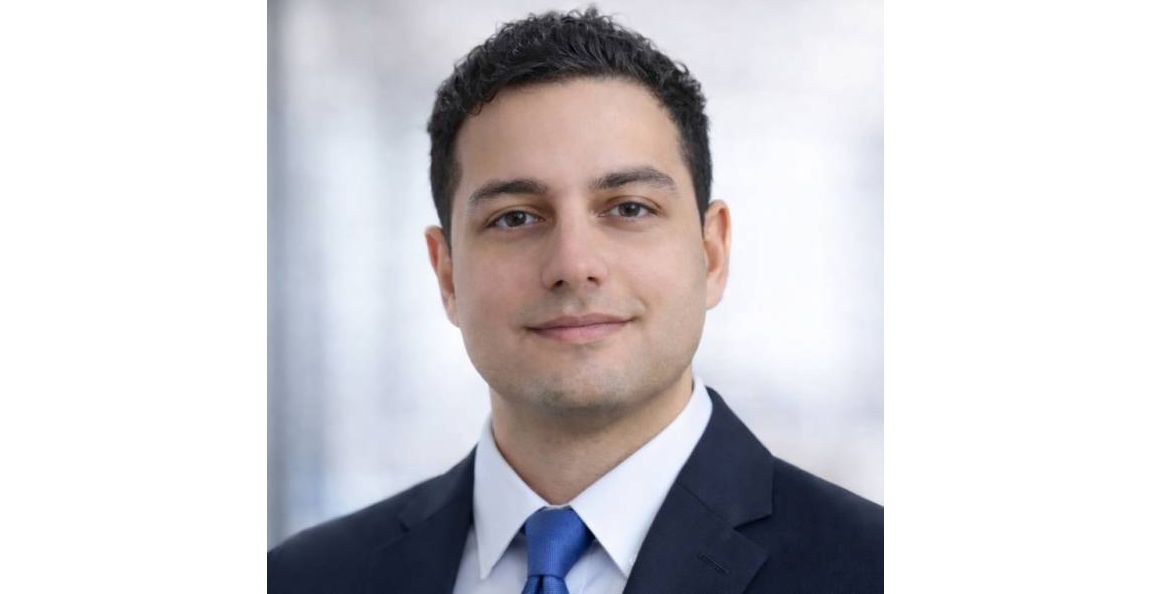
In-span learning: adapting reduced-order models using their own predictionsAmirpasha Kamal Hedayat - Department of Aerospace Engineering, University of Michigan, Ann Arbor
In-span learning: adapting reduced-order models using their own predictionsAmirpasha Kamal Hedayat - Department of Aerospace Engineering, University of Michigan, Ann Arbor
Abstract: Reduced-order models (ROMs) are often trained on a limited range of system behavior and can lose accuracy when dynamics evolve beyond training distribution. Adaptive ROMs try to address this, typically relying on new high-fidelity information to correct their reduced representation during online prediction. We introduce a new adaptive paradigm, called in-span learning, showing that a model’s own predictions contain useful adaptive information that can complement the information obtained from external high-fidelity sources. Because these predictions lie entirely in the current trial subspace, they cannot introduce new directions. Nevertheless, when streamed through an incremental SVD with forgetting, they reweight and rotate the basis within that subspace, creating a trajectoryinformed spectral preconditioner that better prepares the model to absorb future high-fidelity information. We expose this mechanism on a threedimensional spiral model and demonstrate its effectiveness in long-horizon prediction tasks for stiff and complex dynamical systems. Across these problems, in-span updates considerably improve predictive accuracy without additional high-fidelity solves. More broadly, in-span learning can be viewed as a dynamical-systems analogue of in-context learning, in which an evolving model reorganizes its representation at inference time using context generated by its own trajectory.
This is a collaborative effort with Laura Balzano (Electrical Engineering and Computer Science) and Karthik Duraisamy (Aerospace Engineering), both from the University of Michigan, Ann Arbor.
This is a collaborative effort with Laura Balzano (Electrical Engineering and Computer Science) and Karthik Duraisamy (Aerospace Engineering), both from the University of Michigan, Ann Arbor.
Department of Mathematics & Statistics
-
Address
Texas Tech University, 1108 Memorial Circle, Lubbock, TX 79409-1042 -
Phone
806.742.2566 -
Email
math.dept@ttu.edu