
Dynamic Mems: Microfabrication, Mechanisms, and MotionTim Dallas - Electrical & Computer Engineering, Texas Tech University
Dynamic Mems: Microfabrication, Mechanisms, and MotionTim Dallas - Electrical & Computer Engineering, Texas Tech University
Dynamic microelectromechanical systems (MEMS) use controlled mechanical motion at the microscale to perform useful functions. This talk will begin with an introduction to Dynamic MEMS, including basic device architectures, actuation mechanisms, scaling effects, and the fabrication approaches used to create movable structures at the microscale. The second part of the talk will present three examples of Dynamic MEMS. The Digital Micromirror Device (DMD) will provide a vivid example of a highly successful commercial MEMS technology based on the controlled motion of large arrays of microscopic mirrors. Devices fabricated using Sandia National Laboratories’ SUMMiT V surface-micromachining process will illustrate more complex planar micromechanisms, followed by recent work using two-photon polymerization with the Nanoscribe platform to create three-dimensional microstructures and mechanisms. Together, these examples show how advances in microfabrication have expanded the types of motion and mechanical functionality that can be realized at the microscale.
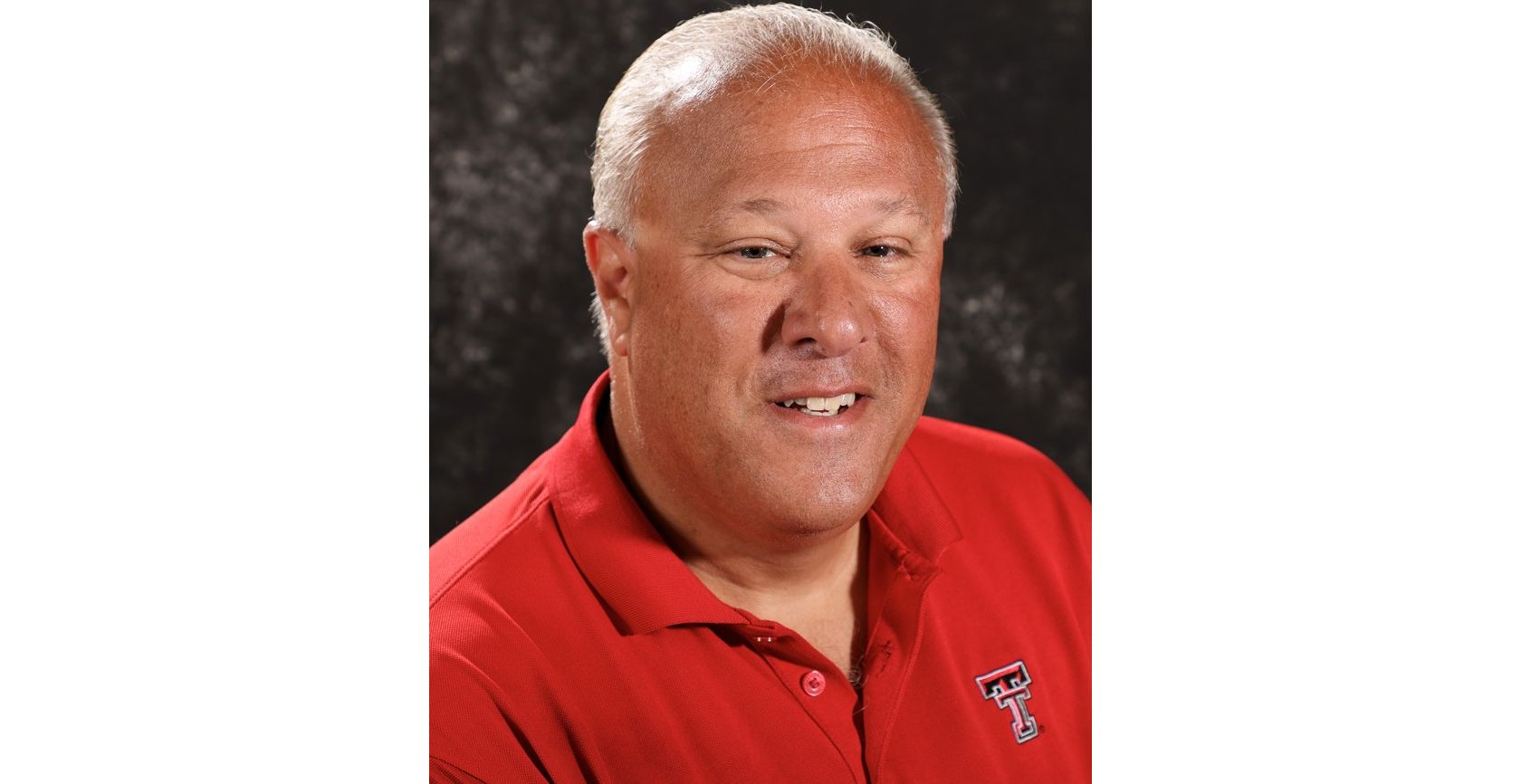
Tim Dallas, PhD, is a Professor of Electrical and Computer Engineering at Texas Tech University. Dr. Dallas’ research includes developing MEMS-based education and research tools, innovative solar racking techniques, and UAS-enabled transplant organ transport. In 2008, he established Class on a Chip, Inc. to commercialize an array of micro-experimental devices for use in engineering, physics, and MEMS classes. He works with colleagues in the College of Education on the development of an education portal, Classroom on a Chip, and the Solar Powered Digital Classroom in a Box (SPDCB). The SPDCB technology has been deployed to off-the-grid locations in Africa, Asia, and Central America. Each summer, he teaches a class entitled Solar Energy, which includes a solar energy system design project. He has also established classes in entrepreneurship and Unmanned Aircraft Systems (UAS). Prof. Dallas serves as a mentor for the TTU Innovation Hub’s accelerator program and other startup programs. Dr. Dallas has served as the principal investigator for three National Science Foundation sponsored Scholarships in STEM (S-STEM) projects, three Research Experience for Undergraduates Sites, a Course Curriculum and Laboratory Improvement (CCLI) project, and a number of other research and equipment grants from NSF. He has also been funded by the Keck and Welch Foundations for MEMS-based education technologies. He serves as an Associate Dean for the Graduate School and has served as an Associate Editor for IEEE Transactions on Education. He is a Senior Member of IEEE and a Fellow of TTU’s STEM-CORE.
Tim Dallas, PhD, is a Professor of Electrical and Computer Engineering at Texas Tech University. Dr. Dallas’ research includes developing MEMS-based education and research tools, innovative solar racking techniques, and UAS-enabled transplant organ transport. In 2008, he established Class on a Chip, Inc. to commercialize an array of micro-experimental devices for use in engineering, physics, and MEMS classes. He works with colleagues in the College of Education on the development of an education portal, Classroom on a Chip, and the Solar Powered Digital Classroom in a Box (SPDCB). The SPDCB technology has been deployed to off-the-grid locations in Africa, Asia, and Central America. Each summer, he teaches a class entitled Solar Energy, which includes a solar energy system design project. He has also established classes in entrepreneurship and Unmanned Aircraft Systems (UAS). Prof. Dallas serves as a mentor for the TTU Innovation Hub’s accelerator program and other startup programs. Dr. Dallas has served as the principal investigator for three National Science Foundation sponsored Scholarships in STEM (S-STEM) projects, three Research Experience for Undergraduates Sites, a Course Curriculum and Laboratory Improvement (CCLI) project, and a number of other research and equipment grants from NSF. He has also been funded by the Keck and Welch Foundations for MEMS-based education technologies. He serves as an Associate Dean for the Graduate School and has served as an Associate Editor for IEEE Transactions on Education. He is a Senior Member of IEEE and a Fellow of TTU’s STEM-CORE.
Department of Mathematics & Statistics
-
Address
Texas Tech University, 1108 Memorial Circle, Lubbock, TX 79409-1042 -
Phone
806.742.2566 -
Email
math.dept@ttu.edu