
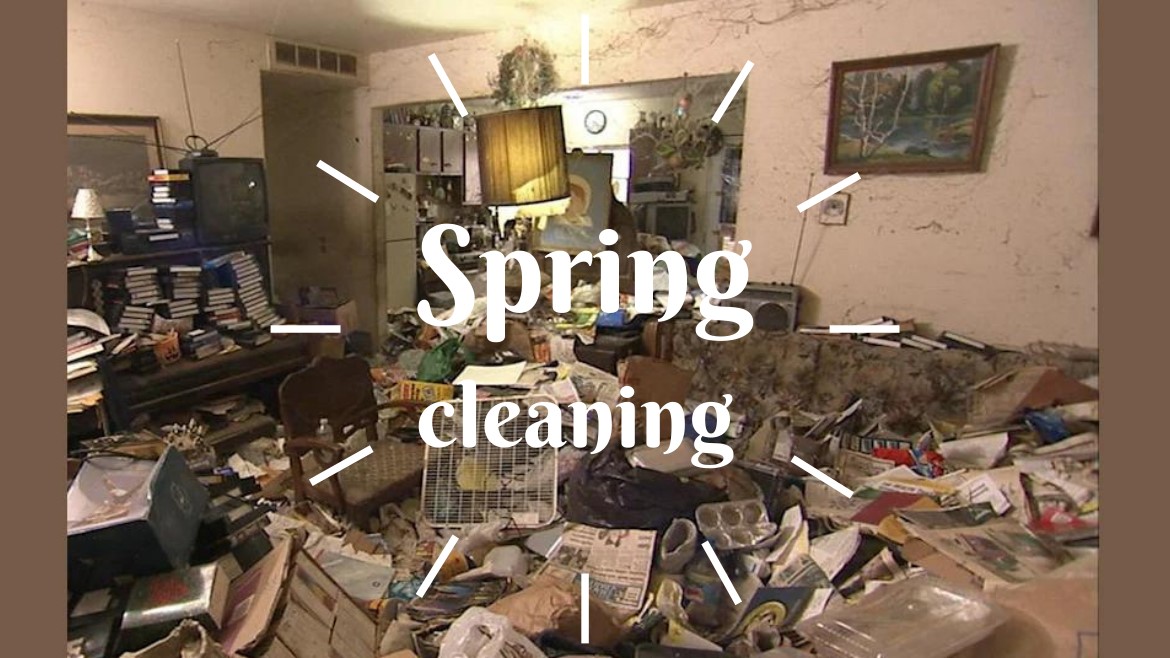
Don't be a hoarder. Spring is the perfect time to clean out your work areas from unneeded items! Fewer hazardous materials on campus creates a safer working and learning environment. Read on to learn about bulk disposal processes for hazardous materials in your work areas.
Biologicals
Clean out those fridges and freezers!
Biological liquids can treated chemically using an appropriate disinfectant. Bulk similar biological liquids into a single container and add a fresh 10% bleach solution in equal volume. Allow the mixture to sit for at least 10 minutes and pour down the drain with lots of water. Individual plastic containment (e.g., conical tubes) can be disinfected by sitting in a 10% bleach bath for 10 minutes, have the disinfectant drained, and then be discarded into regular trash.
Chemical Disinfection of Biowaste How To Poster
Accumulated plates and other biowaste must be contained in an autoclavable bag and autoclaved on an appropriate cycle. After cooling, place a Treated sticker over the biohazard symbol and place biobags in a solid black trash bag and dispose of in the dumpster.
Autoclaving Biowaste How To Poster
Chemicals
Chemicals that are not being used, are outdated, show signs of decomposition (e.g., crystallization), or the containers are in poor in condition shoudl be disposed of through EHS. Priority should be placed on removing high hazard materials that are not in use. Old samples from past projects or students should also be disposed of.
Gather all the materials you want to dispose of into one location in your work area and submit a Lab Clean Out Evaluation to meet with EHS Environmental Protection to create your Lab Clean Out Action Plan to safely and efficiently dispose of bulk chemicals.
Please note, this is a different process than routine waste submission.
Submit a Lab Clean Out Evaluation
Compressed Gases
Unused or old gas cylinders should be returned to the gas vendor indicated on the cylinder label.
Cylinders, whether in use or being stored, should not be past their inspection expiration date. Cylinder test dates are stamped on the shoulder of the cylinder; older cylinders may have many such dates. Inspection stamps consist of a numeral signifying the month, a code indicating the entity that conducted the inspection, and the year of the inspection.
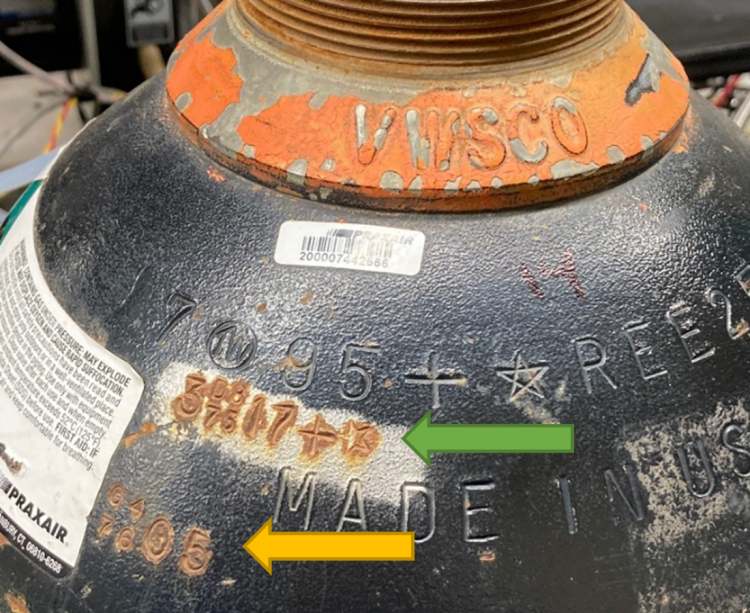
For example, the cylinder in the image above was last inspected in March of 2017 (green arrow). A previous inspection was done sometime in 2005 (yellow arrow). The March 2017 inspection date has a star after it (and also a + sign). Inspections with no plus sign are valid for 5 years; inspections with plus signs are valid for 10 years. If your cylinder needs to be inspected, contact the gas cylinder vendor.
Equipment
Antiquated equipment that will no longer be used should be disposed of through TTU Surplus. If equipment has been used with hazardous materials or stored inside a work area that did, the equipment must be properly decontaminated, have an Equipment Decontamination Form attached and be cleared by EHS before Surplus will pick up the item. Submit an Equipment Clearance Request when the equipment is ready to be cleared.
Glassware
Broken glass or unneeded glassware items can be packed into glass waste boxes or other lableed cardboard box, taped securely and disposed of in the closest dumpster. Make sure all glassware for disposal is clean.
Lasers
So you used to do LASER work, but don't plan to in the future and you need that extra lab space now. Contact the Laser Safety Officer to decommission your old equipment and update your license.
Radioactive Materials
Any radioactive materials that are not being used should be disposed of properly through EHS. Contact the Radiation Safety Officer to decommission your "used-to-be" radiation spaces and update your license.
Recyclable Wastes
Some work areas may also generate recyclable wastes such as light bulbs, batteries, used oil, paint and other recyclable materials. Batteries and printer cartridges can be dropped off in Experimental Sciences Building II Room 406 or Administrative Support Center
It is recommended that building occupants coordinate a centralized accumulation area with available building managers if several spaces have waste items. Then one waste collection request can be submitted to EHS. If you need packaging for recyclable waste items, please reach out to EHS for consult.
Environmental Health & Safety
-
Address
Texas Tech University, 407 Flint Ave, Lubbock, TX 79409 (Mail Stop 1090) -
Phone
806.742.3876 -
Email
safety@ttu.edu