
Biosafety and Biosecurity
Requirements
Work with microorganisms, recombinant/synthetic nucleic acids, human and animal materials, insect and animal vectors, and other potentially biohazardous materials is necessary in many university research and teaching applications and requires special practices and procedures, and in some cases, special equipment to protect personnel and the environment.
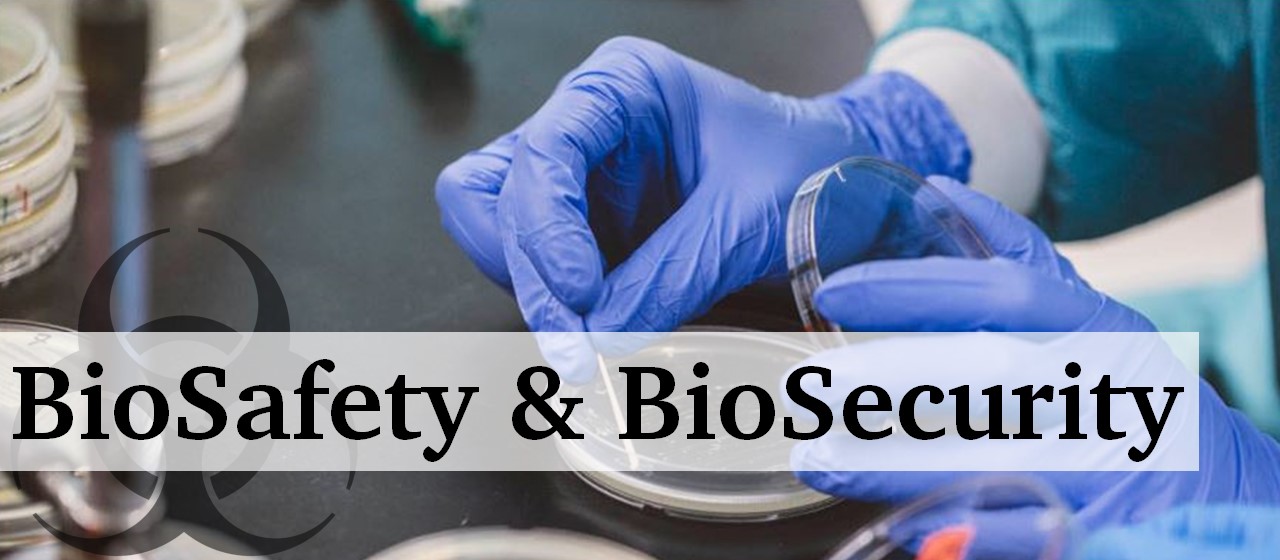
Texas Tech University is actively committed to preserving the health and safety of its students, staff, and faculty and to protecting the environment and surrounding community. The Department of Environmental Health & Safety provides guidance regarding the assessment, containment, and security of biological materials that complement the institutional operating policies which support compliance with the guidelines, recommendations, and regulations applicable to such work.
Biosafety News & Updates
NIH Biosafety Modernization Initiative - Draft Policy out for Public Comments
The NIH released the draft policy for the Biosafety Modernization Initiative on August 19, 2026. Public comments can be submitted through their online portal through October 19, 2026.
The draft policy and assocated documents are available on the NIH-OSP Modernizing and Strengthening Oversight of Biosafety webpage.
USG Policy for Stopping High-Risk Life Sciences Research Released
The Federal Government is issuing a new United States Government (USG) Policy for Stopping High-Risk Life Sciences Research pursuant to Section 4 of Executive Order 14292. NIH is working with the Administration and its Interagency partners to fully implement this new USG Policy, which includes an explicit prohibition on dangerous gain-of-function research. All research activities identified as potential dangerous gain-of-function research per NOT-OD-25-127 and NOT-OD-25-112 remain paused until NIH specific implementation requirements are established.
Recent changes to Biosafety Policy at TTU
Aug. 28, 2026 - The IBC has added the following lanaguage to the Biosafety Manual: Keeping and caring for insects, spiders, and their relatives requires proper containment and husbandry practices.
Due to a change in state regulations, those using human materials collected post-mortem must be certified with the Texas Funeral Service Commission. Please see the Human & Non-human Primate webpage for details regarding this process.
Cayuse Resources
The IBC Office has developed a Researcher Toolbox and a Cayuse FAQ page to assist you in completing your IBC protocol in Cayuse.
Resources & Links
CDC-Biosafety in Microbiological and Biomedical Laboratories 6th ed.
NIH-OSP Division of Biosafety, Biosecurity, and Emerging Biotechnology
Federal Select Agent Program - Guidance Documents
Pathogen Safety Data Sheets - Health Canada
American Biological Safety Association - ABSA International
OSHA Bloodborne Pathogen Standard
Texas Department of State Health Services - Bloodborne Pathogens
Model Bloodborne Pathogen Exposure Plan
Safely doffing gloves - "Beaking" Method
Biosafety Topics
The links below provide specific information about the BioSafety & BioSecurity Program at Texas Tech.
Academic Safety ResourcesAnimals & Animal Materials
Arthropods & Vectors
Biological Risk Assessment
Biosafety & Biosecurity Home Page
Biosafety Cabinets and other Engineering Controls
Biosafety FAQs
Biosafety PI Responsibilities
Biosecurity
Bio-waste Management
BUGs (Bio-material Use Guides)
Clinical Biosafety
Decontamination
Emergency Response
Human & Non-Human Primate Materials
Laboratory Self-Survey
Microorganisms
Occupational Health Program (OHP)
Personal Protective Equipment (PPE)
Plants
Prions
Recombinant/Synthetic Nucleic Acids (r/s NAs)
Standard Operating Procedures (SOPs)
Toxins of Biological Origin
Transporting Biological Materials
IBC Resources

Researcher Toolbox (Forms & Guides)
IBC Protocol Registration Process
Cayuse FAQs
Cayuse Personnel Registration
High-Risk Life Science Work
IBC Minutes
Environmental Health & Safety
-
Address
Texas Tech University, 407 Flint Ave, Lubbock, TX 79409 (Mail Stop 1090) -
Phone
806.742.3876 -
Email
safety@ttu.edu